Boiler replacement and installation in Grand Rapids
Replacing an old cast iron boiler with a high-efficiency condensing or combi model keeps the radiators you already have while cutting the gas it takes to heat them.
The short answer
Boiler installation in Grand Rapids begins with a heat loss calculation, because old boilers are often far larger than the house needs. We remove the old boiler, install a condensing or combi unit sized to the actual load, repipe the near-boiler piping with new pumps and an expansion tank, vent it through PVC and flush the system before start-up.
Keep the radiators
Why replacing a boiler is not a like-for-like swap
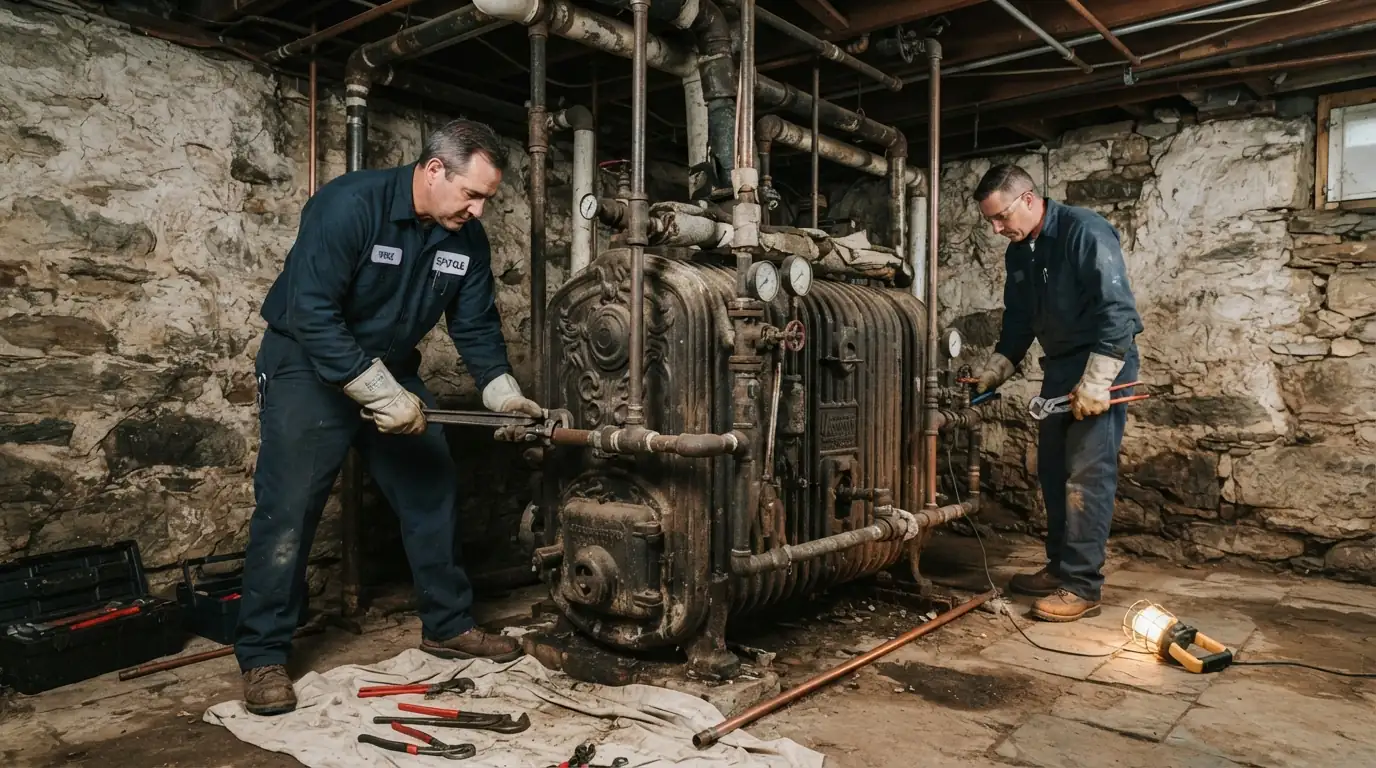
Many old boilers were sized generously decades ago, before insulation and new windows, and some were converted from coal. Replacing one with the same size wastes gas and makes a new boiler short cycle. A new boiler should be sized to the house as it is now.
If the boiler still has life in it, boiler repair work may be the better call. Adding radiant floor heat to a kitchen or bath is easy at the same time as a replacement.
Pricing, explained
What a boiler installation costs depends on
Boiler replacement is priced after a heat loss calculation and a look at the piping, venting and radiators. You get a written scope before any work starts.
Boiler type and size
Condensing and combi models differ in price by output.
Near-boiler piping
Old piping, pumps and tanks are usually replaced.
Venting
PVC venting route and termination location.
System condition
Flushing, a dirt separator or new zones add scope.
Removal
Heavy old cast iron boilers take time to break down and remove.
Choosing between options
Condensing boiler or combi boiler
Both vent through PVC and modulate their flame. The difference is hot water.
| Condensing boiler | Combi boiler | |
|---|---|---|
| Heats the house | Yes | Yes |
| Domestic hot water | Separate tank or indirect tank | Built in, on demand |
| Best for | Larger homes, higher hot water use | Smaller homes and condos |
| Space used | Boiler plus tank | One wall-hung unit |
The three kinds of boiler install
Condensing boiler upgrades
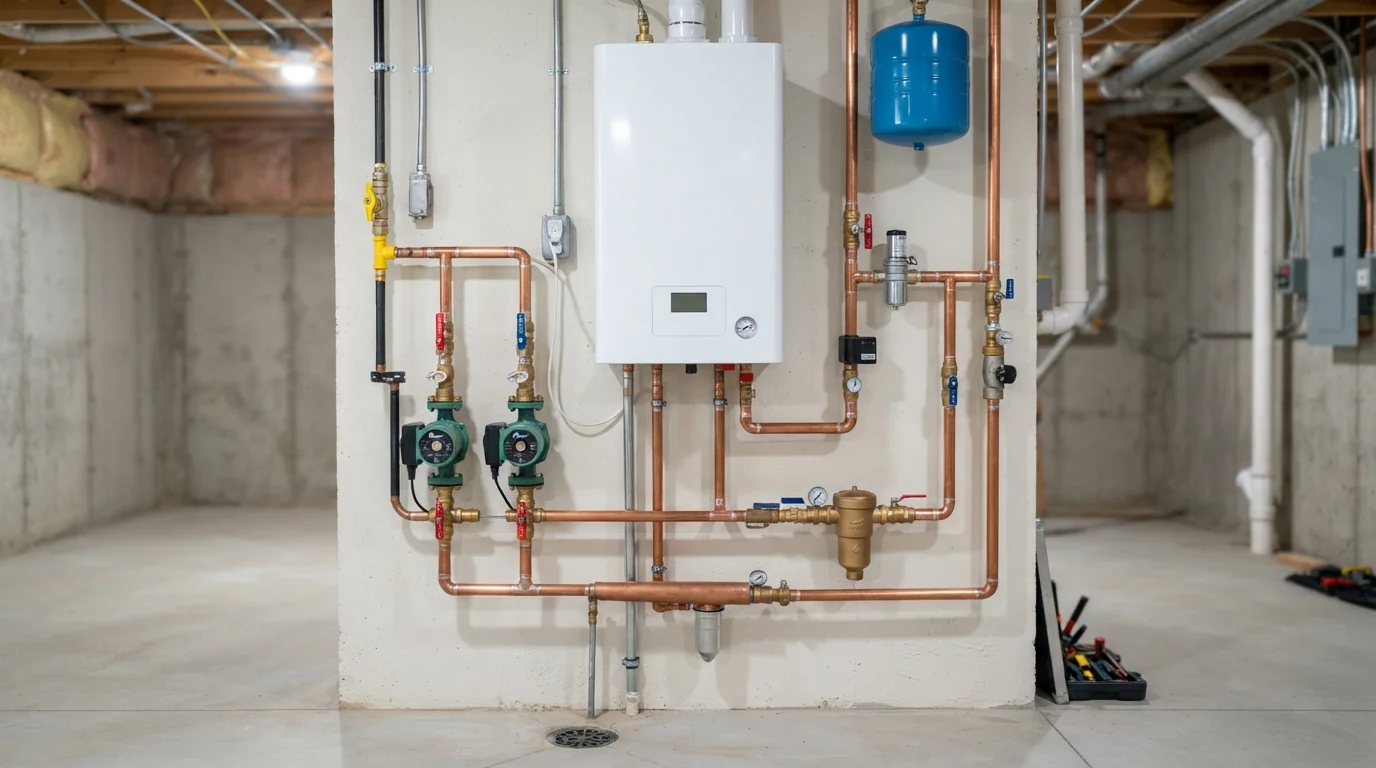
A condensing boiler recovers heat from its exhaust by condensing water vapor out of it, which raises efficiency well beyond an old atmospheric boiler. It works best at lower water temperatures, so we set an outdoor reset control that runs cooler water on mild days and hotter water only when it is truly cold. Condensing boilers vent through PVC rather than the chimney, need a condensate drain with a neutralizer, and modulate their flame to match the load, which ends the short cycling common with oversized old boilers.
Combi boilers
A combi boiler heats the house and makes domestic hot water on demand in one wall-hung unit, removing the separate water heater from the basement. It suits smaller homes and condos where hot water demand is moderate. The trade-off is that it heats hot water one fixture at a time more slowly than a large tank during peak demand, so we size it to how many showers and taps run together. The gas line and venting are sized for the combi's full output.
Radiator and baseboard conversions
Replacing the boiler is a chance to fix the system around it: adding zones to a house run on a single thermostat, replacing failed baseboard, or converting an old gravity system with oversized pipes to pumped circulation. Old systems often carry sludge that damages a new boiler's heat exchanger, so we flush the system and fit a dirt separator before connecting the new unit. Existing cast iron radiators are usually kept, since they hold heat well and work nicely with lower water temperatures.
What the visit covers
What every boiler install includes
- Room-by-room heat loss calculation
- System flush and dirt separator
- New circulator pumps and expansion tank
- PVC venting to code clearances
- Condensate drain with neutralizer
- Outdoor reset control set up
- Permit, inspection and combustion test
Local conditions
Vent terminations in the historic district
Heritage Hill has been a local historic district under a preservation ordinance since 1973, and exterior changes there are reviewed. A condensing boiler vents through PVC pipe out the side of the house instead of up the old chimney, so the termination location matters. We plan it for a side or rear wall where it meets clearance rules and stays out of the street view.
Brands we service and install
From the call to a working system
How a boiler replacement runs
Heat loss
Room-by-room calculation to size the new boiler.
Written scope
Boiler, piping, venting and zoning laid out with prices.
Remove and flush
Old boiler removed; system flushed of sludge.
Install
New boiler, pumps, expansion tank, venting and condensate drain.
Start up
Combustion tested, outdoor reset set, every zone checked.
Questions people ask us
Boiler installation questions
Usually, yes. Cast iron radiators pair well with a new condensing boiler.
Old boilers are often oversized; a right-sized one runs longer and more efficiently.
No. It vents through PVC pipe out a wall.
One unit that heats the house and your tap water.
Usually two to three days, depending on piping changes.
Yes. It is the best time to split a single-zone house.
Yes. Boiler replacements are permitted and inspected.
Call and describe your system; we mostly work on hot water boilers.
From our guides: Guide: choosing a contractor
Boiler at the end of its life?
Call and we will size a replacement to your house.