Temperature creeping up
The system is losing capacity.
A walk-in that is losing temperature puts inventory at risk by the hour. We answer any time and work through the condensing unit, evaporator, defrost and door seals to find the cause.
The short answer
Walk-in cooler and freezer repair in Grand Rapids starts with the box temperature and where the system is failing: a condensing unit that will not run or runs hot, an evaporator iced over from a defrost fault, a failed fan motor, a refrigerant leak, or a door that no longer seals. We diagnose on site and repair what we can the same visit.
What you might notice
The system is losing capacity.
A defrost problem.
A blocked or frozen drain line.
Worn gaskets or a failed door heater.
Dirty coil, low charge or a control fault.
Inventory at stake
A walk-in has two halves: the condensing unit, usually on the roof or outside, and the evaporator inside the box. Most failures are dirty condenser coils, failed fan motors, defrost problems that ice the evaporator, and doors that let warm, humid air in until the system cannot keep up.
Kitchen air balance affects walk-ins too; see make-up air. Rooftop HVAC failures are covered under our commercial HVAC repair page.
The calls we get most
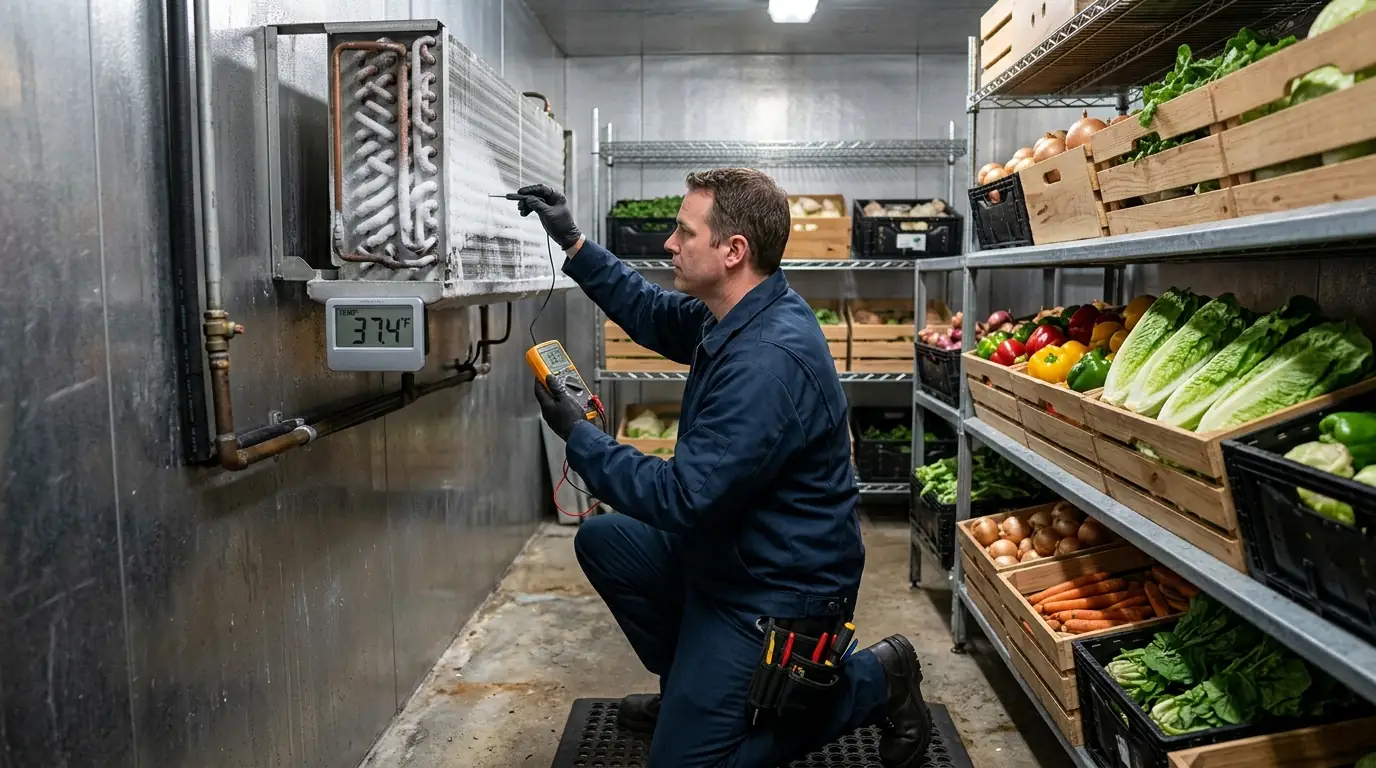
A cooler creeping up in temperature usually has one of a few causes: a condenser coil packed with dirt or grease so the system cannot reject heat, a failed condenser or evaporator fan motor, low refrigerant from a leak, or a door gasket and heater problem letting warm air in. We check the box and coil temperatures, fan operation, pressures and door seals in that order, so the first repair addresses the actual cause. While we work, we advise moving critical product to another box if temperatures are near the safe limit.
Walk-in freezers defrost their evaporator coil on a schedule using electric heaters or hot gas. When a defrost heater, timer, termination sensor or drain line heater fails, ice builds on the coil until airflow stops and the box warms. We clear the ice safely, test each part of the defrost circuit and check that the drain line is heated and flowing, since a frozen drain refills the coil with ice as soon as it defrosts. Door heaters and gaskets get checked at the same time.
The condensing unit carries the compressor, the condenser coil and fan, and the controls, often on a roof exposed to snow, heat and kitchen grease. Common repairs include contactors, capacitors, fan motors, pressure controls and coil cleaning. Compressor failures are major repairs, and we lay out repair against replacement with the lead time for each before the unit is opened. Refrigerant is recovered with proper equipment and never vented, and leaks are found and repaired rather than topped off, so the same failure does not return next month.
From the call to a working system
Box temperature and symptoms checked; product advice given.
Condensing unit, evaporator, defrost and door checked.
Repair price and any part lead time before work starts.
Part replaced, coils cleaned, ice cleared as needed.
Box pulled down and holding before we leave.
Timing
Fan motors, controls, contactors and defrost parts are usually replaced on the first visit, and the box starts pulling down right away.
Refrigerant leaks and compressor failures take longer, and we give you the timeline before the system is opened so you can plan inventory.
Have the condensing unit cleaned before the first heat wave.
Local conditions
Grand Rapids has a busy restaurant and food service scene, and nearly every kitchen depends on a walk-in cooler or freezer that runs around the clock. Summer heat on a rooftop condensing unit and grease from kitchen exhaust are the two things that wear these systems hardest, so condenser coils here need cleaning more often than the equipment manual suggests.
Pricing, explained
Walk-in repairs are priced after diagnosis. Emergency after-hours calls cost more than scheduled work, and we tell you the rate before booking.
Fan motors and controls are minor; compressors are major.
Leak repairs require recovery, repair, vacuum and recharge.
Heaters, timers and drain line heaters vary in cost.
Rooftop condensing units add time.
Nights, weekends and holidays cost more.
Questions people ask us
Most hold around 35 to 38 degrees; follow your food safety plan.
Usually a defrost heater, timer or sensor fault.
Dirty condenser coil, low charge or a door that does not seal.
Yes.
Yes, and check the door heaters at the same time.
Yes, we answer 24/7.
If the box is near the safe limit, move critical items while we work.
Quarterly coil cleaning suits most kitchens.
Call any hour and we will get it holding temperature.
Reach us
Service office
3535 3 Mile Rd NW, Grand Rapids, MI 49534