Doors slam or stick
Strong negative pressure in the building.
Kitchen hoods pull huge volumes of air out of a building. Make-up air brings that air back in, tempered, so doors open normally and the hood actually captures smoke and grease.
The short answer
Make-up air in Grand Rapids restaurants replaces the air a kitchen hood exhausts, usually through a gas-fired or electric rooftop unit that heats the incoming air in winter. When it fails or is undersized, the building goes negative: doors are hard to open, pilot lights flicker, and smoke rolls out of the hood instead of up it.
Air in equals air out
Every cubic foot of air a hood fan removes has to come back in from somewhere. Without a make-up air unit, it comes in under doors, through the dining room's rooftop unit and down flues, which pulls combustion gas back into the building and leaves the hood struggling.
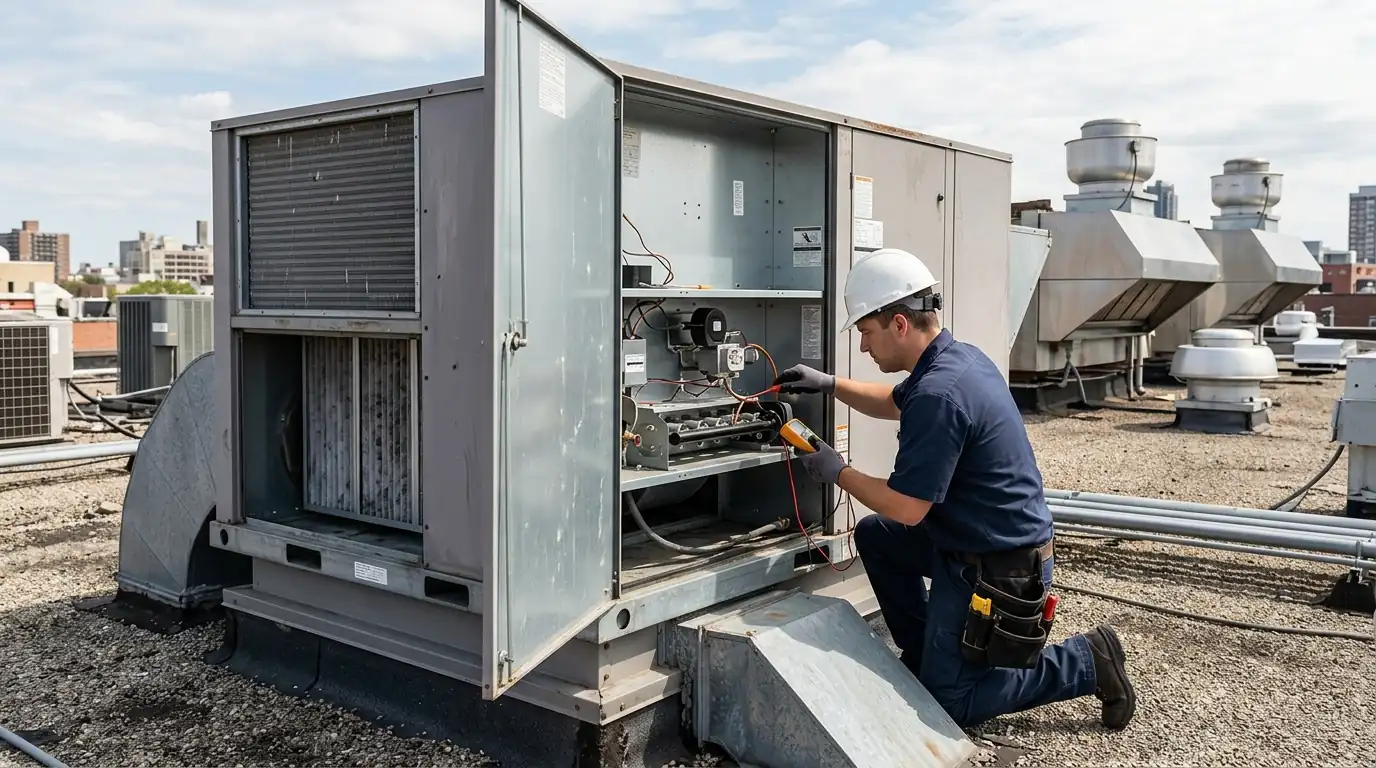
Make-up air units are serviced alongside the rest of the rooftop equipment under commercial maintenance, and failures run through commercial HVAC repair work.
Pricing, explained
Make-up air pricing depends on the hood size, the unit type and the rooftop layout. We quote after reading the hood airflow and seeing the roof.
Larger hoods need larger make-up air units.
Direct-fired, indirect-fired and electric heat differ in cost.
Curbs, duct runs and crane access affect install cost.
Interlocks and variable-speed controls add to the scope.
Motors and belts are repairs; corroded housings mean replacement.
Choosing between options
The tempering method depends on the building, the gas supply and local requirements.
| Direct-fired | Indirect-fired | Electric | |
|---|---|---|---|
| How it heats | Flame in the airstream | Heat exchanger | Electric elements |
| Efficiency | Very high | Lower | Depends on rates |
| Best for | Large kitchens with gas | Where flue gas must be kept out | Small hoods, no gas |
| Upkeep | Burner and safeties | Burner, exchanger, flue | Elements and controls |
The three jobs we do
Commercial kitchen hoods are sized to the cooking line, and the make-up air system is sized to the hood. We install and service direct-fired and indirect-fired make-up air units, interlocked with the exhaust fan so both run together. Tempering matters here: pulling untempered winter air across a cook line makes the kitchen cold and the staff turn the system off. We set the discharge temperature and check the interlock so the system runs whenever the hood runs, and shuts off when the hood does.
A building that runs negative shows it in small ways first: a front door that slams or will not close, cold drafts at the entrance, water heater and furnace pilots that flicker or go out, and odors from drains. We measure the pressure difference between inside and outside with the equipment running, then trace it to an undersized make-up air unit, a failed motor, a clogged intake filter or an exhaust fan added without a matching supply. Correcting it protects both comfort and combustion safety.
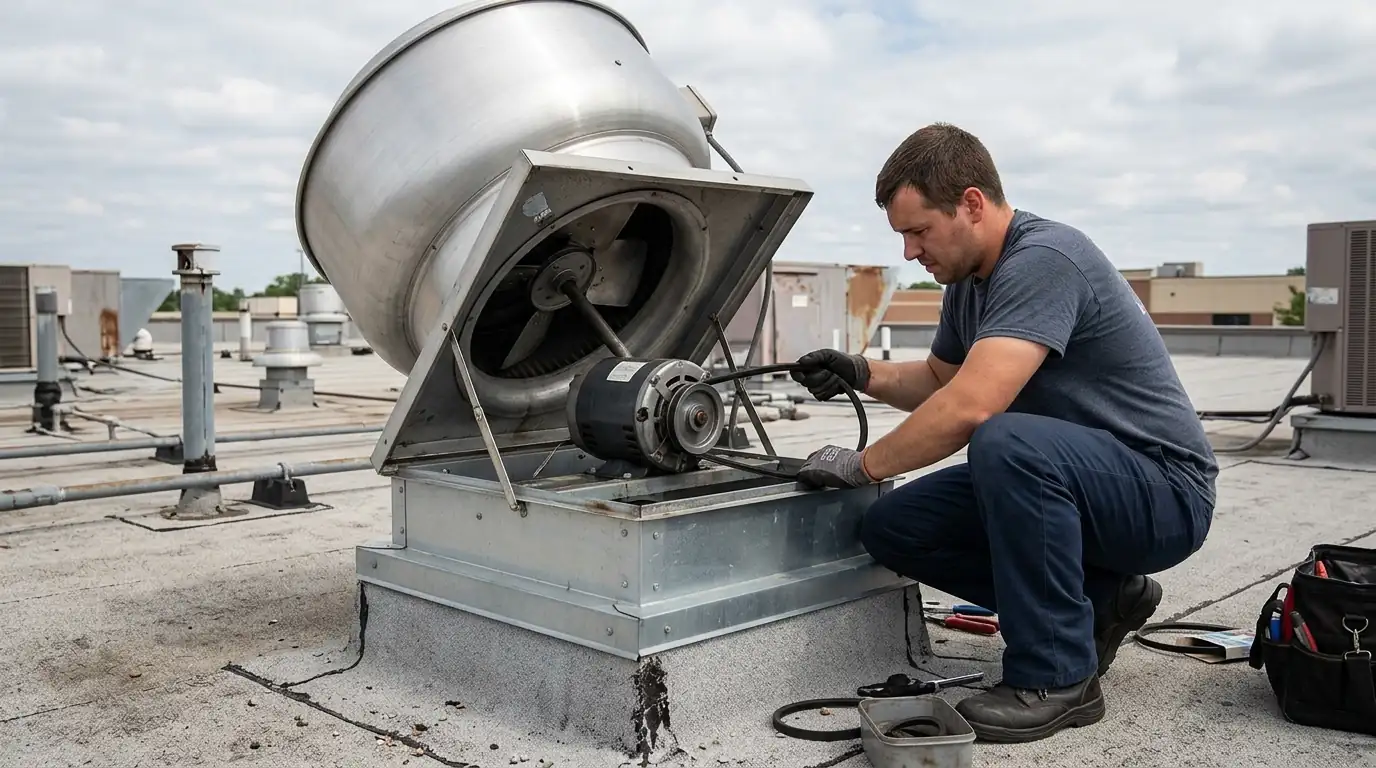
Upblast kitchen exhaust fans run in grease-laden air and wear out belts, bearings and motors. A fan that is noisy, slow or tripping its overload usually has a failing motor or a belt glazed smooth. We replace motors, belts and bearings, or the whole fan when the housing is corroded, and we check that the replacement moves the same airflow the hood was designed for. Grease containment at the fan and the condition of the curb and roof around it are checked at the same time.
Local conditions
Grand Rapids sees only about ten days a year at 90 degrees or above, so for most of the year the challenge for a kitchen is not cooling the incoming air but warming it. A hood that pulls thousands of cubic feet a minute through a winter kitchen will make the line uncomfortable within minutes if the make-up air unit is not heating properly, which is why winter is when most of our make-up air calls come in.
From the call to a working system
Building pressure checked with hoods and HVAC running.
Make-up air and exhaust fans, belts, motors and filters checked.
Burner or heater output and discharge temperature tested.
Parts replaced on the spot or a written scope for new equipment.
Interlock tested and pressure re-measured.
What you might notice
Strong negative pressure in the building.
Hood cannot capture without replacement air.
Outside air forced in through gaps.
Air being pulled down flues.
Worn belt, bearing or motor.
Questions people ask us
The building is negative; the hood is removing more air than comes back.
In Michigan, yes, or the kitchen gets very cold in winter.
Yes, sized to the hood's exhaust airflow.
Negative building pressure can pull air down the flue.
Yes, motors, belts, bearings or complete fans.
Hood and duct grease cleaning is a separate trade; we handle the fans and HVAC.
Quarterly in most restaurants, with filters checked more often.
Yes. Visits can be scheduled after service ends.
Call and we will measure it and fix the cause.
Reach us
Service office
3535 3 Mile Rd NW, Grand Rapids, MI 49534