Gurgling or banging
Air or pressure problems in the piping.
A yearly visit that tests combustion, checks pressure and the relief valve, bleeds air from the radiators and confirms the venting is drafting before the first cold night.
The short answer
A boiler tune-up in Grand Rapids tests combustion with an analyzer, checks the burner and heat exchanger, verifies system pressure and the expansion tank charge, tests the relief valve and low-water cutoff, bleeds air from the radiators, and confirms the chimney or PVC vent drafts. It takes about an hour and prevents most cold-weather lockouts.
Before the heating season
Hot water boilers are reliable, but the parts around them are what fail: expansion tanks lose their charge, relief valves scale up, air collects in radiators over the summer and burners get dusty. A tune-up tests each of those before the house depends on them.
If the tune-up finds a failed pump or tank, our boiler repair page covers the fix. If the boiler itself is near the end, boiler installation explains replacement.
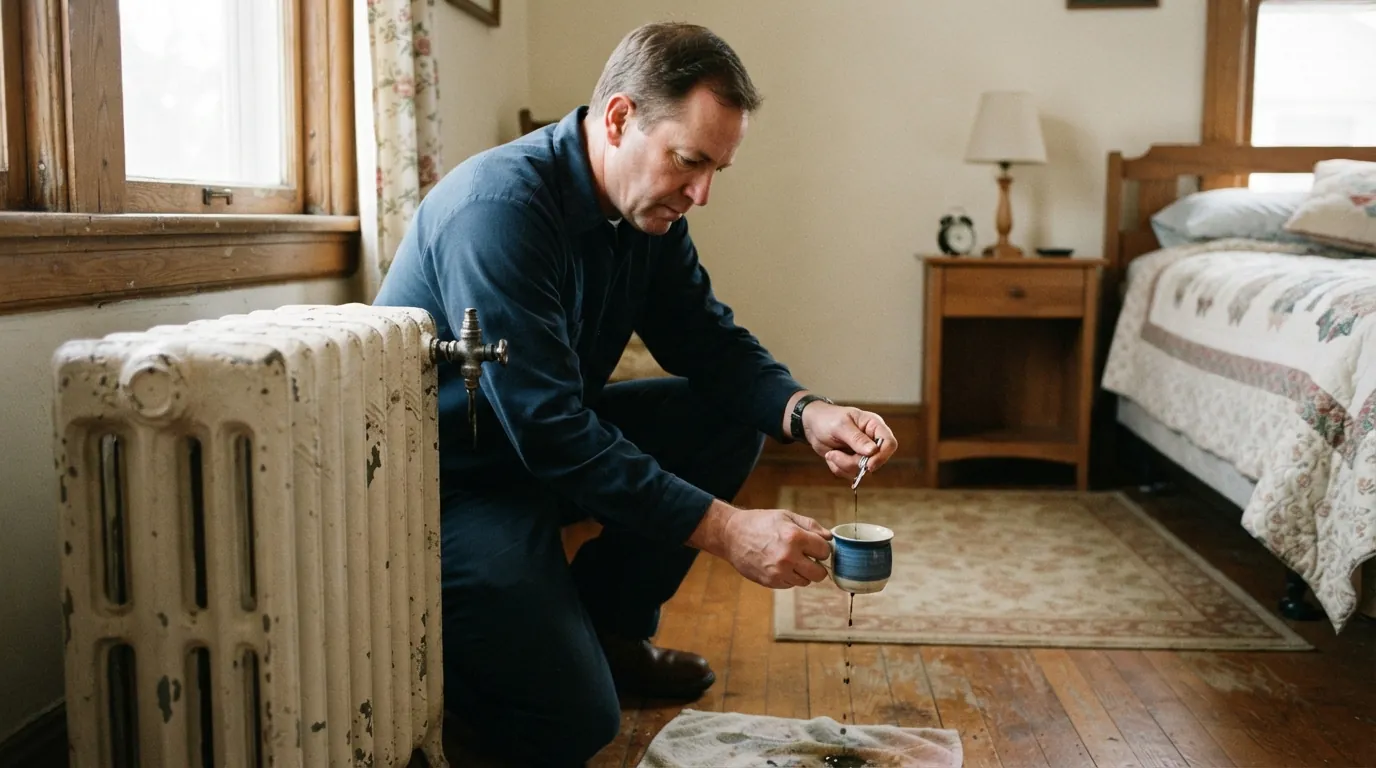
What the visit covers
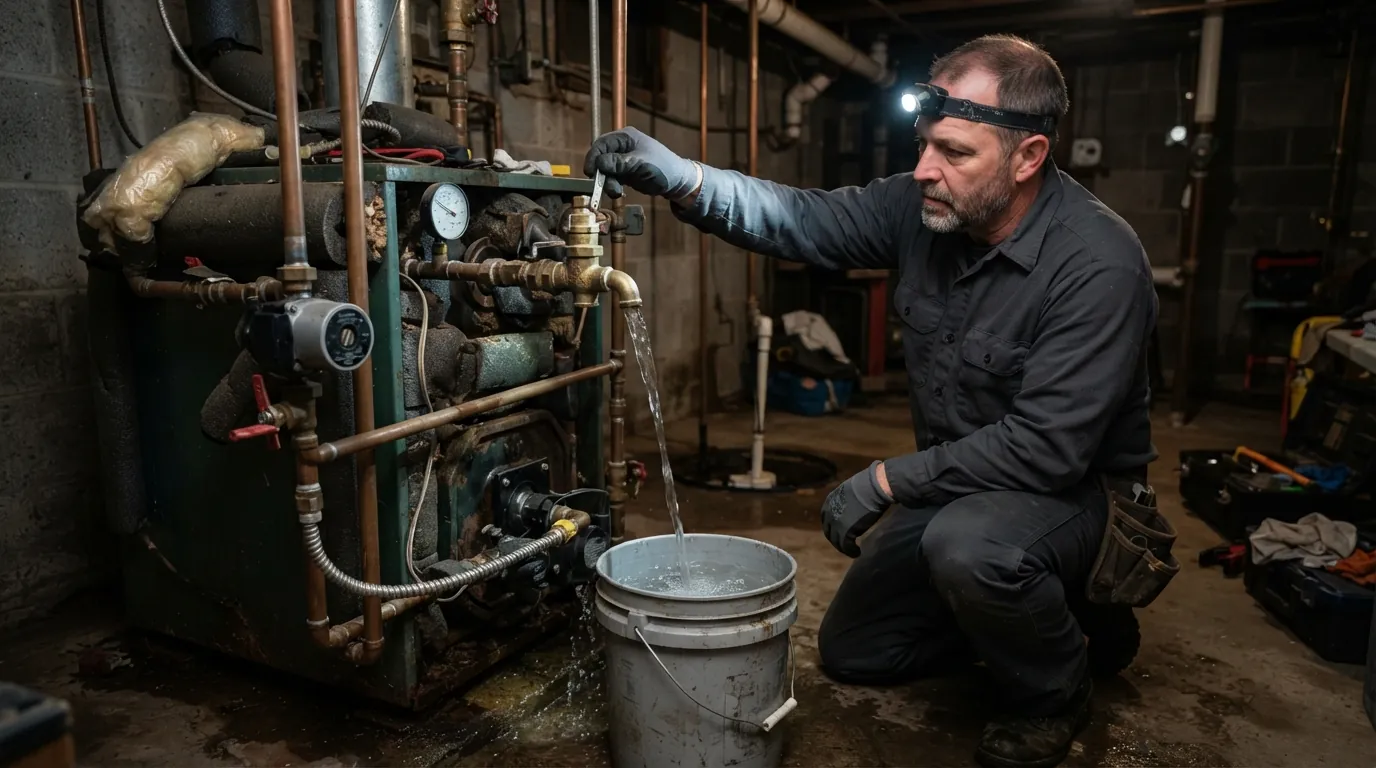
The three parts of the visit
We run the boiler and test the flue gas with a combustion analyzer for oxygen, carbon monoxide and flue temperature. On atmospheric boilers we clean the burners and check the pilot or ignition; on condensing boilers we inspect the burner, the heat exchanger and the condensate trap and neutralizer. High CO or unusual readings point to dirty burners, incorrect gas pressure or a venting problem. We record the numbers so next year's visit can spot a slow change before it becomes a failure.
System pressure should sit in a normal range with the boiler cold and rise modestly when hot. A big swing points to an expansion tank that has lost its air charge, and pressure that keeps creeping up points to a leaking fill valve. We check the tank's charge, confirm the fill valve holds, and look at the relief valve for weeping or mineral buildup. A relief valve that has not been tested in years is a safety device nobody knows still works.
Air works its way into hot water systems over the summer and collects at the top of radiators and in high points of the piping. It leaves radiators cold at the top, makes pipes gurgle and bang, and can starve circulator pumps. We bleed each radiator or baseboard vent, check automatic air vents and purge valves, and confirm every zone heats evenly once the boiler is running. Rooms that stay cold after bleeding point to a zone valve or flow problem.
Local conditions
Many Grand Rapids boilers still vent into a masonry chimney, sometimes one they share with a water heater, and an unlined or deteriorating chimney can cause poor draft and condensation damage. Type-B vent and chimney liners are manufactured right here in the city, so when a tune-up shows the venting needs correcting, the materials are close at hand and the fix is done before the heating season rather than after it.
From the call to a working system
Pressure, tank charge and relief valve inspected.
Combustion analyzer readings taken and recorded.
Burner, heat exchanger and condensate trap checked.
Radiators and vents purged; every zone checked.
Draft confirmed at the flue or PVC termination.
What you might notice
Air or pressure problems in the piping.
Expansion tank losing its air charge.
Pressure or a worn valve seat.
Air in the system or a zone valve fault.
Ignition, flame or venting trouble.
Pricing, explained
Tune-ups are priced per boiler. Repairs found during the visit are quoted separately so you can decide.
Condensing boilers have more components to inspect.
More zones and radiators take longer to bleed and check.
Chimney-vented boilers need a draft and flue inspection.
Maintenance plans bundle annual service.
Relief valves, air vents and tanks are quoted on the spot.
Questions people ask us
Once a year, before the heating season.
Most residential hot water systems run roughly 12 to 15 psi cold.
Air collects while the system sits idle over summer.
They have a condensate trap and neutralizer that need checking yearly.
A clean, correctly adjusted boiler burns more efficiently.
Yes, as part of the combustion analysis.
We explain it and quote the repair separately.
Call and describe your system; hot water boilers are most of our work.
From our guides: Carbon monoxide safety guide
More maintenance & inspection work
Call to book a tune-up before the cold arrives.
Reach us
Service office
3535 3 Mile Rd NW, Grand Rapids, MI 49534