Scheduled commercial HVAC maintenance in Grand Rapids
Filters, belts, coils and seasonal checks on a calendar you agree to, across one building or every site you manage, so breakdowns become the exception.
The short answer
Commercial HVAC maintenance in Grand Rapids is a set schedule of visits to each rooftop unit, split system and make-up air unit you own: filters and belts changed, coils cleaned, drains cleared, and heating and cooling tested before their seasons. The visit frequency is set by the building's use, from twice a year for an office to quarterly for a restaurant.
Fewer emergency calls
What a maintenance schedule covers
Commercial equipment runs long hours and loads up with dust, grease and cottonwood far faster than a house furnace. Most rooftop failures we are called for were visible months earlier as a cracked belt, a loaded filter or a pitted contactor.
A schedule catches those on a normal weekday instead of a Saturday night. When something fails anyway, commercial HVAC repair in Grand Rapids runs through the same phone line, and the unit notes from each visit make the diagnosis faster.
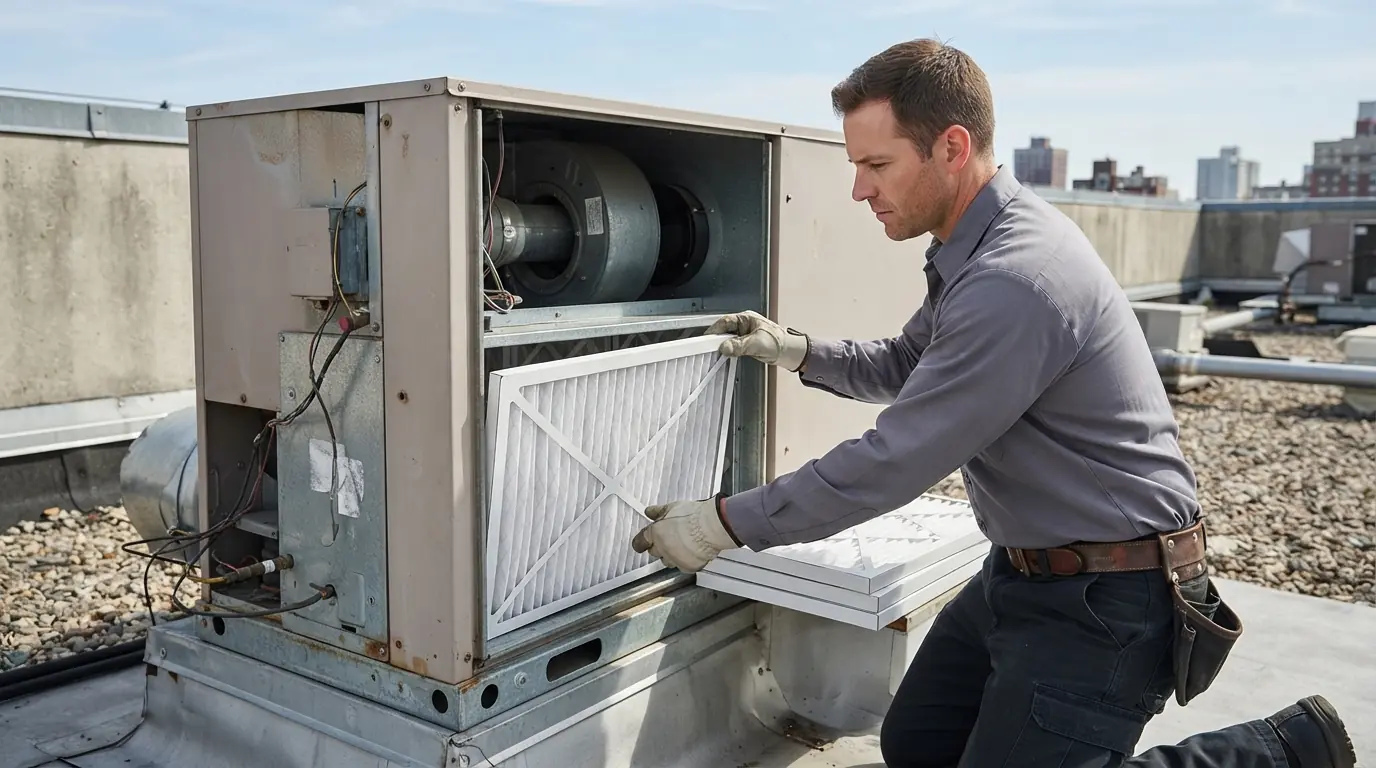
What the visit covers
What each maintenance visit covers
- Filters changed to the recorded size
- Belts inspected, tensioned or replaced
- Condenser and evaporator coils checked and cleaned
- Condensate drains and pans cleared
- Electrical connections and contactors inspected
- Heating section and flame checked before winter
- Written unit-by-unit report
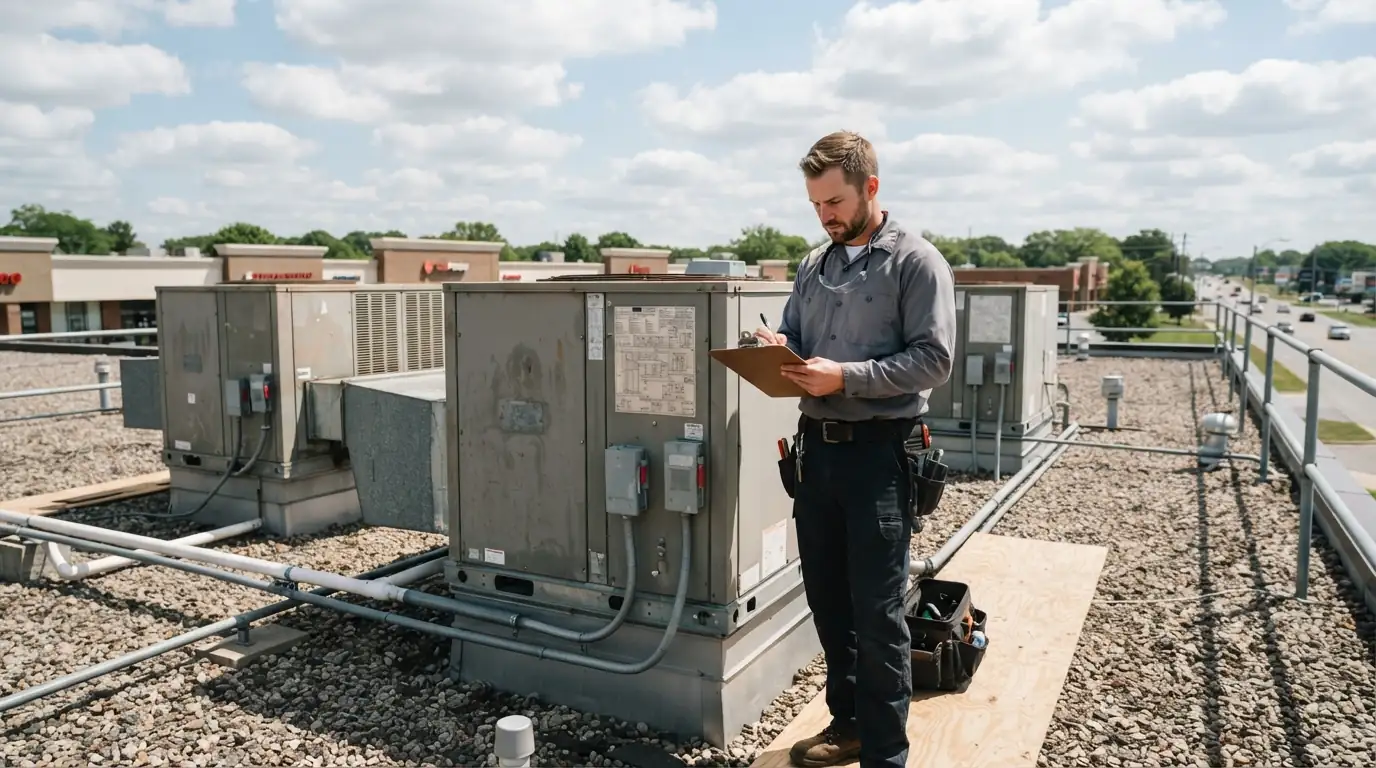
How we set up maintenance
Multi-site property plans
Property managers with several buildings need one schedule, one point of contact and one set of records. We list every unit by site, tag it, and record model, serial, filter size and belt size on the first visit, so later visits bring the right parts. Visits are grouped by location to cut travel time, and each site gets a short written report. When a unit is nearing the end of its life, it shows up in the report well before it becomes an emergency budget request.
Filter and belt programs
Filters and belts are the two wear items that cause the most avoidable failures. A loaded filter starves the coil of air and freezes it in summer or trips the high limit in winter; a worn belt slips, squeals and eventually snaps. A filter and belt program sets a change interval for each unit based on its environment, with shorter intervals near kitchens, on dusty sites and in cottonwood season. We carry the recorded sizes so each change is done in one trip.
Priority response agreements
Some businesses cannot wait in line when a unit fails: restaurants, medical offices, server rooms. A response agreement sets out how quickly you want a technician on site and how after-hours calls are handled, in writing, before anything breaks. The terms are agreed with you directly and depend on the sites and hours involved. Every call is answered 24/7 regardless, and the unit records from maintenance visits mean the technician arrives already knowing the equipment, its history and the parts it takes.
Local conditions
Low-rise commercial stock around the metro
Kentwood sits on M-6 and I-96, and only about half of its housing units are single-family homes; large apartment buildings and attached row homes make up most of the rest. Buildings like those typically carry several small packaged or split units rather than one central plant, each with its own filters, belts and drain. A maintenance schedule built unit by unit, with parts recorded on the first visit, is how those buildings avoid a string of July breakdowns.
From the call to a working system
How commercial maintenance starts
Walk the sites
Every unit listed, tagged and recorded with parts sizes.
Set the schedule
Visit frequency chosen per building and use.
Quote in writing
Per-unit, per-visit price and any response terms agreed.
Visit and report
Filters, belts, coils, drains and safeties checked each visit.
Plan ahead
Aging units flagged in reports before they become emergencies.
Summer loads start early on a roof.
Get every unit serviced before the first heat wave.
Pricing, explained
What commercial maintenance costs depends on
Maintenance is priced per unit and per visit, set by the equipment list and the schedule. You get the price in writing before the first visit.
Number of units
Each rooftop unit, split system and make-up air unit is counted.
Visit frequency
Quarterly costs more than twice-yearly, and prevents more.
Filters and belts
Parts are priced by the recorded sizes and change interval.
Access
Roof hatches, ladders and fall protection affect time per site.
Coil cleaning
Grease or cottonwood loading means more cleaning time.
Questions people ask us
Commercial maintenance questions
At least twice a year; quarterly for restaurants and high-dust sites.
Yes. One schedule and one report set covers every site.
Yes. Intervals are set per unit based on its environment.
Yes. Kitchen make-up air is included in restaurant schedules.
No, but it catches most wear before it becomes a failure.
Response terms are agreed in writing when a site needs them.
Yes. Each visit produces a short report per site.
Visits can be scheduled early or late to avoid disruption.
Tired of summer breakdowns?
Call to set up a maintenance schedule for your buildings.