Furnace tune-ups before the Grand Rapids heating season
A fall visit that tests the furnace the way it will run all winter: combustion readings, heat exchanger, ignition, safeties, blower and filter.
The short answer
A furnace tune-up in Grand Rapids tests combustion with an analyzer, inspects the heat exchanger, cleans the flame sensor and burners, checks the ignitor, pressure switch and limit, measures temperature rise and static pressure, and confirms the flue drafts. It takes about an hour and catches most parts that would otherwise fail in the first cold week.
Before the first cold snap
What a tune-up actually tests
A tune-up is not a quick vacuum and filter change. It is a set of measurements that show whether the furnace is burning cleanly, venting safely and moving the right amount of air, plus a look at the parts that wear out on schedule.
Many owners pair it with a spring cooling visit through a maintenance plan. If we find a failing part, the repair is quoted separately, and furnace repair explains the common ones.
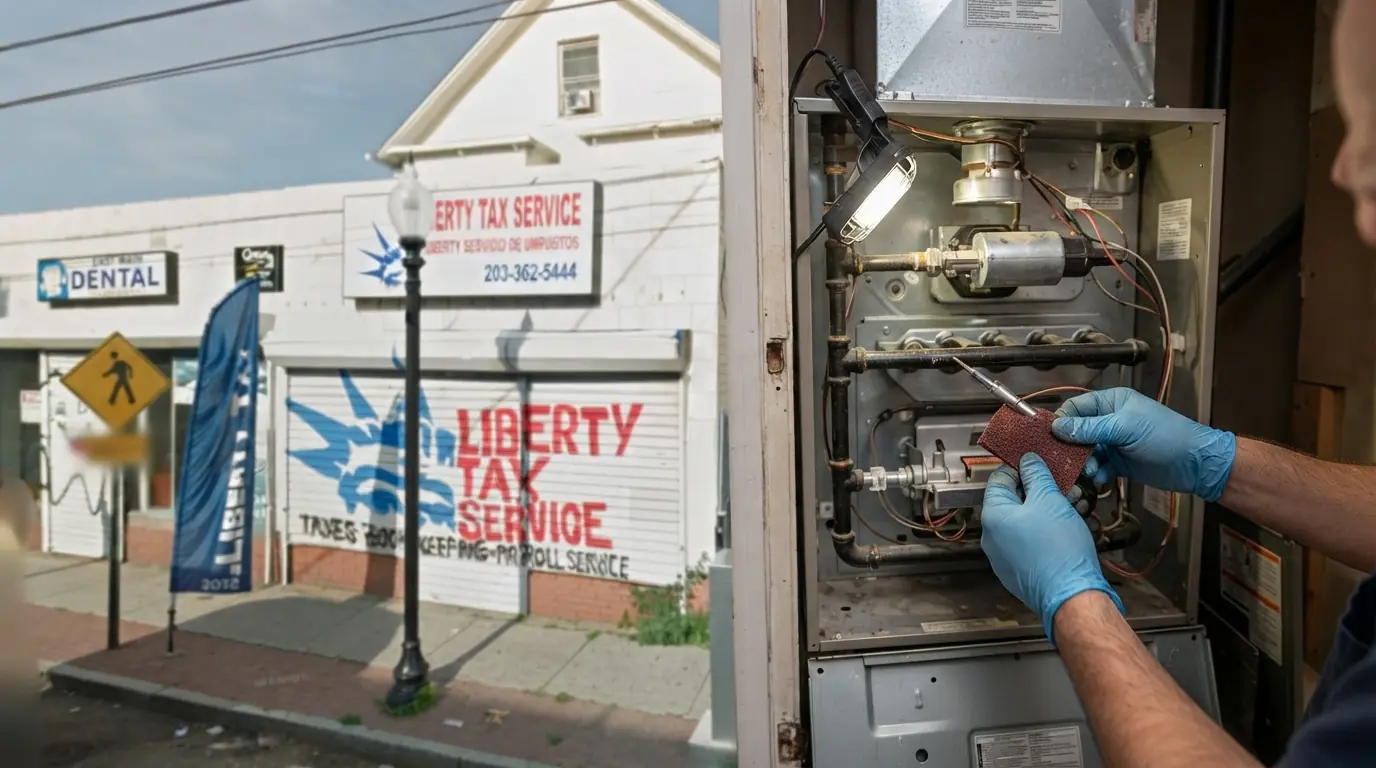
What the visit covers
What every furnace tune-up includes
- Combustion analysis with recorded readings
- Heat exchanger inspection
- Flame sensor and burners cleaned
- Ignitor, pressure switch and limits tested
- Temperature rise and static pressure measured
- Condensate drain and PVC vents checked
- Filter changed and thermostat tested
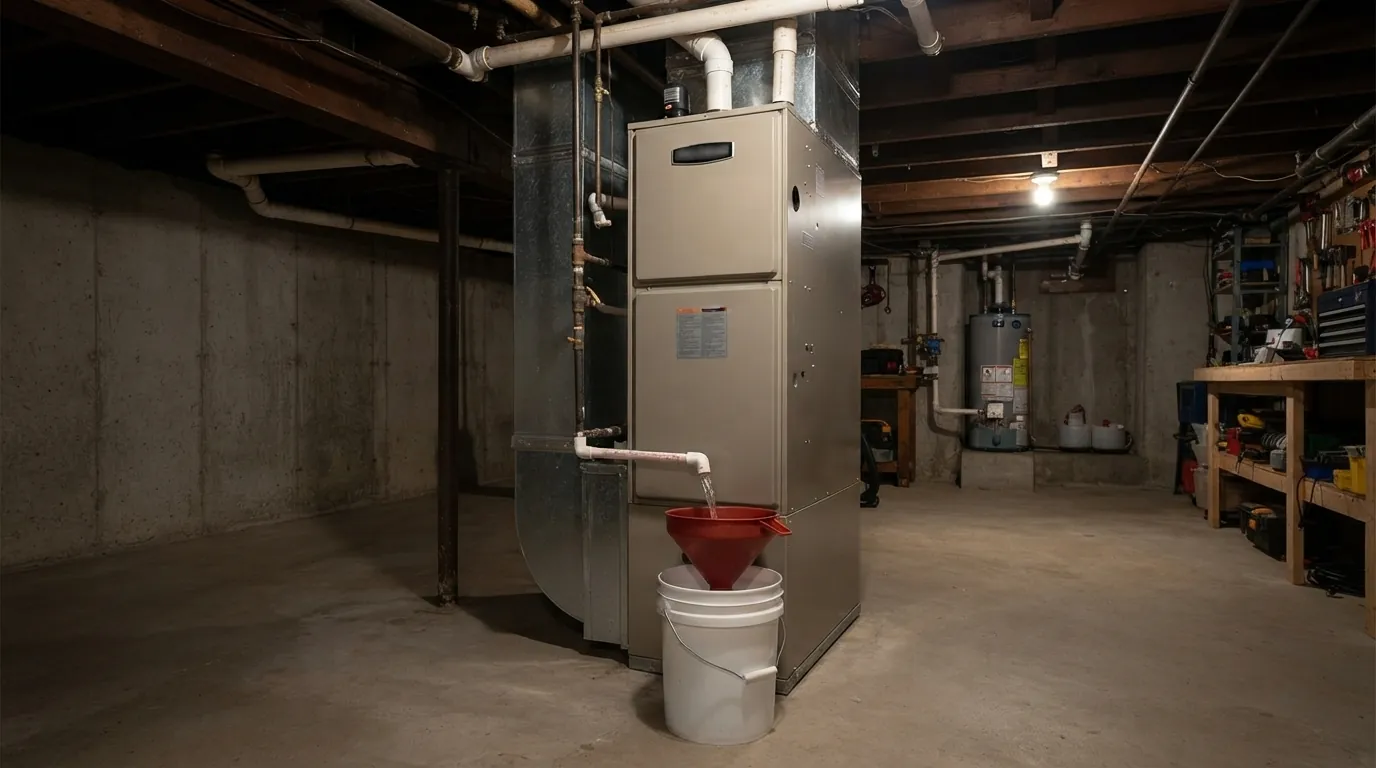
The three parts of the visit
Fall safety inspection
We check every safety device the furnace relies on: the high limit, the pressure switch, the rollout switches and the flame sensor. Each one is there to shut the furnace down when something goes wrong, and each can fail in a way that either shuts off heat for no reason or, worse, fails to shut it off when it should. We also check the gas connections for leaks, the condensate drain on high-efficiency furnaces, and the intake and exhaust terminations outside the house.
Combustion analysis
A combustion analyzer placed in the flue reads oxygen, carbon monoxide and flue temperature while the furnace runs. Those numbers show whether the burners are getting the right mix of gas and air. High CO or odd oxygen readings point to dirty burners, incorrect gas pressure or a venting problem. We adjust gas pressure to the manufacturer's specification where needed and record the readings so next year's visit has something to compare against, which is how slow changes in a furnace get noticed before they become failures.
Heat exchanger check
The heat exchanger separates combustion gas from the air you breathe, and it is the part whose failure matters most. We inspect it with a light or camera where the design allows, watch the flame when the blower starts, and compare supply-air CO readings. Most furnaces pass. When one does not, we show you exactly what we found, with photos or camera footage where we can get them, and explain the options, rather than recommending replacement on a guess or a rust spot.
Local conditions
Snow, vents and a long heating season
Grand Rapids winters are long and mostly cloudy, and snow covers the ground on more than half of winter days, with about 77 inches in a normal year. High-efficiency furnaces vent through PVC pipes low on an outside wall, and a drift or ice buildup there shuts the furnace down. Part of every fall tune-up is checking that those terminations sit well clear of the likely snow line.
From the call to a working system
How a tune-up visit runs
Ask about the furnace
Noises, short cycles or uneven rooms since last winter.
Test in operation
Combustion, temperature rise and static pressure measured.
Clean and inspect
Burners, flame sensor, blower compartment and drain.
Check the safeties
Limits, pressure switch, rollouts and gas connections.
Written results
Readings recorded and any concerns explained.
Before you pick up a screwdriver
What you can do between tune-ups
Owners can handle the routine items. Anything involving gas, combustion or safeties needs testing equipment.
| Safe for a homeowner | Leave it to a technician | |
|---|---|---|
| Filter | Change it every one to three months | Upgrading to a media cabinet |
| Outside vents | Keep snow and ice clear | Relocating vents that keep drifting in |
| Registers | Keep them open and unblocked | Balancing airflow between rooms |
| Burners and flame | Look for a steady blue flame | Adjusting gas pressure and combustion |
Pricing, explained
What a tune-up costs depends on
Tune-ups are priced per furnace. Any repair we find is quoted separately so you can decide whether to do it now or later.
Number of furnaces
Each furnace in the house is tested separately.
Furnace type
High-efficiency units have condensate and venting to check.
Filter
Standard filters are included; media filters are priced by size.
Plan membership
A maintenance plan bundles the fall and spring visits.
Repairs found
Parts such as ignitors or sensors are quoted on the spot.
Questions people ask us
Furnace tune-up questions
Once a year, ideally in early fall before steady use.
About an hour for a typical furnace.
A standard filter change is part of the visit.
No. We report what the readings show.
A clean, correctly adjusted furnace burns fuel more efficiently.
Yes, and some manufacturers expect annual service.
We explain it and quote the repair separately.
Yes. CO readings are part of the combustion test.
From our guides: Signs a furnace is failing guide
Want the furnace checked before it gets cold?
Call to book a tune-up while there is still room on the calendar.