Stuffy rooms
Possible high CO2 and low ventilation.
Before buying a purifier or a dehumidifier, measure the problem. We test the air in your home and explain which fix will actually help.
The short answer
Indoor air quality testing in Grand Rapids measures humidity, temperature, carbon dioxide, fine particles and volatile organic compounds room by room, and checks combustion appliances for carbon monoxide and safe venting. The readings show whether the fix is ventilation, humidity control, filtration or a repair, so you spend money on the right equipment.
Measure first
Stuffy rooms usually mean high carbon dioxide and too little fresh air. Fogged windows and musty basements point to humidity. Dust and allergy flare-ups point to particles and filtration. Each needs a different fix, and the readings tell you which one you have.
Common fixes include fresh-air ventilation, dehumidifiers and better filtration. Combustion problems are handled on carbon monoxide inspections.
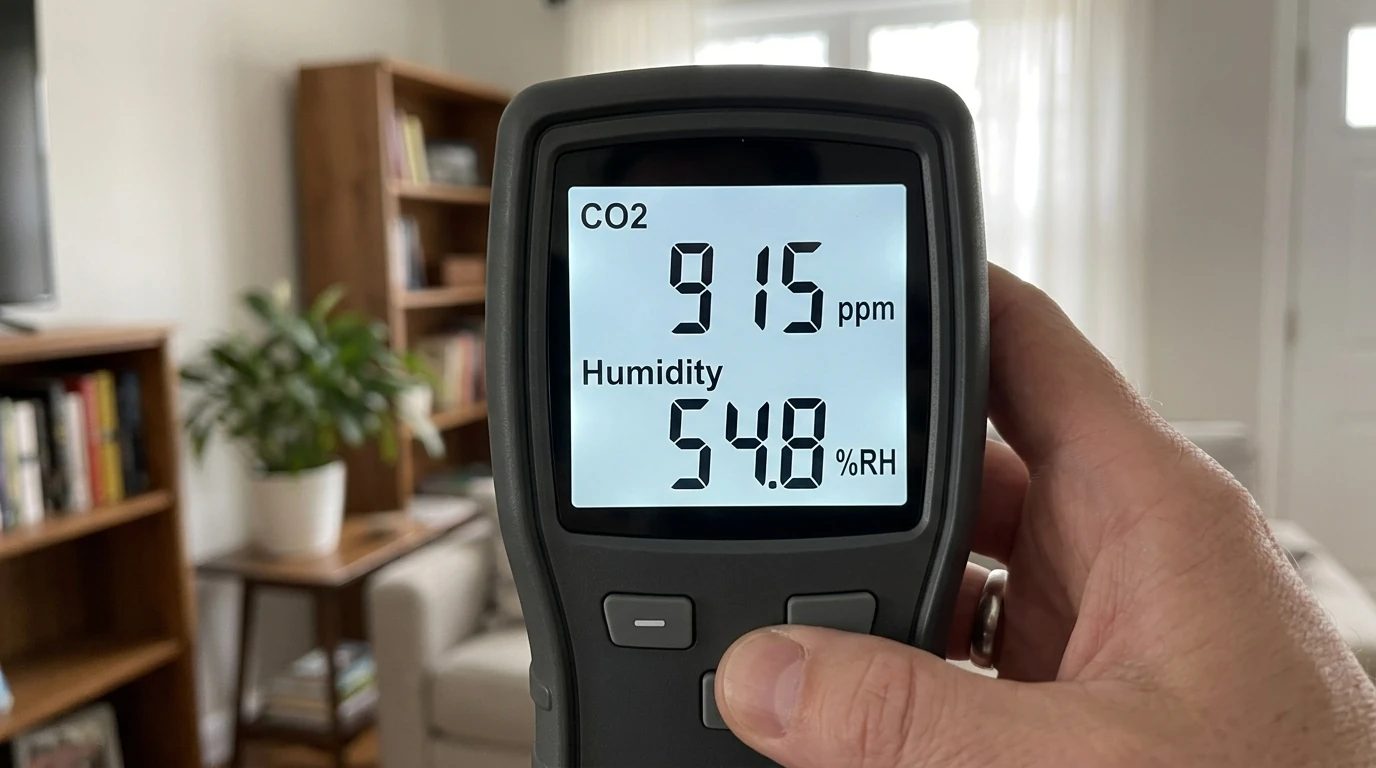
What the visit covers
What we test
We measure relative humidity and temperature in the main rooms, the basement and any problem areas, and log carbon dioxide as an indicator of how much fresh air the house gets. High winter CO2 in bedrooms and living areas points to a ventilation shortfall, common in newer, tight homes. Humidity readings show whether a basement needs a dehumidifier in summer or the house needs a humidifier in winter, and whether window condensation is a humidity or insulation problem. Readings are taken over enough time to see the pattern, not a single snapshot.
Fine particle counts show how much dust, smoke and allergen-sized material the air carries and whether the furnace filter is doing its job. We compare readings with the system running and off, and check the filter, the filter rack and the return ducts for gaps that let air bypass the filter. VOC readings flag off-gassing from new furnishings, finishes, stored chemicals or an attached garage, which usually calls for ventilation and source control rather than a purifier. We explain which sources are worth removing first.
Every gas appliance in the home is checked for carbon monoxide at the appliance and in the living space, and for safe draft in the venting. We look for backdrafting water heaters, cracked heat exchangers and blocked vents, and check that carbon monoxide alarms are working and in the right places. Combustion problems are always handled first, before any comfort or filtration recommendation. If we find a dangerous reading, the appliance is shut off and the fix explained before we go any further.
Local conditions
Around Grand Rapids, a lot of the newest housing is tight construction: Kentwood alone grew from 48,698 residents in 2010 to 54,295 in 2020, much of it in newer homes and apartments. Tight homes kept closed through a long heating season build up moisture, carbon dioxide and indoor pollutants unless ventilation is designed in, which is why testing often points to fresh air first.
From the call to a working system
Stuffiness, dust, odors, condensation or allergies.
Humidity, CO2, particles and VOCs room by room.
CO and draft at every gas appliance.
Filter, filter rack and returns checked.
Readings reviewed with a plain recommendation.
What you might notice
Possible high CO2 and low ventilation.
Indoor humidity too high.
Summer humidity problem.
Filter bypass or poor filtration.
Leave and call; possible CO problem.
Pricing, explained
Testing is priced per visit, based on the size of the home and the number of areas tested. Any equipment we recommend is quoted separately.
More rooms and levels mean more readings.
Basements, bedrooms and additions tested separately.
Each gas appliance gets a combustion check.
Filter rack and return gaps checked.
Optional retest after changes are made.
Questions people ask us
Often high CO2 from too little fresh air in a tight home.
Only for particles; testing shows whether that is the problem.
Indoor humidity too high for the outdoor temperature.
Yes, at every gas appliance and in the living space.
It shows whether humidity, ventilation or a duct problem is behind it.
Usually one to two hours.
Yes, to confirm the fix worked.
Only what the readings show you need.
From our guides: Guide: humidifier or dehumidifier
More air quality & ducts work
Call and we will measure it first.
Reach us
Service office
3535 3 Mile Rd NW, Grand Rapids, MI 49534