Loads take two cycles
Air cannot leave fast enough to carry moisture out.
A clogged dryer vent makes every load take longer and runs the dryer hot. We clean the full run from the dryer to the outside hood and fix vents that were installed too long or too flexible.
The short answer
Dryer vent cleaning in Grand Rapids means disconnecting the dryer, running a rotary brush and vacuum through the entire vent line to the outside hood, clearing the hood damper, and checking airflow at the termination afterward. Clogged vents are a common cause of long dry times and a well-known dryer fire risk.
Lint goes somewhere
The lint screen catches most lint, not all of it. The rest coats the inside of the vent line, collects at every bend and piles up behind the outside hood flap. As the line narrows, the dryer runs longer and hotter to get the same load dry, and the lint in the line is exactly the fuel a dryer fire needs.
Vents are cleaned separately from ducts; if the heating ducts need attention too, see duct cleaning work.
What we clean and fix
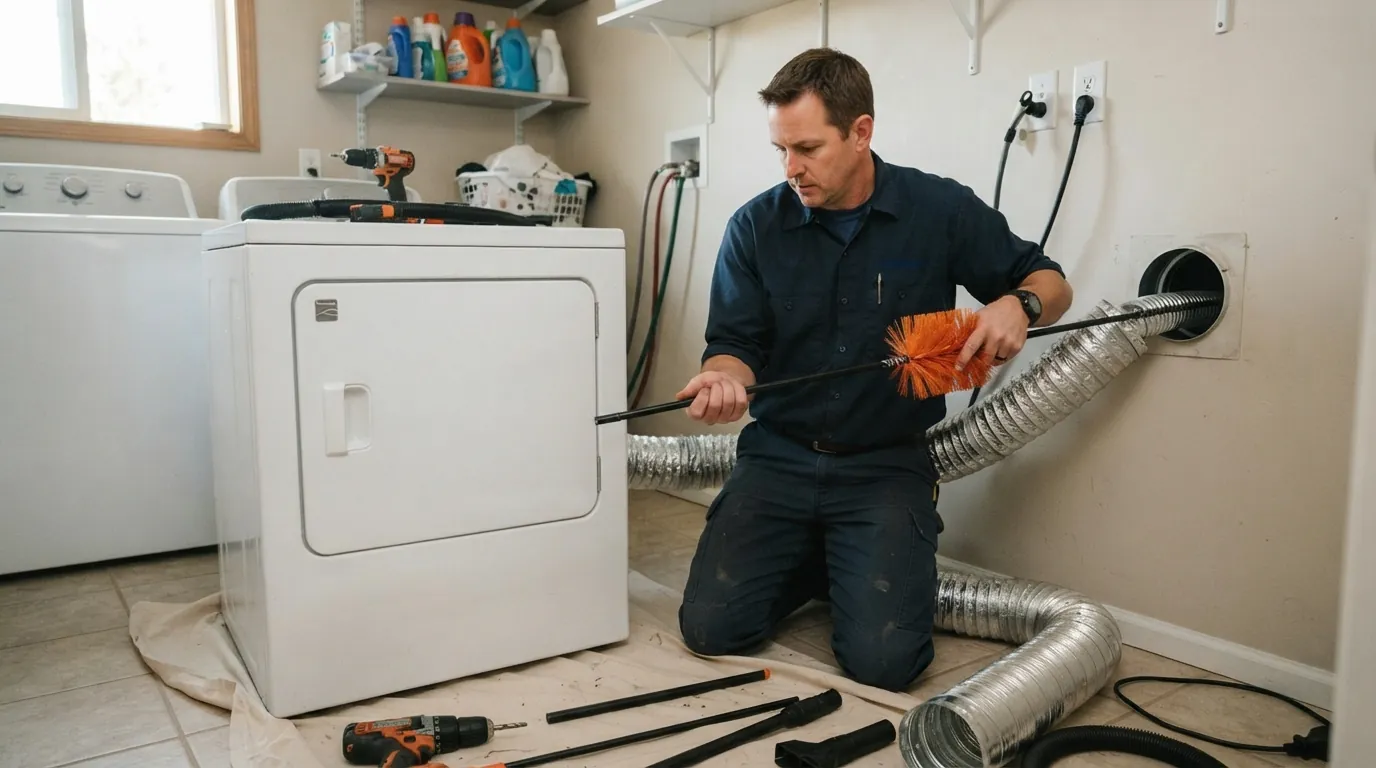
We pull the dryer out, disconnect the transition hose and brush the vent line from the inside while a vacuum collects the lint at the other end. The outside hood is opened and cleared, since the flap is often held shut by packed lint and in winter by frozen condensation. We also clean the transition hose or replace it with a semi-rigid metal connector if the old one is plastic or foil and crushed behind the dryer. Airflow at the hood is checked before we push the dryer back.
Every foot of vent and every elbow adds resistance, and dryer manufacturers set a maximum equivalent length for their vents. Basement laundry rooms in older houses often run the vent across the ceiling, up and out, well past that limit. A long run clogs faster and dries slowly even when clean. We measure the equivalent length and suggest a shorter route, smooth rigid pipe in place of flex, or a booster fan listed for dryer use when rerouting is not practical.
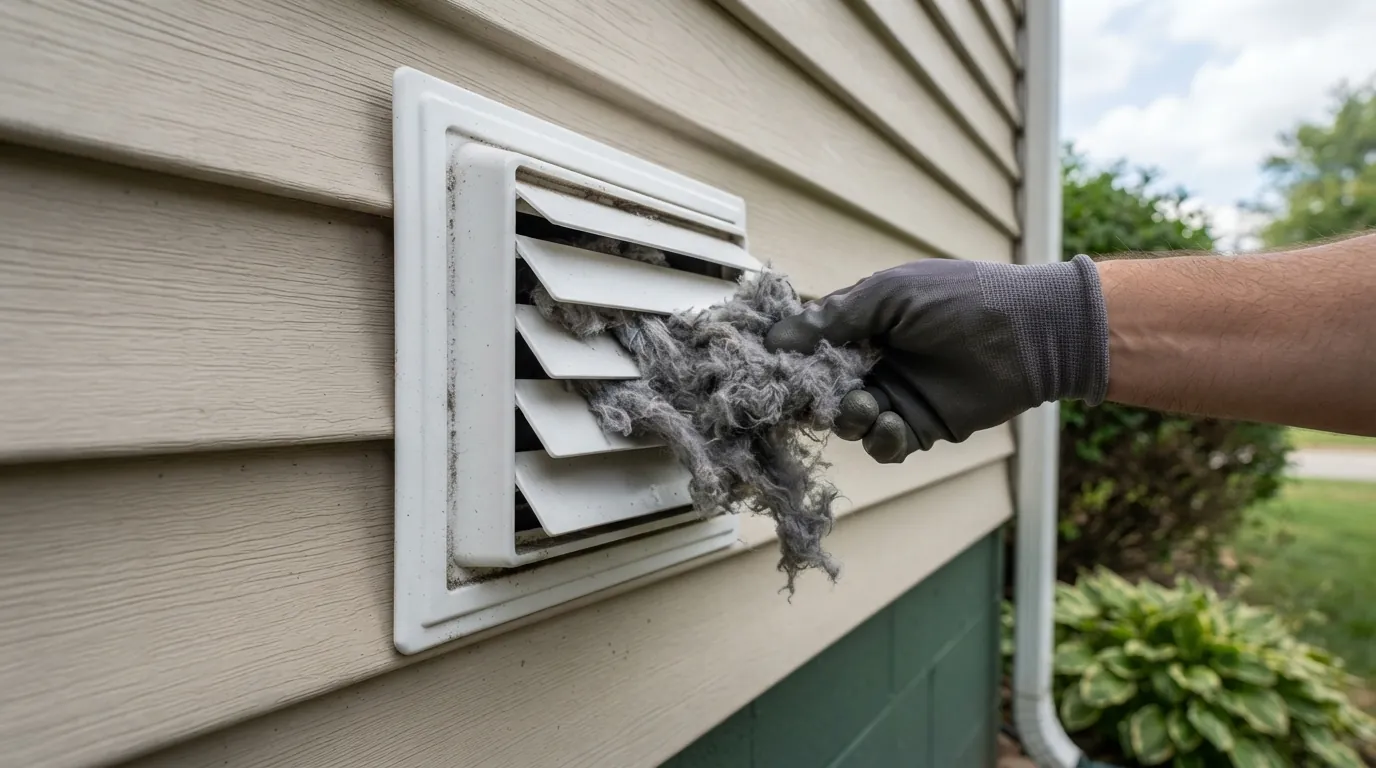
The outside hood keeps weather and animals out and lets exhaust escape. Hoods with screens are a problem because lint mats on the screen and blocks the vent completely, which is why screens are not allowed on dryer terminations. Birds nesting in an open hood cause the same blockage. We replace damaged hoods with a louvered or single-flap design, add a listed bird guard that does not trap lint, and seal the hood to the siding so water stays out of the wall.
Local conditions
Grand Rapids averages about 77 inches of snow a year, with snow on the ground for more than half of winter days. Dryer vent hoods sit low on the side of the house, and warm, damp exhaust freezes on the flap and the snow around it, which can hold the damper shut. Checking and clearing the hood in late fall, and keeping snow off it through the winter, keeps the whole vent line from backing up with lint.
From the call to a working system
Dry times, heat in the laundry room and hood condition.
Transition hose removed and inspected.
Full run cleaned from inside to the outside hood.
Flap freed and termination cleaned; screens removed.
Dryer reconnected and exhaust flow checked at the hood.
What you might notice
Air cannot leave fast enough to carry moisture out.
Heat is building up in the cabinet.
Lint near the heater is overheating.
Lint or ice is holding it shut.
Lint escaping past a blocked termination.
Before you pick up a screwdriver
Owners can keep the easy parts clean. The full vent run needs brushes and a vacuum sized for it.
| Safe for a homeowner | Leave it to a technician | |
|---|---|---|
| Lint screen | Clean it every load | Cleaning the lint trap housing |
| Outside hood | Clear snow and visible lint | Cleaning the line behind it |
| Transition hose | Keep it uncrushed behind the dryer | Replacing flex with rigid connectors |
| Slow drying | Check the hood flap opens | Measuring and shortening long runs |
Pricing, explained
Cleaning is priced by the length and route of the vent. Rerouting, new hoods or new pipe are quoted separately.
Longer runs take more time to brush and vacuum.
Roof terminations and runs through finished ceilings are harder.
Packed lint or a nest takes extra passes.
A damaged or screened hood is replaced with a proper one.
Shortening an overlong run is quoted as a separate job.
Questions people ask us
Once a year in most homes, more often for large families.
A clogged vent is the most common cause.
Yes. Lint in the vent is flammable and the dryer runs hotter.
A semi-rigid metal connector is safer and lasts longer.
No. Screens trap lint and block the vent.
Yes, though they take more time and care.
Yes. Manufacturers set a maximum length that includes elbows.
We handle the vent; appliance repair is a separate trade.
More air quality & ducts work
Call and we will clean the vent from the dryer to the hood.
Reach us
Service office
3535 3 Mile Rd NW, Grand Rapids, MI 49534