Gas fireplace insert installation in Grand Rapids
A sealed, direct-vent gas insert turns a drafty wood fireplace into a real heat source, with a flip of a switch instead of a pile of wood and an open damper.
The short answer
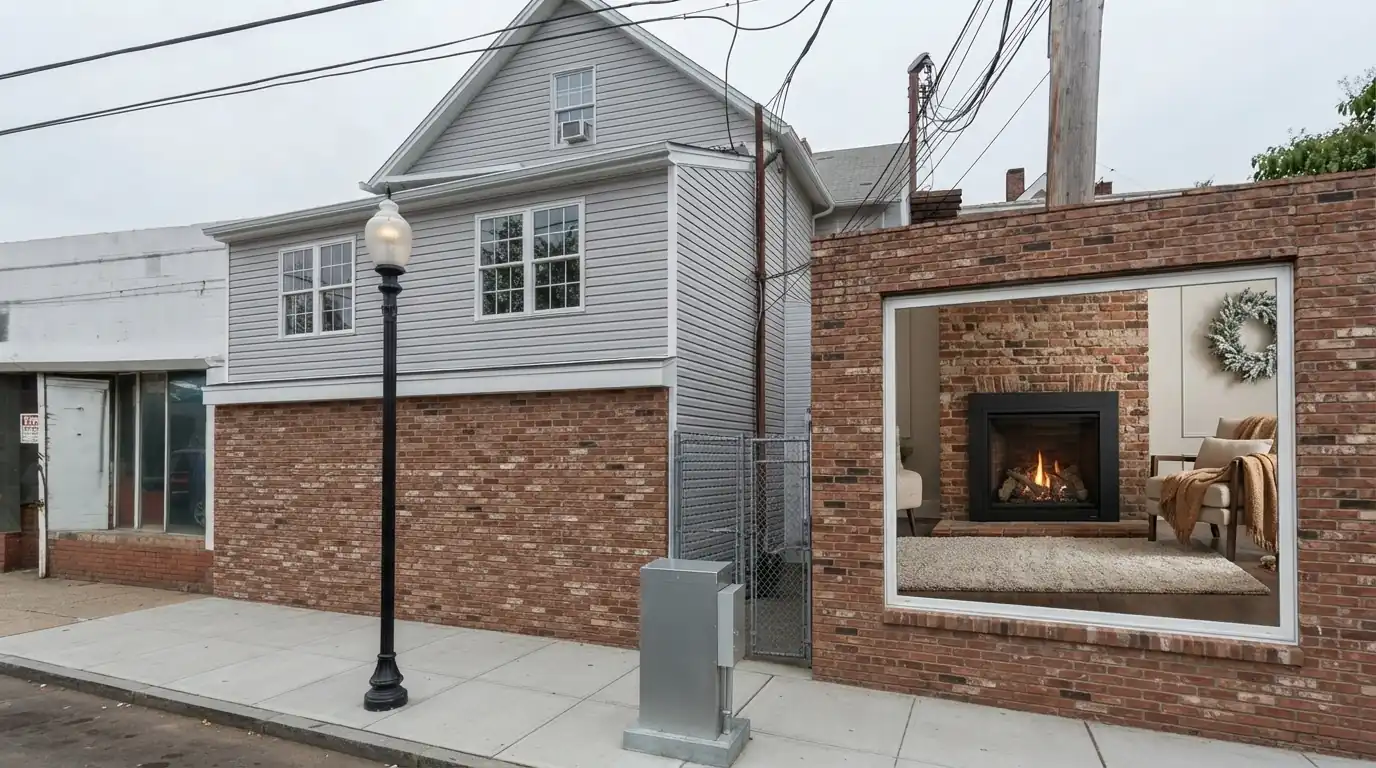
Gas fireplace insert installation in Grand Rapids means fitting a sealed firebox into your existing masonry fireplace, running a two-pipe liner up the chimney for combustion air and exhaust, connecting a gas line with a shutoff, and testing combustion. An insert heats the room far more effectively than an open wood fireplace, which usually loses more heat up the chimney than it gives off.
From drafty to useful
Why an insert beats an open fireplace
An open wood fireplace pulls warm room air up the chimney along with the smoke, so on a cold night it can cool the rest of the house. A direct-vent insert seals the firebox with glass, draws combustion air from outside through its liner and sends exhaust back out, so the room air stays in the room.
Existing gas fireplaces and log sets are serviced under gas fireplace service. If the house needs a new gas branch for the insert, that is part of our gas line installation page.
Pricing, explained
What an insert install costs depends on
Pricing depends on the insert model, the chimney height and condition, and how far the gas line has to run. We quote after measuring the fireplace and inspecting the chimney.
Insert size and model
Firebox size, heat output and features vary.
Chimney height
Taller chimneys need longer liners.
Chimney condition
Repairs or cleaning come before the liner goes in.
Gas line
The run from existing piping to the fireplace.
Controls
Remote, thermostat and blower options.
Choosing between options
Direct-vent insert or vented log set
Both burn gas in your fireplace; only one heats the room well.
| Direct-vent insert | Vented gas log set | |
|---|---|---|
| Heats the room | Yes, effectively | Mostly decorative |
| Firebox | Sealed behind glass | Open, damper must stay open |
| Venting | Two-pipe liner | Existing chimney |
| Relative cost | Higher | Lower |
What an insert install involves
Direct-vent fireplace inserts
Direct-vent inserts are sealed from the room and draw combustion air through a dedicated pipe, which makes them the safest and most efficient choice for a masonry fireplace. We measure the firebox opening, depth and chimney height to choose a model that fits, then set the insert, attach the surround panels and connect the controls. Most inserts offer a wall switch, remote or thermostat control, and some include a blower that pushes warm air into the room faster, which makes a noticeable difference in a large living room.
Chimney liners for inserts
An insert does not vent into the open masonry flue. It needs a liner, usually two flexible aluminum pipes, one bringing outside air down and one carrying exhaust up, connected to a termination cap at the top of the chimney. We inspect the chimney first for cracks, loose mortar and obstructions, since the liner relies on the chimney as a chase. The liner length and diameter are set by the manufacturer's venting rules, and the cap is fitted to keep out rain, snow and animals.
Wood-to-gas conversions
Converting from wood to gas starts with cleaning the fireplace and chimney of creosote and ash, then removing or fixing the damper so the liner can pass through. A gas line is run to the fireplace with a shutoff valve inside the opening or nearby. Some homeowners choose a vented log set instead of an insert for the look of an open fire; it costs less but heats far less effectively. We explain both before you choose, including how much heat each one actually puts into the room on a cold night.
Local conditions
Masonry fireplaces in older homes
Many older Grand Rapids houses were built with a masonry wood fireplace that now sits unused most of the winter because it lets more heat out than it puts in. An insert makes that fireplace a useful heat source again. Older chimneys can have cracked flue tiles or missing caps, so the chimney inspection comes before any insert is chosen.
From the call to a working system
How an insert install runs
Measure and inspect
Firebox measured; chimney checked for cracks and blockages.
Choose the insert
Model sized to the opening and the room.
Line the chimney
Liner run to a termination cap at the top.
Set and connect
Insert placed, gas connected, surround fitted.
Test
Combustion, venting and controls checked before we leave.
Timing
How long the install takes
With a sound chimney and a gas line nearby, most inserts are installed in one day, from liner to first fire.
Chimney repairs, cleaning or a long gas run are scheduled first, so the insert day stays short.
Questions people ask us
Fireplace insert questions
Yes. A sealed insert heats far better than an open fireplace.
Yes. Direct-vent inserts vent through a dedicated liner.
Most masonry fireplaces, if the opening and chimney fit the model.
Logs look like an open fire; inserts heat much more effectively.
Many light without power; blowers and some controls need an outlet.
Usually one day if the chimney is sound.
Yes. Gas appliance installs are permitted and inspected.
Yes, through yearly gas fireplace service.
Want the fireplace to actually heat the room?
Call and we will measure it for an insert.