Whole-house fan installation in Grand Rapids
On a Michigan summer evening the air outside is often cooler than the air inside. A whole-house fan pulls that cool air through the house and pushes the heat out through the attic.
The short answer
A whole-house fan in Grand Rapids is a ceiling-mounted fan that draws cool evening air in through open windows and exhausts warm air through the attic, cooling the house for a fraction of what air conditioning costs. Modern units are insulated and sealed when off, sized to the house's volume, and need enough attic venting to let the air out.
Cooling with night air
Why whole-house fans suit Michigan summers
Grand Rapids summers have warm afternoons but usually cool nights. A whole-house fan takes advantage of that, flushing the day's heat out of the house in minutes once the outside temperature drops, so the air conditioner can stay off for much of the season.
It works alongside central air rather than replacing it; see AC tune-ups. Attic ventilation matters for both, and humidity control is covered on whole-house dehumidifiers.
Pricing, explained
What a whole-house fan costs depends on
Pricing depends on the fan size, the ceiling and attic access, and any attic venting the fan needs.
Fan size
Sized to the volume of the house.
Ceiling framing
Opening cut and framed between joists.
Attic venting
Added vents if the attic cannot exhaust the air.
Insulated doors
Sealed, insulated units cost more and save more.
Controls
Timer, speed and AC interlock.
Choosing between options
Whole-house fan or attic fan
The names are similar; the jobs are not.
| Whole-house fan | Attic fan | |
|---|---|---|
| What it cools | The living space | The attic only |
| How it works | Pulls outdoor air through the house | Exhausts attic heat |
| Windows | Opened while running | Not involved |
| Best for | Cool evenings and nights | Hot attics over finished rooms |
What a proper install includes
Attic fan sizing and installation
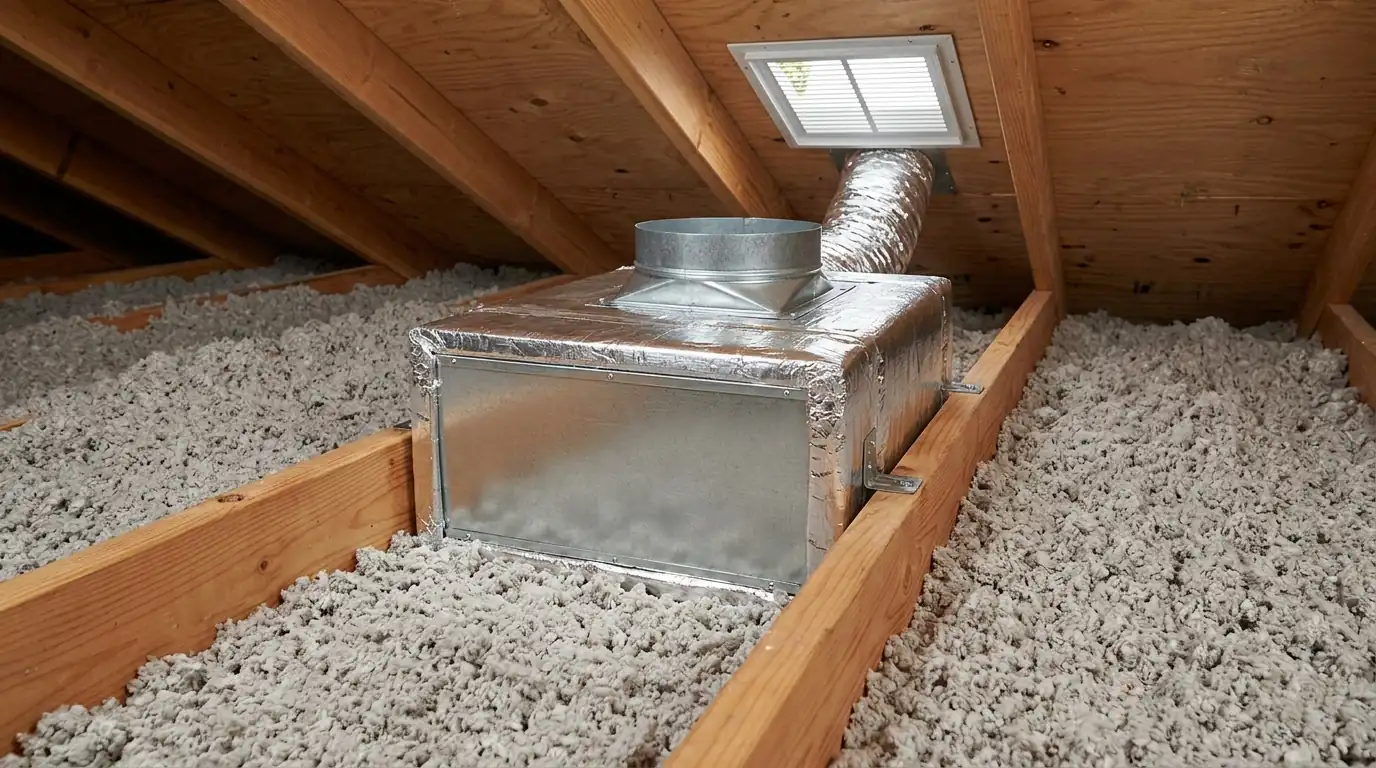
A whole-house fan is sized by the volume of the living space, so the fan can change the air in the house quickly without being loud. We pick a central ceiling location, usually a hallway, cut and frame the opening between joists, and mount the fan so it is isolated from the framing to keep vibration and noise out of the house. The attic needs enough net vent area to let the moved air escape, and we check soffit and roof vents before recommending a size.
Insulated, sealed fan doors
Older whole-house fans left an uninsulated hole in the ceiling with louvers that leaked heat all winter. Modern units close with insulated, gasketed doors when the fan is off, so the ceiling stays sealed through the heating season. We seal the framed opening, insulate around it in the attic and set up controls with a timer, so the fan shuts itself off overnight once the house has cooled. A sealed opening also keeps attic dust and insulation from drifting into the hallway, and the doors close on their own as soon as the fan stops.
Pairing a fan with central air
A whole-house fan does not replace air conditioning on hot, humid days, but it covers many of the mild days and evenings in between. We set up the controls so the fan and the air conditioner never run at the same time, and explain the simple routine: open windows and run the fan in the evening and early morning, close up and switch to the AC when the afternoon heat and humidity climb. Used this way, the air conditioner runs fewer hours, the house cools faster in the evening and the upstairs bedrooms stop holding the day's heat.
Local conditions
Warm days, cool nights
Grand Rapids summers are made for night cooling: the 1991-2020 normals for mid-July put the average high near 83 degrees and the average low near 62 degrees. That 20-degree swing from afternoon to night is exactly what a whole-house fan uses, flushing the heat out of the house once the evening air drops below the indoor temperature and letting the air conditioner rest.
From the call to a working system
How a fan install runs
Check the attic
Vent area, framing and access checked.
Size the fan
Matched to the house volume.
Frame and mount
Opening framed and fan isolated.
Seal and insulate
Doors gasketed and opening insulated.
Set controls
Timer and AC interlock set up.
Timing
How long the install takes
Most whole-house fans are installed in one day, including framing, sealing and controls.
If the attic needs more venting, that work is usually done the same day.
Questions people ask us
Whole-house fan questions
No, but it covers many mild days and evenings.
Modern units mounted on isolation are quiet.
Not with insulated, sealed doors.
Sometimes; we check the vent area first.
When outside air is cooler than inside, with windows open.
No; we set up controls so they never run together.
No. An attic fan only vents the attic.
Usually one day.
Want cheaper summer cooling?
Call and we will check your attic for a whole-house fan.