Media filters and better air filtration for Grand Rapids homes
The one-inch filter slot on most furnaces is a compromise. A deeper media filter catches more of what you breathe and restricts the furnace less.
The short answer
Air filtration upgrades in Grand Rapids usually mean replacing the one-inch filter slot with a four or five inch media filter cabinet between the return duct and the furnace. The deeper pleated filter catches far more fine dust and allergens, lasts six to twelve months, and restricts airflow less than a high-MERV one-inch filter, which protects the blower and coil.
Filters protect people and equipment
Why a thicker filter is usually better
A furnace filter has two jobs: keeping dust off the blower and coil, and cleaning the air you breathe. Thin high-rated filters do the second job at the expense of the first, choking airflow until the coil freezes or the high limit trips.
A media cabinet solves both. For smoke or very fine particles, see electronic air cleaners and UV lights. If the ducts themselves are dirty, our duct cleaning page comes first.
What we cover
Media filter upgrades
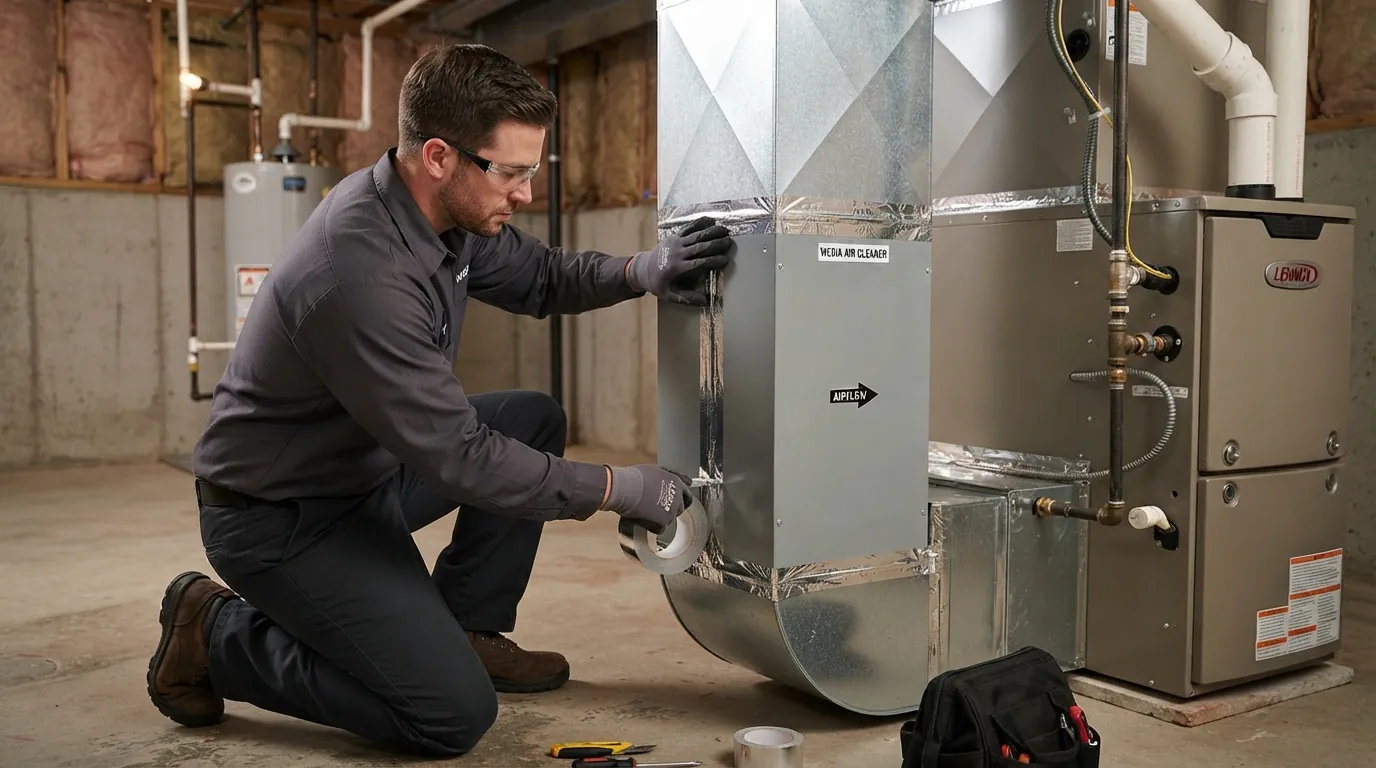
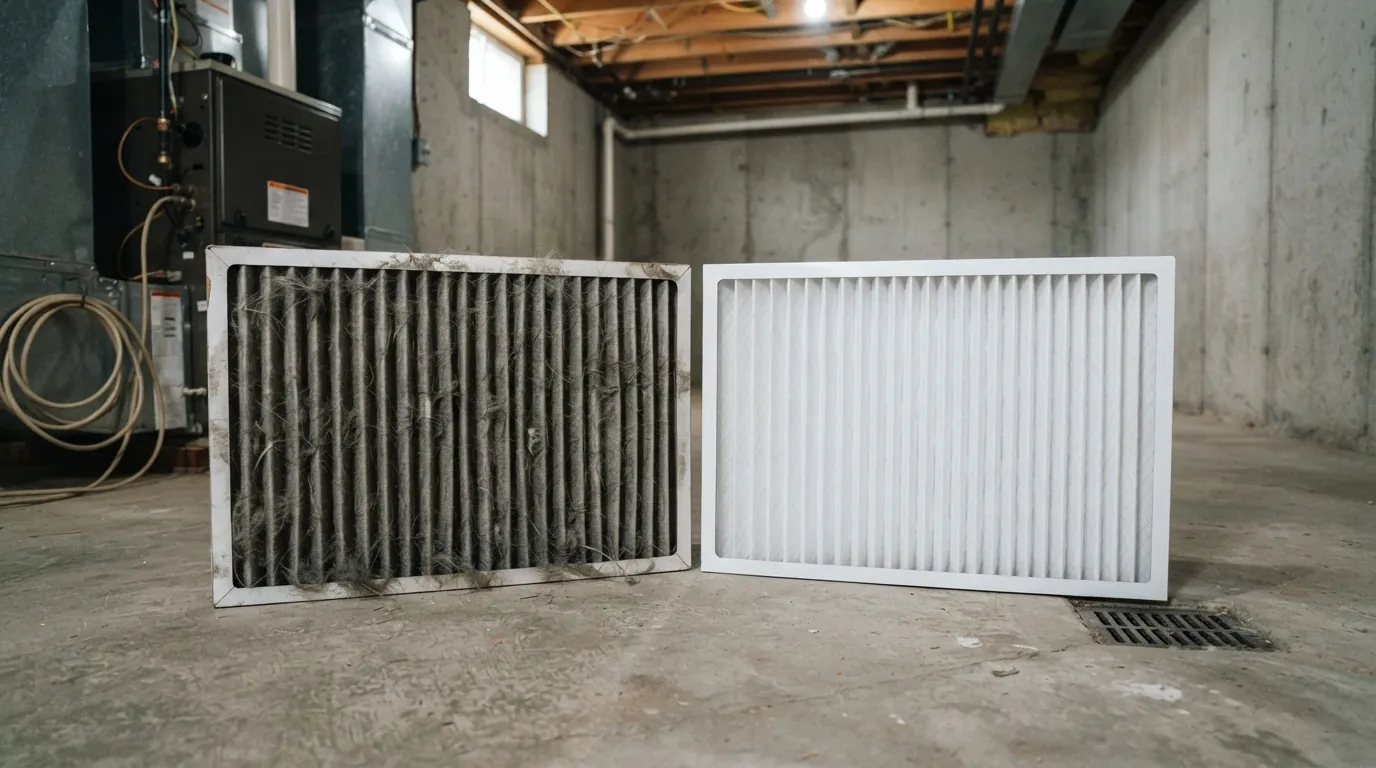
A media filter cabinet holds a deep pleated filter with many times the surface area of a one-inch filter. More surface area means lower air resistance and more room to hold dust before it clogs, which is why these filters last six months to a year. We install the cabinet at the furnace return, seal it to the duct and the furnace so air cannot sneak around the filter, and label the filter size on the cabinet. Replacement filters are available from the major manufacturers and most supply houses.
MERV ratings explained
MERV is a scale from 1 to 16 that rates how well a filter captures particles of different sizes. Cheap fiberglass filters sit at the bottom and mostly protect the furnace. MERV 8 captures most household dust and pollen, MERV 11 adds finer particles such as pet dander, and MERV 13 captures a large share of very fine particles, including some smoke. The catch is resistance: a MERV 13 filter in a one-inch slot can restrict airflow badly, while the same rating in a deep media filter usually does not.
Filter cabinet retrofits
Retrofitting a cabinet means making room for it in the return duct next to the furnace. We cut out a section of return, set the cabinet level, transition the duct into and out of it, and seal every seam. On furnaces with a side return or tight clearances we build the transition to fit, and on systems with a filter grille in a hallway ceiling we can move filtration to the furnace so the filter is easier to change. We measure static pressure before and after to confirm airflow improved.
Local conditions
A long filtering season in Grand Rapids
In Grand Rapids the furnace blower runs through a heating season that stretches from fall into spring, and the same filter then serves the air conditioner through the summer. That is a lot of air through one filter, which is why one-inch filters here often need changing monthly in winter. A deep media filter handles the same load for months at a time, so it keeps working even when nobody remembers to change it.
From the call to a working system
How a filtration upgrade runs
Check the return
Duct size, clearances and current filter location checked.
Measure static pressure
A baseline reading before any change.
Install the cabinet
Return section cut, cabinet set, transitions sealed.
Choose the filter
MERV rating matched to your needs and the system.
Measure again
Static pressure compared and filter size labelled.
Choosing between options
One-inch filter or deep media filter
The filter slot matters as much as the rating.
| One-inch filter | Four to five inch media filter | |
|---|---|---|
| Change interval | One to three months | Six to twelve months |
| Airflow at MERV 13 | Often restrictive | Usually fine |
| Dust holding | Low | High |
| Install | Existing slot | Cabinet retrofit |
Before you pick up a screwdriver
What you can do yourself
Filter changes are the owner's job. Cabinet retrofits and airflow testing are ours.
| Safe for a homeowner | Leave it to a technician | |
|---|---|---|
| Filter changes | Swap on schedule, arrow toward the furnace | Fitting a new cabinet |
| Choosing a rating | Pick MERV 8 to 13 for a media cabinet | Checking static pressure with a new filter |
| Gaps around filter | Make sure the door is closed and sealed | Sealing cabinet and transitions |
| Dusty rooms | Keep registers and returns clear | Finding duct leaks pulling in dust |
Brands we service and install
Pricing, explained
What a filtration upgrade costs depends on
A cabinet retrofit is priced on the return layout at your furnace. Replacement filters are an ongoing cost we explain up front.
Cabinet size
Matched to the furnace and return duct size.
Return layout
Side returns and tight clearances need custom transitions.
Filter rating
Higher MERV filters cost more per replacement.
Relocation
Moving filtration from a ceiling grille adds work.
Combined work
Pairing with a tune-up or new furnace saves a visit.
Questions people ask us
Air filtration questions
MERV 8 to 13 in a deep media filter suits most homes.
In a one-inch slot, yes; it can choke airflow.
Usually every six to twelve months.
Major manufacturers and most supply houses stock them.
It reduces airborne dust and dander; it does not replace medical care.
Most forced-air furnaces, with a custom transition if needed.
MERV 13 captures some smoke particles; electronic cleaners do more.
Running the fan more filters more air but uses more electricity.
From our guides: Guide: fall furnace prep
More air quality & ducts work
Other air quality work
Dusty house even with a new filter?
Call and we will fit a media filter that actually keeps up.