Gas fireplace and log set service in Grand Rapids
Pilots that will not stay lit, sooty glass, a flame that burns yellow or a remote that stopped working. We service gas fireplaces, inserts and log sets and check how they vent.
The short answer
Gas fireplace service in Grand Rapids covers the pilot assembly, thermocouple or thermopile, burner and log placement, the glass and gasket, and the venting. Most fireplaces that will not light have a dirty pilot or a weak thermopile, which we clean or replace in one visit, then check that the flame burns clean and the vent is clear.
A small furnace in the living room
Why a gas fireplace needs yearly service
A gas fireplace is a combustion appliance like a furnace, just smaller and more visible. Dust and spider webs block pilot orifices over the summer, logs shift out of position and start to soot, and glass gaskets wear until the firebox leaks.
Because it burns gas indoors, the venting matters as much as the flame. We test it for carbon monoxide the same way we test furnaces; see carbon monoxide inspection for a whole-house check.
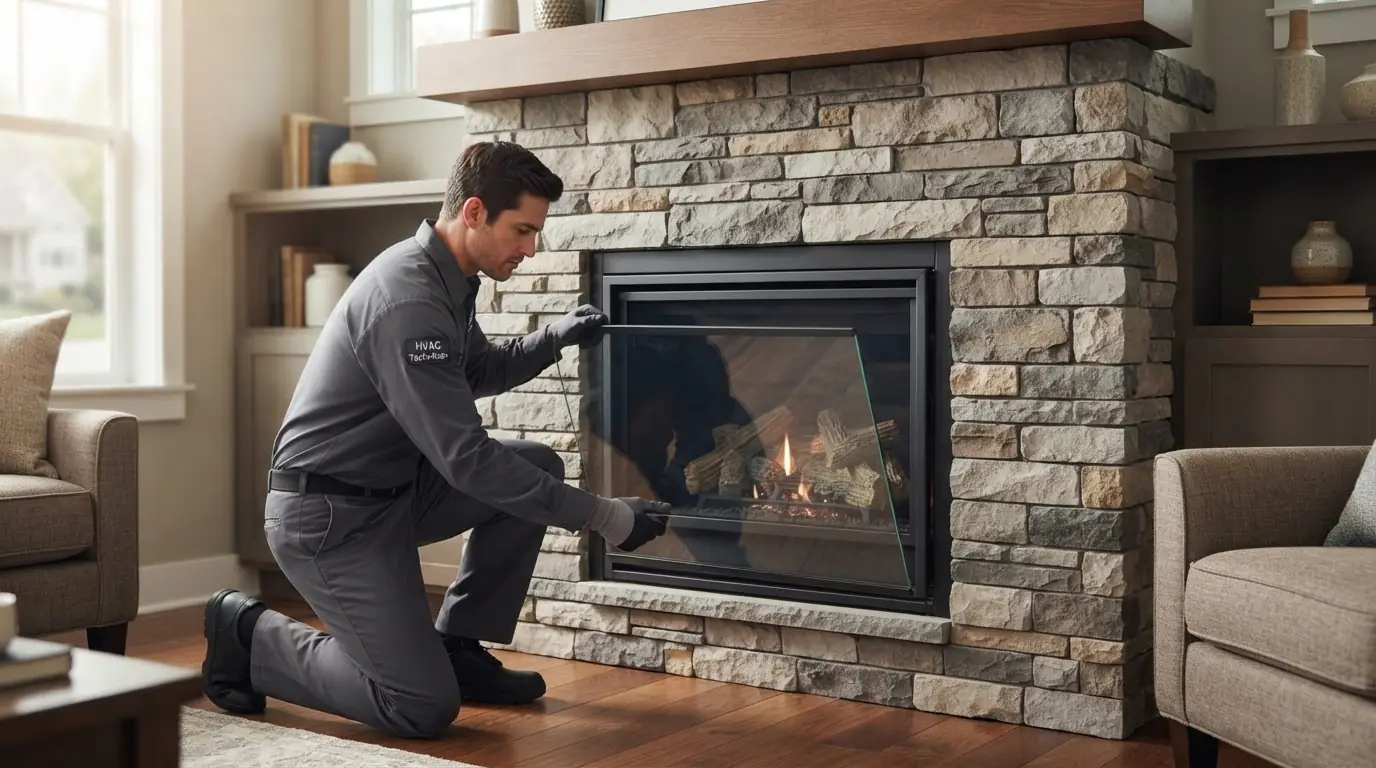
What the visit covers
What every fireplace service includes
- Flame and pilot checked while running
- Glass removed and cleaned
- Glass gasket inspected
- Burner, embers and pilot hood cleaned
- Thermopile or thermocouple output measured
- Venting, liner and cap inspected
- CO and spillage test before we leave
What we service
Pilot and ignition repair
Most gas fireplaces use a standing pilot with a thermocouple or thermopile that generates the small voltage that holds the gas valve open. When the pilot flame shrinks from dust or a partly blocked orifice, that voltage drops and the fireplace will not stay lit, or it lights and then shuts off after a few minutes. We clean the pilot assembly, measure thermopile output under flame, and replace the part if it is below specification. Electronic ignition models get their igniter, receiver and batteries checked the same way.
Annual cleaning and glass service
The white film on fireplace glass is mineral residue from combustion, and it bakes on harder every season it is left. We remove the glass, clean it with a product made for fireplace glass, inspect the gasket that seals it to the firebox and replace the gasket when it is flattened or torn. Inside, we vacuum the burner and embers, clear the pilot hood, check the burner ports and look at the firebox walls for cracks. The result is a flame that looks right and a firebox that stays sealed.
Gas log set installation
Converting a wood-burning fireplace to gas logs is quick when the chimney is sound and a gas line is nearby. We confirm the chimney drafts, run or extend the gas line with a shutoff in the fireplace area, set the burner and logs in the manufacturer's layout, and adjust the flame. Vented log sets need the damper open whenever they run, and we fit a damper clamp where required so it cannot be closed while the logs are lit. We test for spillage before we leave.
Local conditions
Chimneys, liners and old flues
Type-B gas vent, chimney liners and related venting parts are manufactured right here in Grand Rapids by Hart & Cooley, so the materials for correcting a fireplace flue are close at hand. An insert or log set that drafts poorly usually needs a liner sized to the appliance, and a cap to keep out rain, snow and animals. We check the liner and cap on every gas fireplace we service, along with the draft and the carbon monoxide readings at the appliance.
From the call to a working system
How a fireplace service visit runs
Check it running
We light it and watch the flame, pilot and venting.
Clean inside
Glass removed; burner, embers and pilot hood cleaned.
Test the controls
Thermopile output, valve and remote or wall switch checked.
Inspect the venting
Termination, liner and cap looked at; spillage tested.
Relight and set
Logs placed correctly, flame adjusted, results explained.
Before you pick up a screwdriver
What you can do yourself
A few checks are safe for any owner. Anything inside the gas controls or venting is not.
| Safe for a homeowner | Leave it to a technician | |
|---|---|---|
| Fireplace will not start | Replace remote and receiver batteries | Testing the thermopile and gas valve |
| Pilot out | Relight following the label on the unit | Cleaning the pilot orifice and assembly |
| Dusty glass outside | Wipe the outside when cool | Removing and cleaning the inner glass |
| Gas smell | Leave the house and call the gas utility | Everything after the utility clears it |
Pricing, explained
What fireplace service costs depends on
Routine cleaning and pilot service are priced per fireplace. Parts such as thermopiles, gaskets or receivers are quoted when we find they need replacing.
Fireplace type
Direct-vent inserts, B-vent units and log sets differ in time.
Parts needed
Thermocouples and gaskets are minor; control valves cost more.
Glass condition
Heavily etched glass may need replacing rather than cleaning.
Venting
A missing or damaged liner or cap adds to the job.
Log set installs
Gas line length and chimney condition set the price.
Questions people ask us
Gas fireplace questions
Usually a dirty pilot or weak thermocouple or thermopile.
It is combustion residue. Clean it with a product made for fireplace glass.
Once a year, ideally before the heating season.
Misplaced logs, a dirty burner or a venting problem.
Yes, with a gas log set or insert, if the chimney is sound.
Any gas appliance can. We test for it at every service.
We check the receiver, batteries and wiring for remote and wall switches.
Many owners turn it off in summer; we can show you how.
From our guides: Our carbon monoxide safety guide
Fireplace not lighting?
Call and we will clean it, fix the pilot and check the venting.