Rooftop unit service for Grand Rapids commercial buildings
Packaged rooftop units sit in snow, sun and cottonwood all year. Regular service on belts, coils, economizers and heat sections keeps them from failing on the worst day of the season.
The short answer
Rooftop unit service in Grand Rapids covers the whole packaged unit on each visit: filters and belts, condenser and evaporator coils, the condensate drain, the economizer and its dampers, electrical connections, and the gas heat section before winter. Most buildings need it quarterly or twice a year, depending on hours and how dirty the site is.
One cabinet, every system
What a rooftop service visit checks
A packaged rooftop unit puts the compressor, condenser, evaporator, blower and gas heat in one cabinet on the roof, where nobody sees it until something goes wrong. Most of the failures we are called for, like snapped belts, frozen coils and flooded ceilings from a blocked drain, were visible at the last service that never happened.
Scheduled service across several buildings is set up under commercial HVAC maintenance plans. When a unit fails between visits, it goes through commercial HVAC repair in Grand Rapids.
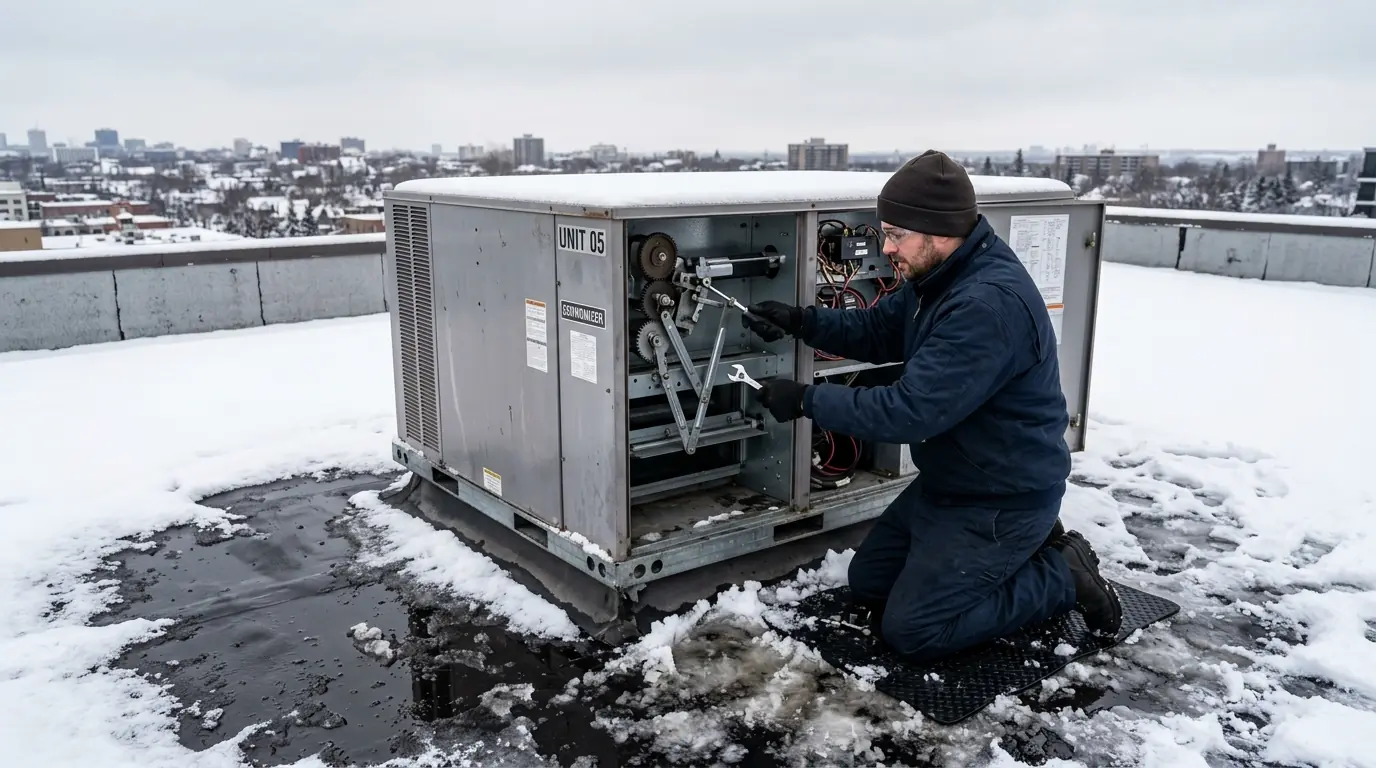
What the visit covers
What every rooftop visit includes
- Filters changed to the recorded size
- Belts inspected, tensioned or replaced
- Condenser coil cleaned
- Condensate drain and trap cleared
- Economizer dampers and sensors checked
- Gas heat section tested before winter
- Unit report with readings and concerns
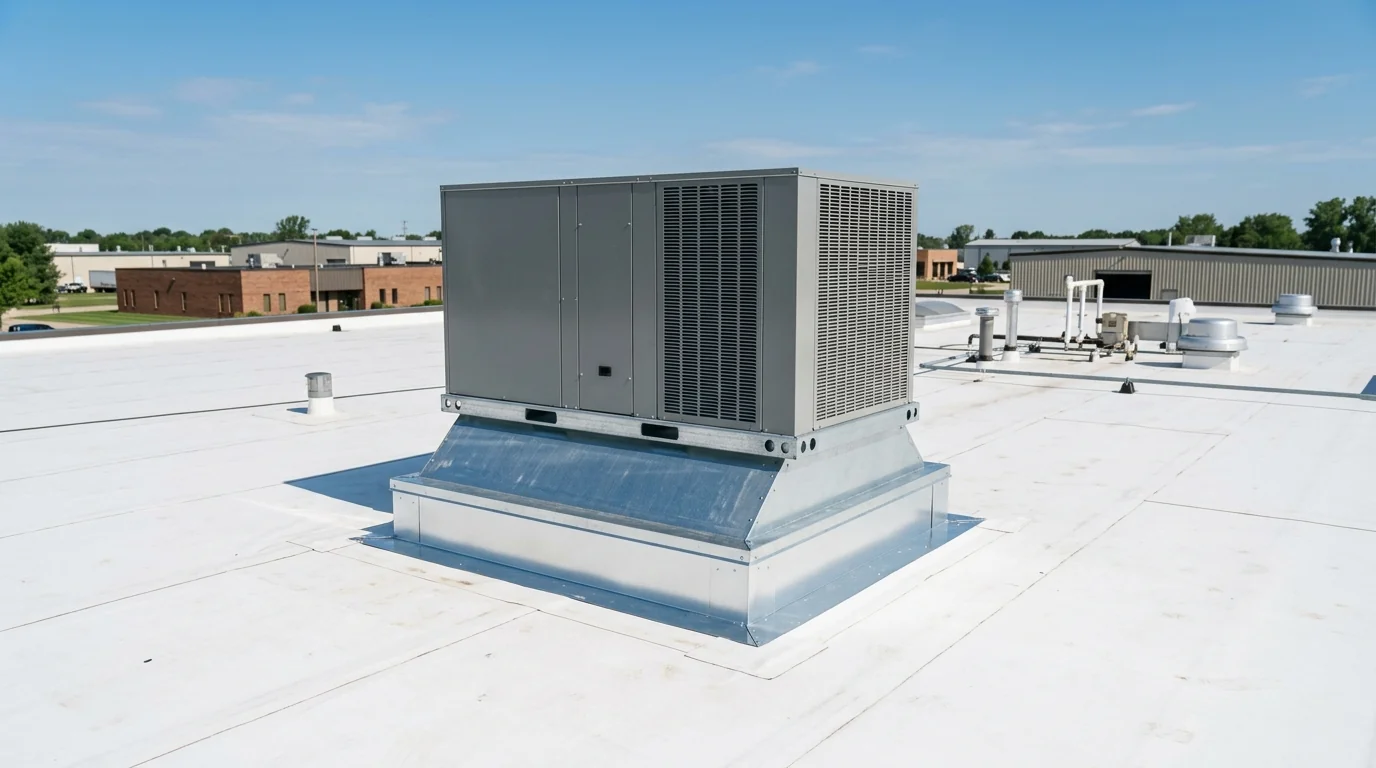
What we service on a rooftop unit
Quarterly RTU maintenance
A quarterly visit changes filters, checks belts for wear and tension, cleans the condenser coil, clears the condensate drain and trap, and tightens electrical connections. Before cooling season we check refrigerant pressures and the compressor's amperage; before heating season we check the gas section, flame, inducer and heat exchanger. Every visit ends with the unit run through its heating or cooling stages and a note of anything that is wearing out. Restaurants, gyms and dusty sites usually need the full quarterly schedule.
Economizer and belt service
Economizers use outside air for free cooling when it is cool enough, and they are the part of a rooftop unit most often found broken and ignored. A stuck damper either wastes energy by bringing in hot or frozen air, or leaves the space without fresh air. We check the actuator, the linkage, the sensors and the control settings, then watch the damper move through its range. Belts get checked for cracks and glazing, tensioned correctly and replaced with the recorded size before they slip or snap.
Curb adapters and replacements
When a rooftop unit is replaced, the new model rarely matches the old curb exactly. A curb adapter bridges the difference so the new unit can sit on the existing roof opening without cutting and reroofing. During service visits we check the existing curb for rot, rust and leaks around the flashing, because a failing curb lets water into the ceiling and makes a future replacement harder. When a unit is near the end of its life, we note the curb size so replacement planning starts early.
Local conditions
Rooftops across the metro
Our service office sits on 3 Mile Rd NW, on the northwest side where Grand Rapids meets Walker, and the rooftop work we do reaches across the Grand Rapids, Wyoming and Kentwood metro of roughly 1.15 million people. A metro that size carries a great many rooftop units on offices, shops, restaurants and apartment buildings, which is why we plan visits building by building and keep each unit's filter and belt sizes on record.
From the call to a working system
How a rooftop service visit runs
Check in
We confirm which units serve which spaces and any complaints.
Clean and change
Filters changed, coils cleaned, drain cleared.
Inspect wear parts
Belts, contactors, motors and economizer checked.
Test operation
Cooling or heating stages run and readings taken.
Report
Unit-by-unit notes with anything that needs budgeting.
Brands we service and install
Cooling season starts on the roof.
Get every rooftop unit serviced before the first hot week.
Pricing, explained
What rooftop unit service costs depends on
Service is priced per unit and per visit. Parts found worn during a visit are quoted before they are replaced.
Number of units
Each rooftop unit is serviced and recorded separately.
Unit size
Larger tonnage units take longer to clean and check.
Visit frequency
Quarterly service costs more per year and prevents more failures.
Site conditions
Grease, cottonwood and dust add coil cleaning time.
Roof access
Hatches, ladders and fall protection affect time on site.
Questions people ask us
Rooftop unit service questions
At least twice a year; quarterly for high-use or dusty sites.
A damper system that uses cool outside air instead of the compressor when possible.
Usually a blocked condensate drain or trap on the unit.
We service the common commercial brands and older equipment.
A frame that lets a new unit sit on an old curb of a different size.
Yes, with short shutdowns scheduled around your use.
Yes. Model, serial, filter and belt sizes are recorded.
Yes, well ahead, so it can be budgeted.
Rooftop units overdue for service?
Call and we will put every unit on a schedule.