Gas tankless water heater installation in Grand Rapids
Endless hot water and a wall-mounted unit instead of a tank. The catch is sizing, gas supply and venting, and that is where most tankless installs go right or wrong.
The short answer
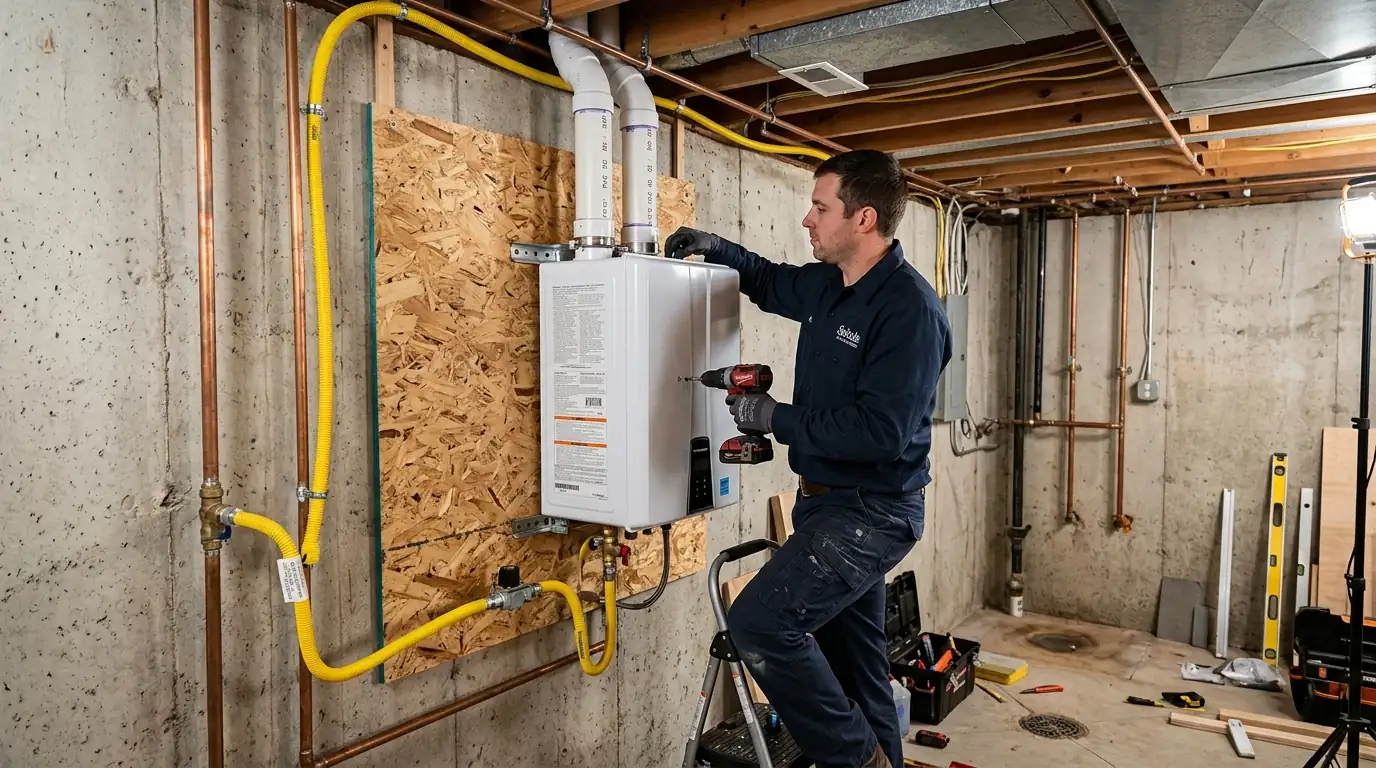
Tankless water heater installation in Grand Rapids means sizing the unit to your peak hot water use and our cold winter inlet water, confirming the gas line can deliver enough fuel, and venting it to the outside. Most installs replacing a gas tank take a full day, longer when the gas line needs upsizing or a new vent route is required.
Before you go tankless
What changes when you replace a tank
A tankless unit heats water only as it flows, so it never runs out. It also needs far more gas while it runs than a tank does, and it must raise very cold winter water to shower temperature instantly. Those two facts drive every decision on the install.
If a standard tank still suits the house better, water heater replacement work covers gas, power-vent and electric tanks.
Pricing, explained
What moves the price of a tankless install
Tankless installs vary more than tank swaps because the gas line and venting usually change. We price after checking the meter, gas piping and vent route.
Unit size
Higher flow ratings cost more and need more gas.
Condensing or not
Condensing units cost more but vent through PVC.
Gas line
Upsizing from the meter is often the largest added cost.
Venting route
A short run through a nearby wall is simplest.
Water treatment
A scale-reduction filter adds cost and protects the heat exchanger.
Choosing between options
Tank or tankless for your house
Neither is right for every home. Here is how they compare where it matters.
| Gas tank | Gas tankless | |
|---|---|---|
| Hot water supply | Limited to the tank | Continuous, limited by flow rate |
| Space | Floor space for the tank | Wall-mounted |
| Gas line | Usually existing line | Often needs upsizing |
| Venting | Chimney or power vent | Dedicated PVC or stainless vent |
| Upkeep | Annual flush | Annual descaling |
What a proper install involves
Gas tankless sizing
Tankless units are rated by how many gallons per minute they can heat by a given temperature rise. In a Michigan winter the incoming water is cold, so a unit that runs two showers easily in August may manage only one and a faucet in February. We add up the fixtures you use at the same time, apply a winter temperature rise, and size to that number. Undersizing is the most common reason tankless owners are unhappy, and it cannot be fixed without replacing the unit.
Venting and gas line upgrades
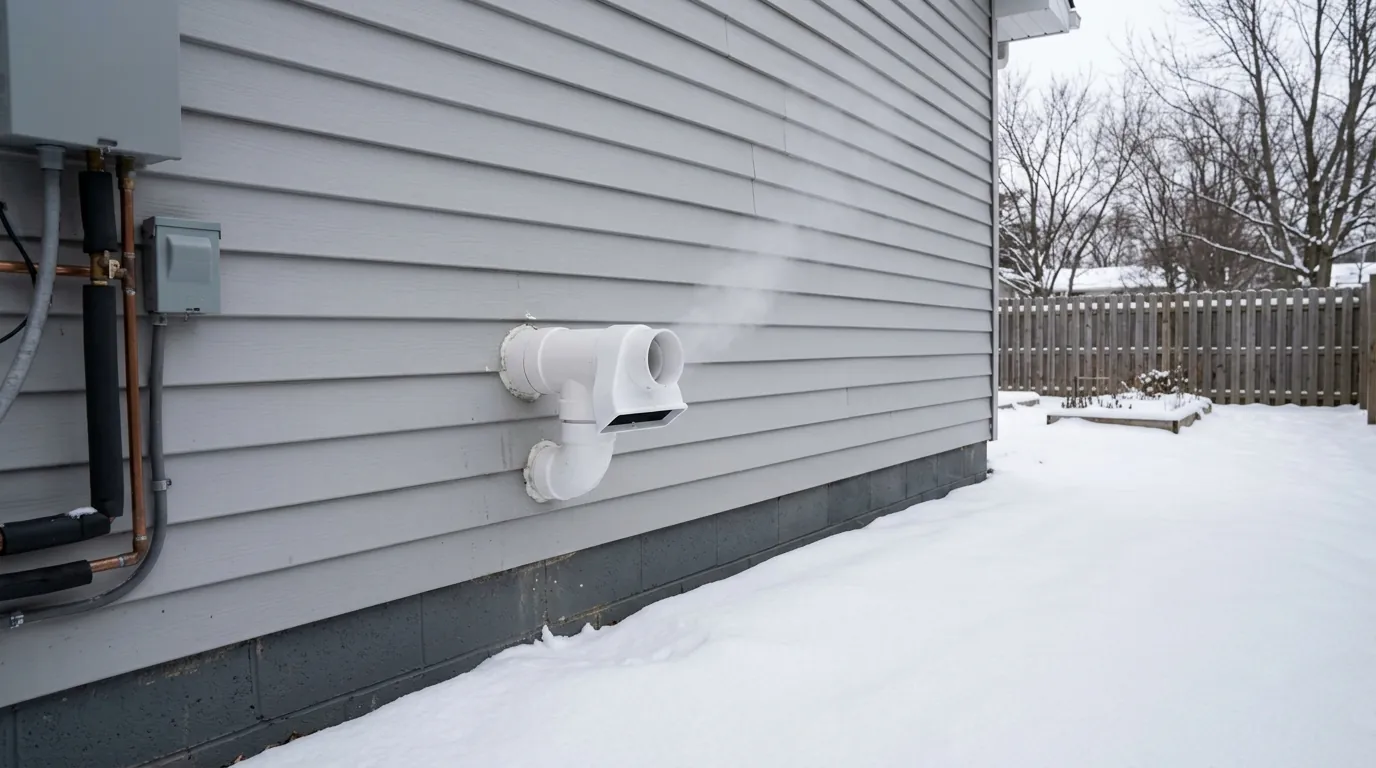
Many tankless units need a gas supply several times larger than the tank they replace, which often means a larger line from the meter or a separate run. Condensing units vent through PVC, while non-condensing units need stainless vent pipe, and neither can reuse the old metal flue in most cases. We plan the vent route to meet clearances from windows, doors and the snow line. Where the gas meter itself is too small, the utility has to upgrade it before the install.
Descaling and annual service
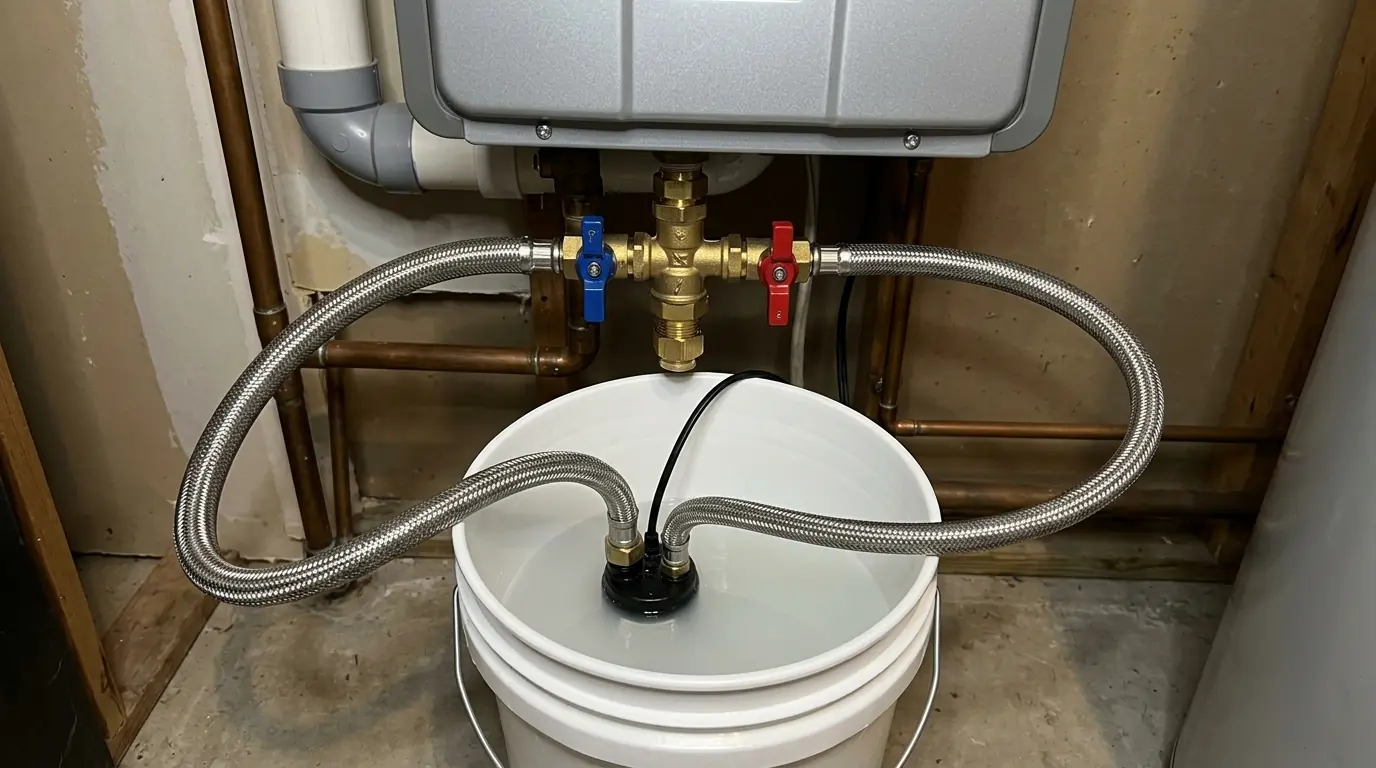
Heat exchangers in tankless units scale up from minerals in the water, which reduces output and eventually trips error codes. A yearly flush with a descaling solution through the unit's service valves keeps it running at rated output. We also clean the cold water inlet screen, check the condensate neutralizer on condensing models, and read the stored error history so small faults are caught before they shut the unit down. Units installed without service valves are hard to flush, so we fit them on every install as standard.
What the visit covers
What every tankless install includes
- Demand sizing at winter inlet temperature
- Gas line sized from the meter
- Dedicated vent to code clearances
- Isolation and service valves for flushing
- Condensate line with neutralizer where required
- Permit and inspection arranged
- Full-fire gas pressure test at start-up
Local conditions
New construction and permits around the city
Grand Rapids authorized 859 new residential units in 2024, well above five years earlier, and many new builds are plumbed with a tankless unit from the start, which brings its own service calls once the first year of scale has built up. On a retrofit, every Michigan jurisdiction including Kent County requires a permit for the water heater replacement, and a tankless install that also changes the gas line and venting gets inspected on all three.
Brands we service and install
From the call to a working system
How a tankless install runs
Measure demand
Fixtures and simultaneous use counted; winter temperature rise applied.
Check gas and venting
Meter size, pipe size and vent routes confirmed before quoting.
Remove the old tank
Drained, disconnected and hauled away.
Mount and connect
Unit hung, gas, water, vent, condensate and service valves installed.
Test and set
Gas pressure checked under full fire and temperature set with you.
Questions people ask us
Tankless water heater questions
If it is sized for it at winter water temperatures. We size to your real use.
Often not. Many tankless units need a larger line than a tank.
Generally no. Tankless units need their own PVC or stainless vent.
A descaling flush once a year keeps it at rated output.
Slightly longer than a tank; a recirculation option can shorten it.
No. Tankless units need electricity for their controls and fan.
With annual flushing, typically longer than a tank.
Yes. Descaling, error codes and repairs on most common brands.
From our guides: Our choosing a contractor guide
Ready to stop running out of hot water?
Call and we will size a tankless unit to your house.