Dual-fuel heating for Grand Rapids homes: heat pump plus gas furnace
A heat pump carries the mild months and the gas furnace takes over when it gets truly cold. You get lower heating costs most of the year and gas heat when it matters most.
The short answer
A dual-fuel system in Grand Rapids pairs an electric heat pump with a gas furnace and switches between them at a set outdoor temperature, called the balance point. The heat pump heats and cools through spring and fall; below the balance point the furnace takes over. It is the most common way we add a heat pump to a house that already has gas.
Two heat sources, one thermostat
Why dual fuel suits a Michigan winter
A heat pump moves heat instead of making it, which makes it efficient in the 30s and 40s where much of a Grand Rapids heating season is spent. As it gets colder its output drops and its efficiency falls. A gas furnace does not care how cold it is outside.
Dual fuel lets each do what it is good at. The heat pump replaces your central AC as well, so it earns its keep year round. When the furnace is still young, we often add only the heat pump and controls. If both are near the end, see furnace replacement and heat pump installation work for doing both at once.
Pricing, explained
What a dual-fuel project costs
Michigan heat pump installs typically run $5,500 to $13,000 installed according to 2026 statewide pricing data, and a dual-fuel add-on to a good existing furnace usually sits toward the lower part of that range because the furnace and ductwork stay.
Heat pump capacity
Tonnage is sized to the house's heat loss and cooling load.
Cold-climate rating
Models that hold capacity at low temperatures cost more and push the balance point lower.
Existing furnace
A newer variable-speed furnace pairs well; an old single-stage one may be worth replacing too.
Line set and electrical
Reusing a clean, correctly sized line set saves money; a new circuit may be needed.
Controls
A dual-fuel-capable thermostat or communicating control is part of every install.
Choosing between options
Gas only, dual fuel or all-electric heat pump
Dual fuel sits between the two familiar setups. Here is how the three compare for a typical Grand Rapids house.
| Furnace + AC | Dual fuel | All-electric heat pump | |
|---|---|---|---|
| Coldest-night heat | Gas | Gas | Heat pump plus electric backup |
| Mild-weather heat | Gas | Heat pump | Heat pump |
| Cooling | Central AC | Heat pump | Heat pump |
| Keeps gas service | Yes | Yes | Not needed |
How a dual-fuel system is put together
Heat pump paired with a gas furnace
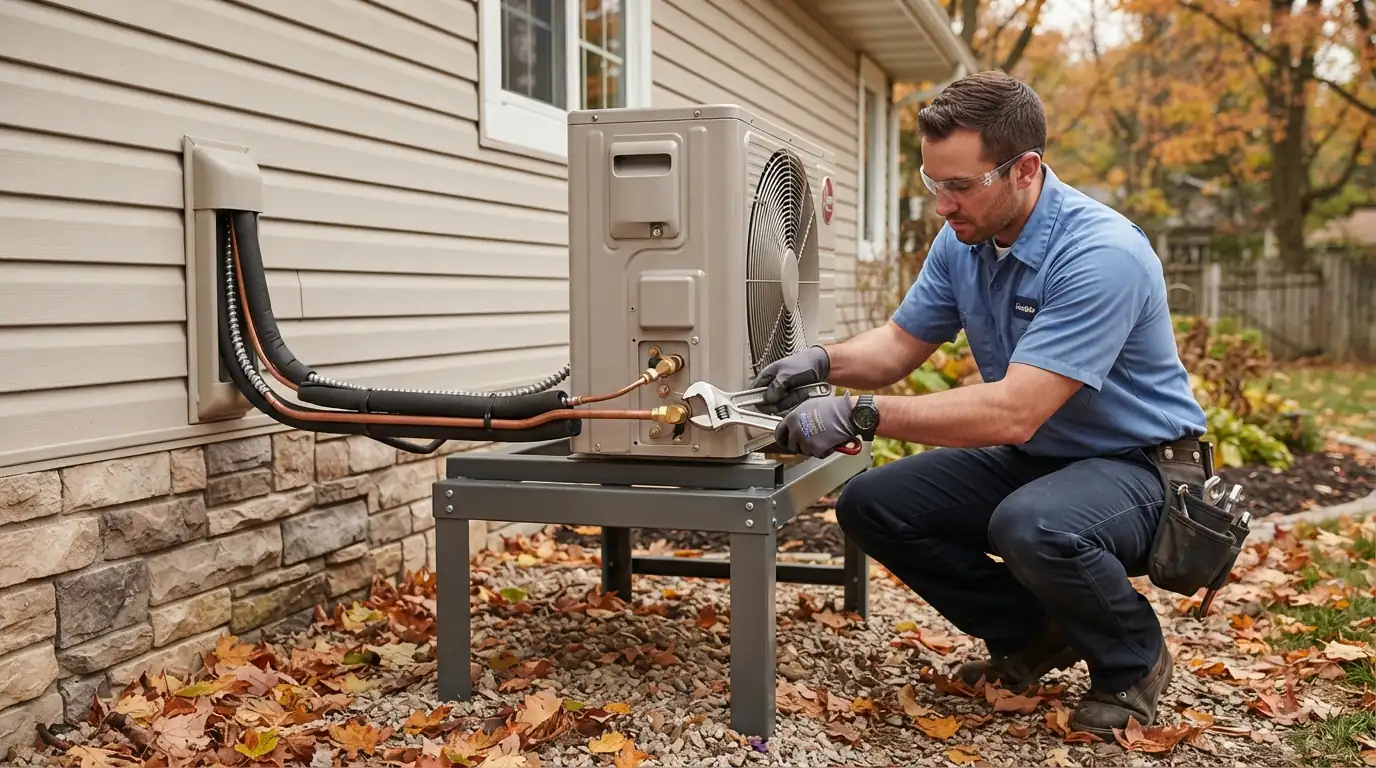
The heat pump's outdoor unit takes the place of the air conditioner condenser, and the indoor coil sits on the furnace just like an AC coil. The furnace blower moves air for both. That means the ductwork, filter location and most of the indoor equipment stay put. What changes is the outdoor unit, the refrigerant piping and a control system that knows which source to call. When the existing furnace has a variable-speed or two-stage blower, the pairing runs quieter and holds temperature more evenly.
Balance point setup
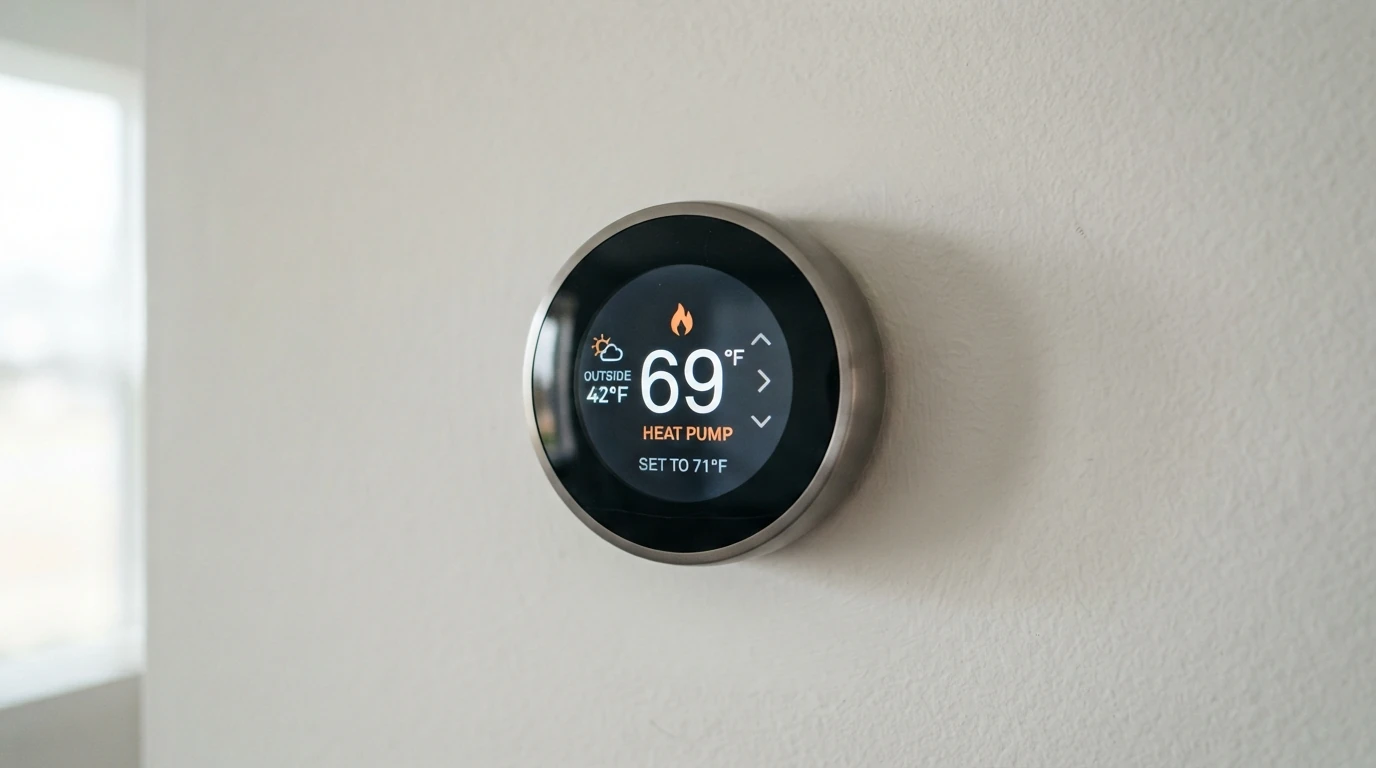
The balance point is the outdoor temperature where the system hands heating from the heat pump to the furnace. It is set from the heat pump's capacity, the heat loss of the house and the price of gas against electricity. Set too high, you burn gas you did not need to. Set too low, the heat pump struggles and runs long cycles with cool supply air. We set an initial point at start-up and adjust it after the first cold weeks based on how the house actually holds temperature.
Controls and thermostats for dual fuel
A dual-fuel system needs a thermostat or control board that reads outdoor temperature and locks out one source when the other should run. Many smart thermostats support this with an outdoor sensor or a weather feed, and some equipment brands use their own communicating controls. The key is that the furnace and heat pump never run at the same time on the same coil, which would push hot furnace air through the refrigerant circuit. We wire and test the lockout before the first heating call.
What the visit covers
What a dual-fuel install includes
- Heat pump sized to the house, not the old AC
- Matched indoor coil on the furnace
- Line set pressure test and deep vacuum
- Outdoor lockout control wired and tested
- Balance point set and recorded
- Heating and cooling modes run at start-up
- Rebate model and efficiency data provided
Local conditions
Why the switch-over matters in Grand Rapids
Grand Rapids averages about 133 nights a year at or below freezing but only a handful below zero, so most of the heating season sits in the range where a heat pump works well and a small part sits where gas is the better tool. Consumers Energy currently pays $300 on a qualifying air-source heat pump, and we help gather the model and efficiency details the claim needs. The federal tax credit that used to apply ended with 2025.
Brands we service and install
From the call to a working system
How a dual-fuel install runs
Heat loss and equipment check
We size the heat pump and look at the furnace, coil and ductwork.
Options with numbers
Heat pump add-on or full replacement, with the trade-offs laid out.
Install
Outdoor unit set, coil fitted, line set pressure-tested and evacuated.
Controls and balance point
Lockout wired, balance point set, both modes tested.
Rebate paperwork
Model and efficiency data filled in with you for the utility rebate.
Questions people ask us
Dual-fuel questions
Yes. Below the balance point the gas furnace carries the load exactly as it does today.
Yes. It cools in summer the same way a central AC does.
Usually, if it is in good condition and its blower can handle the heat pump's airflow.
It depends on the house and equipment. We set a starting point and adjust after real cold weather.
Often, through the mild months. The result depends on your gas and electric rates.
Usually. It has to handle the outdoor lockout between the two sources.
Consumers Energy offers rebates on qualifying heat pumps. The federal credit expired at the end of 2025.
Not in the same way. Ductless heat pumps usually work alongside the furnace rather than on it.
From our guides: Guide: heat pump or gas furnace
More heat pumps & ductless work
Related heat pump work
Curious whether dual fuel pays off in your house?
Call and we will look at your furnace and give you both options in plain numbers.