Warm air on hot days
Capacity drops as charge is lost.
A system that needs refrigerant has a leak. Topping it off every summer costs more over time than finding the leak once. We search, repair and verify before recharging.
The short answer
Refrigerant leak repair in Grand Rapids starts by confirming low charge from pressures and temperatures, then locating the leak with an electronic detector, bubble solution or a nitrogen pressure test. We repair the leak, pressure test the repair, pull a deep vacuum and weigh in the correct charge. R-22 systems get a frank repair-or-replace conversation first.
What you might notice
Capacity drops as charge is lost.
Low charge makes the coil run below freezing.
A larger leak at a fitting or coil.
The system works harder to reach the setting.
A system that needed refrigerant once is still leaking.
Refrigerant does not wear out
Refrigerant circulates in a sealed loop and is not consumed. If the system is low, it is leaking, and it will keep leaking. Adding refrigerant without repairing the leak restores cooling for a while and puts the same money into the air next year.
Low charge also freezes coils and overheats compressors. If your AC has iced up, see our AC repair page; if the leak is in an old indoor coil, compare coil replacement in Grand Rapids.
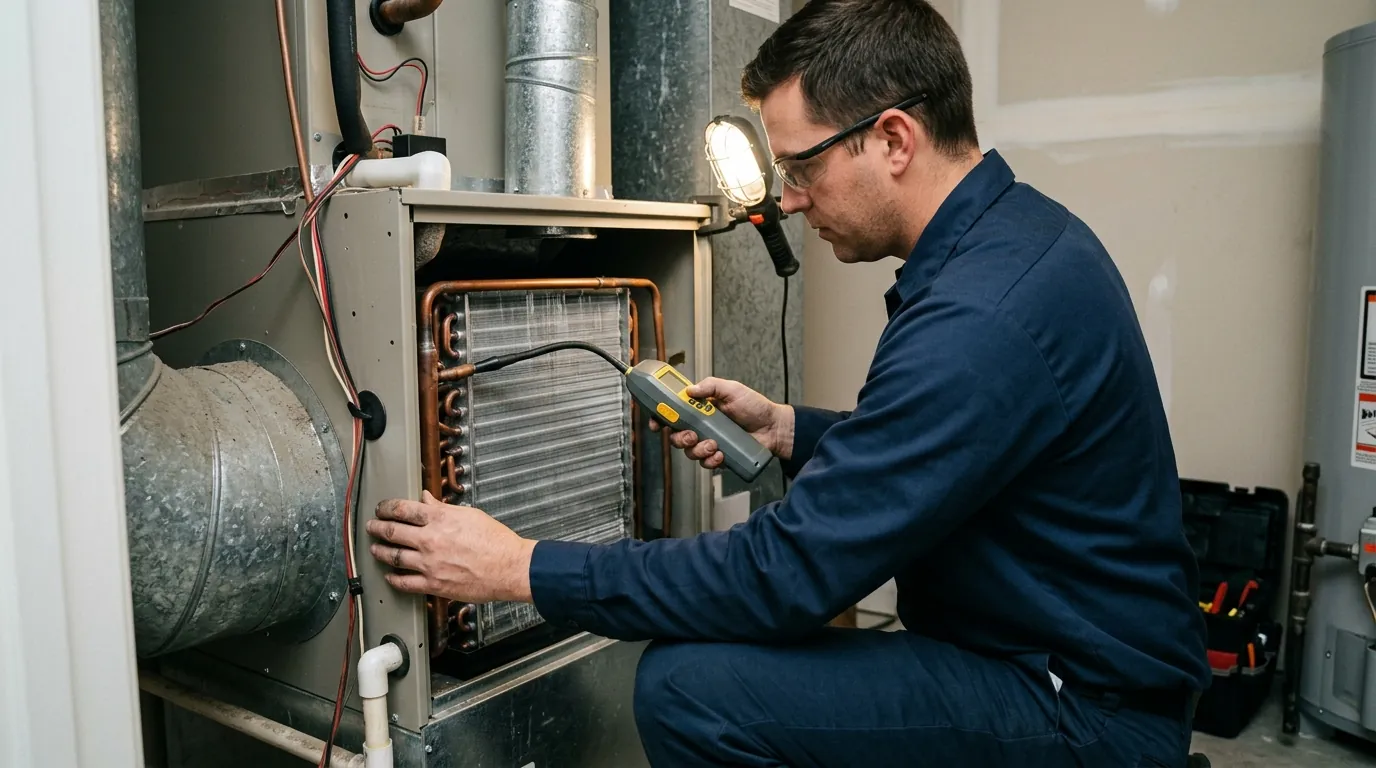
How we handle a leak
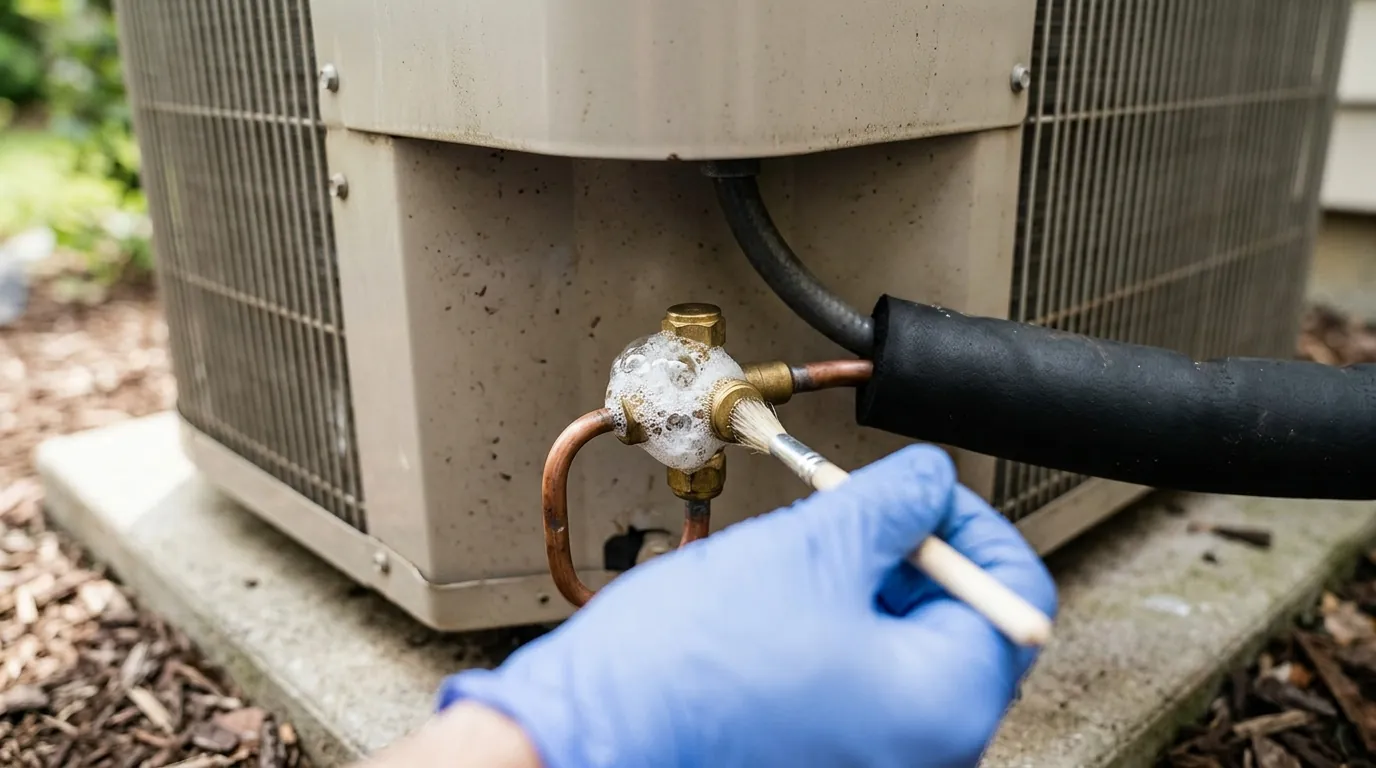
We start with the most common leak points: the indoor evaporator coil, the service valves and their caps, flare fittings on mini splits, brazed joints at the outdoor unit and the Schrader cores. An electronic detector narrows the area, and bubble solution pinpoints the exact spot. When a leak cannot be found with the system charged, we recover the refrigerant, pressurize the system with dry nitrogen and listen and watch for the drop. Joints are rebrazed, valves and cores replaced, and the repair is pressure tested before recharging.
Most systems installed in the last fifteen years use R-410A, which is still available for service. Older systems use R-22, which has not been produced for years, so recharging one is expensive and getting more so. On an R-22 system with a small, accessible leak, a repair can make sense for a few more seasons. With a coil leak or a large charge to replace, putting that money toward a new system usually makes more sense, and we lay out both numbers honestly.
After the repair holds pressure, we pull a deep vacuum with a micron gauge to remove air and moisture, then weigh in the charge the system specifies rather than adding refrigerant until the pressures look about right. We confirm the charge with superheat or subcooling readings at operating conditions and check the temperature split at the supply registers. A system charged by weight and verified this way runs as designed, which is the only way to know whether the repair actually worked.
From the call to a working system
Pressures, temperatures and superheat or subcooling read.
Detector, bubbles or nitrogen pressure test.
Repair, or replacement numbers if repair is not sensible.
Joint, valve or core repaired; pressure test held.
Deep vacuum, charge weighed in, operation verified.
Timing
A leak at a valve core or cap is found and fixed in a single visit. Brazed joint repairs add time for recovery, repair, pressure test and deep vacuum, usually still the same day.
Coil leaks depend on getting the replacement coil, and we give you a clear timeline before the system is opened.
Local conditions
With a median home value in Grand Rapids near $225,500, many owners are weighing a leaking 15-year-old air conditioner against a new system rather than against the price of a luxury upgrade. That makes an honest diagnosis matter: a leaking service valve on an otherwise healthy R-410A system is worth fixing, while a leaking coil on an R-22 system is usually the moment to replace.
Pricing, explained
Leak repairs are priced in two parts: the search and the repair. You approve the repair price once we know where the leak is.
Valve cores and caps are simple; coils and buried joints are not.
R-22 costs far more to recharge than R-410A.
Larger systems need more refrigerant after repair.
A nitrogen test takes longer than a detector search.
A leaking coil may mean replacing the coil itself.
Questions people ask us
No. If it does, it has a leak that should be repaired.
Usually, with a detector, bubbles or a nitrogen pressure test.
Only reclaimed supply, and it is expensive.
Not by changing refrigerant; the systems are not interchangeable.
In a home system it is mostly an environmental and cost problem.
It is the only way to set the exact amount the system needs.
Yes, most often at the flare fittings.
We do not recommend sealers; they can clog valves and metering devices.
From our guides: Our ac frozen over guide
Call and we will find the leak instead of refilling it.
Reach us
Service office
3535 3 Mile Rd NW, Grand Rapids, MI 49534