Ductless mini split installation for Grand Rapids homes
Heating and cooling for rooms the central system never reached: finished attics, sunrooms, additions and older homes built with radiators and no ductwork at all.
The short answer
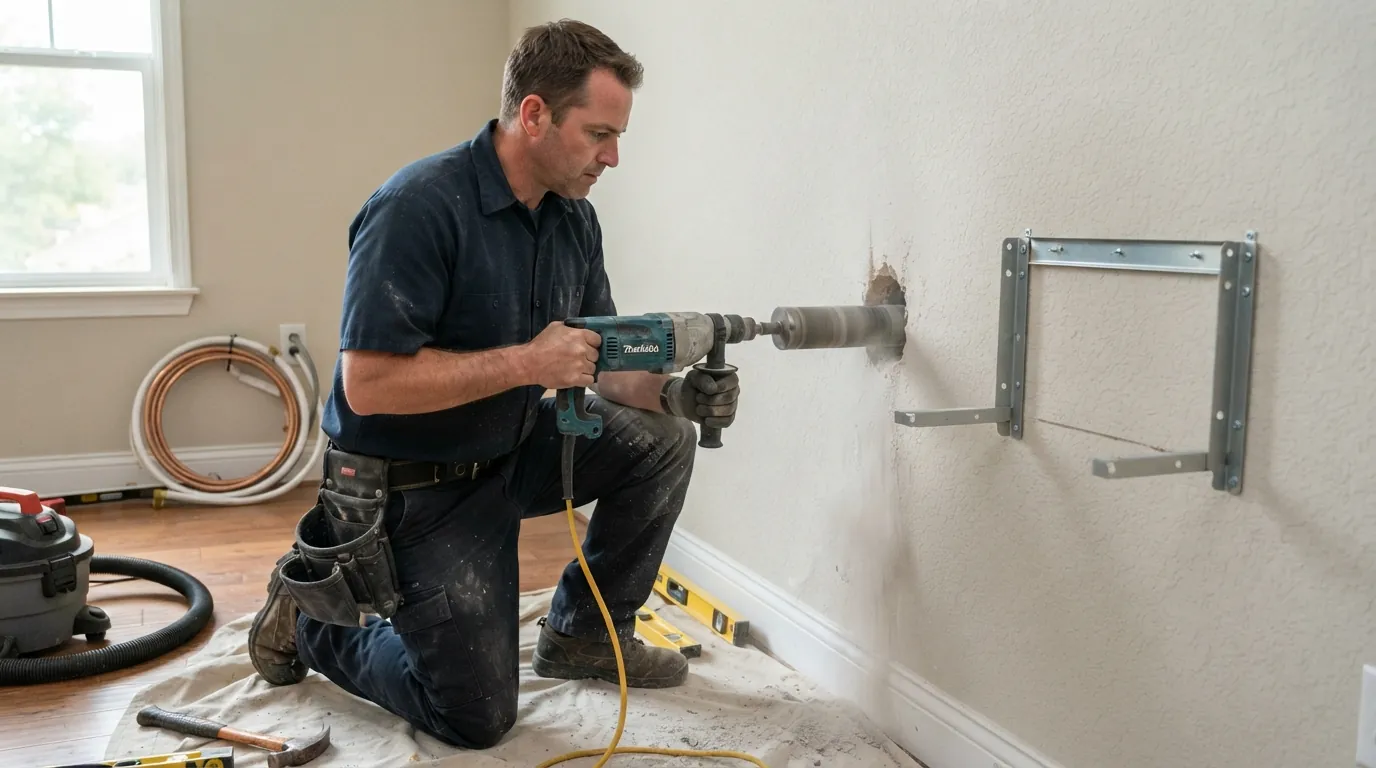
Ductless mini split installation in Grand Rapids puts a small outdoor heat pump outside and one or more wall, ceiling or floor units inside, joined by a refrigerant line set through a three-inch hole. Each indoor unit has its own control. A single-zone install usually takes a day; multi-zone systems take two or more.
No ducts required
Where a mini split beats extending ductwork
A mini split is a heat pump that delivers heating and cooling straight to the room through an indoor head, so there is no duct to run and no air lost on the way. That makes it the practical answer for spaces the furnace ducts never reached, and for houses that heat with a boiler and have never had central air.
When a whole house needs one system on existing ducts, a ducted heat pump is usually the better fit. When an installed mini split stops working, see our mini split repair page.
Pricing, explained
What moves the price of a ductless install
Ductless pricing depends mostly on how many indoor heads you need and how far the line sets run. We quote after walking the rooms and the outside walls.
Number of zones
Each indoor head adds equipment and a line set.
Head type
Wall units cost least; ceiling cassettes and ducted heads cost more.
Cold-climate rating
Low-temperature heating capacity costs more to buy.
Line set length
Long runs and multi-story routing add time and material.
Electrical
The outdoor unit needs its own circuit and disconnect.
Choosing between options
Mini split or extending the ducts
For a single room or addition, these are the two usual choices.
| Ductless mini split | Extend existing ducts | |
|---|---|---|
| Comfort in the room | Controlled on its own | Depends on the main system |
| Construction | Three-inch hole per head | Duct runs through walls or ceilings |
| Efficiency | No duct losses | Long runs lose heat and cooling |
| Best for | Additions, attics, no-duct homes | Short runs off a large trunk |
The four jobs we do most
Single-zone systems
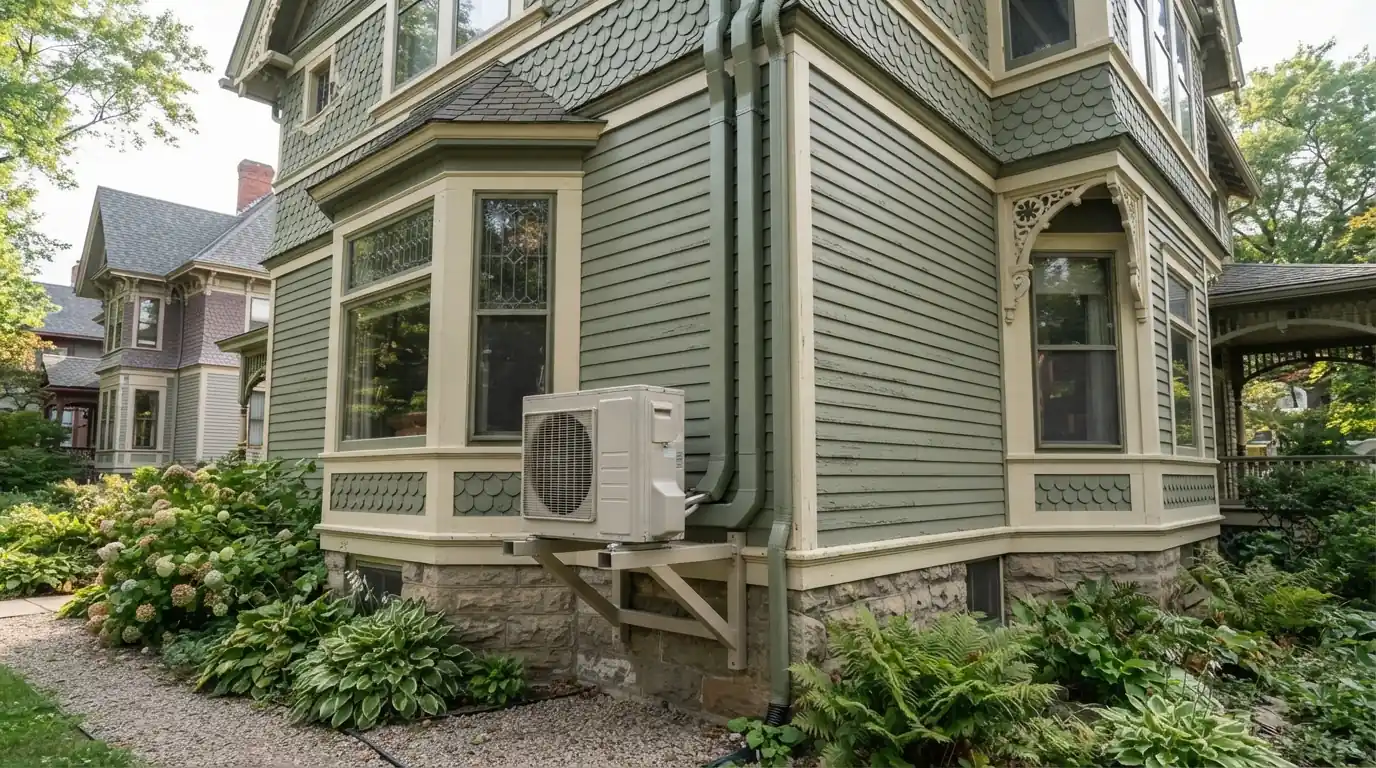
One outdoor unit serving one indoor head is the simplest ductless install, and the most common: a bonus room over the garage, a hot upstairs bedroom, a home office in a converted porch. We size the head to that room's heat loss and cooling load rather than square footage alone, since a room with three exterior walls and big windows needs far more than an interior bedroom of the same size. The outdoor unit sits on a wall bracket or a stand above the snow line.
Multi-zone systems
A multi-zone outdoor unit can serve two to five or more indoor heads, each with its own thermostat. It is how older houses with no ductwork get whole-house cooling and efficient shoulder-season heat without opening walls. The trade-off is that every head relies on one outdoor unit, and a unit that is oversized for how the rooms are actually used will cycle inefficiently. We plan heads room by room and size the outdoor unit to the combined real load, not the sum of the largest heads available.
Additions, sunrooms and finished attics
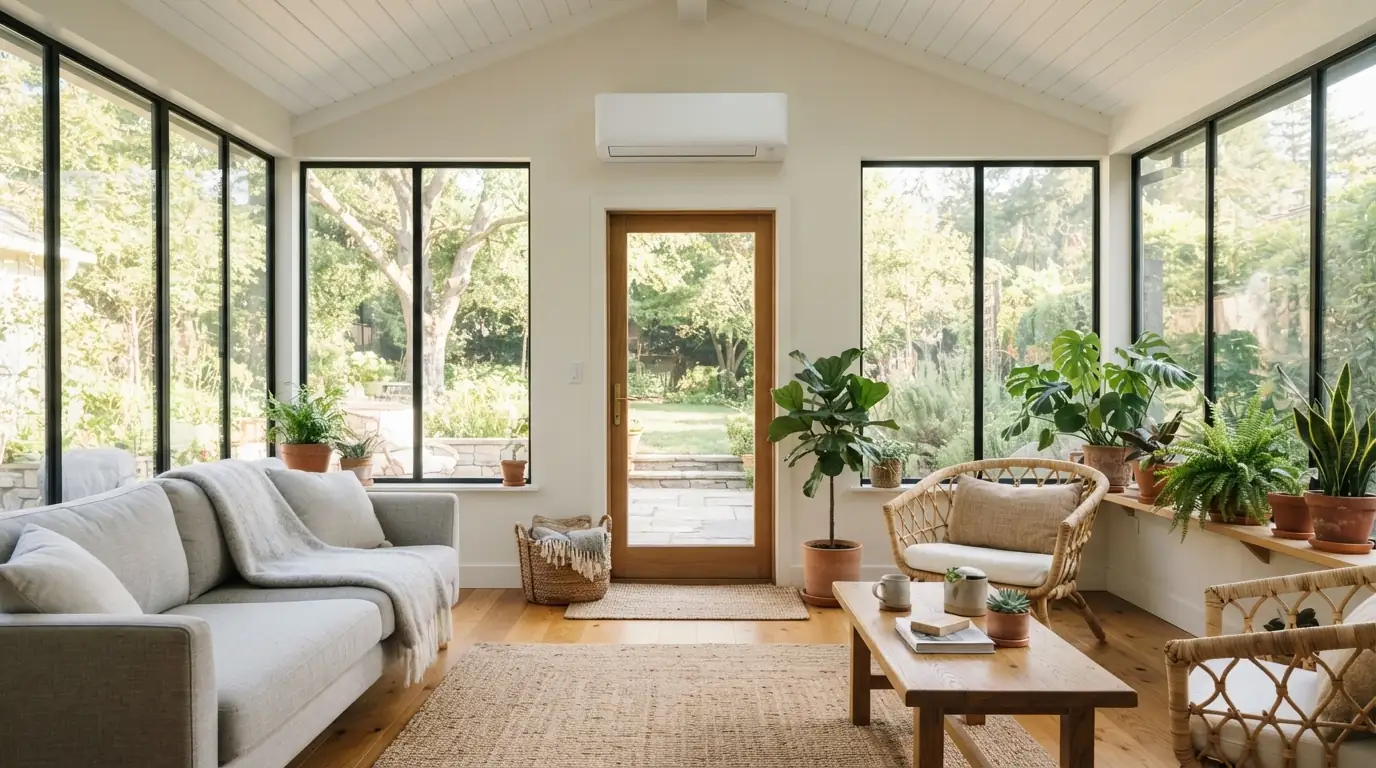
Extending ductwork into an addition often means undersized runs that leave the new room hotter and colder than the rest of the house. A dedicated mini split avoids that and lets the room be comfortable on its own schedule. Sunrooms and finished attics swing hard with the weather, so we lean toward cold-climate models that keep heating on the coldest nights rather than models rated only for mild climates. Line sets are routed and covered along the outside wall, and the condensate line is run to a drain or a small pump.
Homes with no ductwork
Houses heated by boilers, radiators or baseboard have no way to distribute cooled air, and window units are the usual stopgap. Ductless heads on each floor give real air conditioning with no duct chases cut into plaster, and they add efficient heat in spring and fall while the boiler rests. We place heads where the air can reach the rooms that need it, route line sets on the least visible walls, and run condensate lines to a drain or a small pump.
Local conditions
Historic districts and exterior review
Heritage Hill has been a local historic district since 1973, and exterior changes there go through review, which includes where an outdoor condenser sits and how line sets run up a facade. Many of the large houses north of Cherry Street have radiators and no ducts, so ductless is the usual route to cooling. We plan unit placement on side and rear elevations before the install, which keeps the approval simple and the street view unchanged.
Brands we service and install
From the call to a working system
How a ductless install runs
Walk the rooms
Heat loss, sun exposure and head placement noted room by room.
Plan the outside
Outdoor unit location, line set route and condensate path agreed.
Mount and connect
Heads hung, three-inch penetrations sealed, line sets run and covered.
Evacuate and charge
Deep vacuum, leak check and refrigerant charge confirmed.
Show the controls
Remote or app set up and each mode demonstrated.
Timing
How long the install takes
A single-zone system is usually finished in one day, including the electrical connection and start-up. Each extra head adds time for mounting, drilling and line set routing, so a three- or four-zone system commonly takes two days.
Historic-district homes may need the exterior plan approved first, which adds time before the install date rather than on the day.
Questions people ask us
Ductless mini split questions
Cold-climate models keep heating well below freezing. We size them for our winters.
About three inches per head, sealed inside and out.
Yes. Multi-zone units serve two or more indoor heads.
Clean the indoor filters monthly in season and have the system serviced yearly.
Indoor heads are very quiet; outdoor units are quieter than most AC condensers.
We route it on the least visible wall and cover it with a painted line-hide channel.
Yes. Mechanical and electrical work is permitted and inspected.
Qualifying heat pumps, including some ductless models, are eligible for Consumers Energy rebates.
From our guides: Guide: consumers energy rebates
More heat pumps & ductless work
Other heat pump and ductless work
Got a room that is never comfortable?
Call and we will plan a ductless system for it.