Converting an oil furnace to natural gas in Grand Rapids
Replacing an old oil furnace with a high-efficiency gas furnace ends oil deliveries, tank worries and nozzle cleanings, where gas service is available at the street.
The short answer
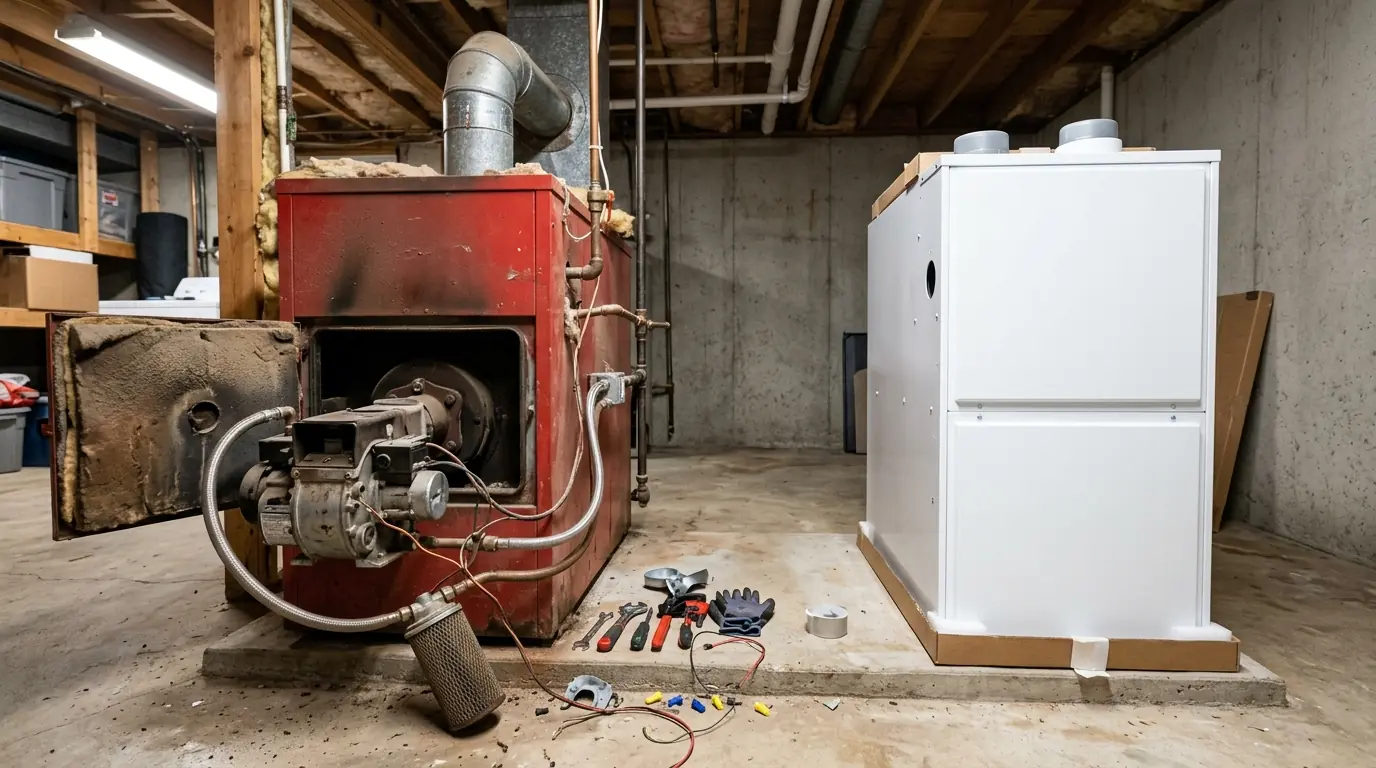
An oil-to-gas furnace conversion in the Grand Rapids area replaces the oil furnace with a gas furnace, usually a 96 percent condensing model, after the utility brings gas service and a meter to the house. We run the gas piping, install and vent the new furnace, disconnect the oil tank and lines, and correct any water heater venting left in the old chimney.
Leaving oil behind
What a conversion involves
Oil furnaces are durable but need regular nozzle and filter service, and the oil tank itself becomes a liability as it ages. Where natural gas runs down the street, converting ends deliveries and usually lowers heating costs and maintenance.
The new furnace is sized and installed the same way as any furnace replacement work, and the piping is covered by gas line installation in Grand Rapids.
Pricing, explained
What a conversion costs depends on
Conversion pricing combines a furnace replacement, the gas piping and the oil disconnection. The utility's service line and meter are arranged and priced by the utility.
Furnace choice
Efficiency and staging set the furnace price.
Gas piping
Distance from the meter and how many appliances go on gas.
Venting
PVC venting and any water heater liner work.
Ductwork changes
Plenum and return adjustments for the new footprint.
Oil tank
Basement tank removal or a specialist for buried tanks.
The three parts of a conversion
Oil furnace removal
The old oil furnace, burner, oil filter and fuel lines at the appliance are removed once the new furnace is ready to go in, so the house is without heat for as little time as possible. We check the ductwork connections and the return air at the same time, since an old oil furnace often has a different footprint and plenum layout from the gas furnace replacing it. The new furnace is sized by load calculation rather than copied from the oil furnace's rating.
Gas service and piping
The gas utility runs the service line and sets the meter; that is the first step and sets the conversion schedule. We then run piping from the meter to the furnace, water heater and any other gas appliances you are adding, sized for their combined load, with shutoffs and sediment traps. Many owners add a gas range, dryer or water heater at the same time, since the meter and main line are already being put in and adding a branch then costs less than coming back later.
Oil tank disconnection
Once the furnace is off oil, the tank, fill pipe and vent pipe are disconnected from the heating system and capped so no one delivers oil to a tank that is no longer in use. Removing or abandoning the tank itself, especially a buried tank, is handled by a tank specialist and may involve local requirements, and we tell you who to call. A basement tank is often removed at the same time as the old furnace, which clears floor space and ends any worry about leaks.
What the visit covers
What every conversion includes
- Load calculation for the new furnace
- Gas piping sized for all gas appliances
- New furnace set, vented and started
- Oil furnace and burner removed
- Oil tank and lines disconnected and capped
- Water heater venting checked
- Permit and inspection
Local conditions
Older homes and gas service
Natural gas is the main heating fuel across the Grand Rapids area, but some older homes and houses on the edges of the metro still heat with oil. When gas service reaches the street, converting brings those homes onto the same fuel and furnace types as the rest of the city, with a condensing furnace venting through the side wall instead of up the old chimney.
Brands we service and install
From the call to a working system
How a conversion runs
Confirm gas service
The utility schedules the service line and meter.
Plan and quote
Furnace sized, piping and venting planned in writing.
Install
Gas piping run, new furnace set and vented.
Remove oil equipment
Oil furnace removed; tank and lines disconnected and capped.
Start up
Combustion tested and the permit inspection arranged.
Timing
How long a conversion takes
Once the utility has set the meter, the furnace and piping are usually installed in one to two days, with the house without heat for about a day.
The utility's service line is the timeline to watch, so we start planning as soon as gas service is requested.
Questions people ask us
Oil-to-gas conversion questions
Yes. The utility has to bring a service line and meter to the house.
Usually, with plenum adjustments for the new furnace.
It is disconnected and capped; removal is arranged separately.
Often, since the gas line is already being run.
Usually a day, once gas service is in place.
Usually a 96 percent condensing gas furnace sized to the house.
Yes, for the furnace and the gas piping.
Yes. It is worth comparing where gas is not available.
Ready to stop buying oil?
Call and we will plan the conversion with you.