Rusty or cloudy hot water
Discolored hot water can mean corrosion inside the tank.
Cold showers, a pilot that keeps going out or water on the floor by the tank. We diagnose the cause first and tell you plainly whether it is a repair or the end of the tank.
The short answer
Water heater repair in Grand Rapids usually comes down to one of three things: a gas pilot or thermocouple that will not hold, a failed electric element or thermostat, or a leak. The first two are routine repairs done in one visit. A leak from the tank body itself means the tank has failed and needs replacing.
What you might notice
Discolored hot water can mean corrosion inside the tank.
Sediment on the tank bottom boils and crackles as the burner fires.
Could be a valve or fitting, or the tank itself; it needs tracing.
Often the thermocouple, sometimes a draft problem in the flue.
A failed element or heavy sediment is cutting capacity.
Before you replace it
Tank water heaters are simple machines, and most of what goes wrong with them is a small, replaceable part: a thermocouple or flame sensor on gas units, an element or thermostat on electric ones, or a control valve. Those repairs cost a fraction of a new tank.
The call we cannot fix is a tank that leaks from its body or bottom seam. Once the steel has rusted through, the only answer is a new water heater, and we will say so on the first visit rather than sell you a part.
What we see most often
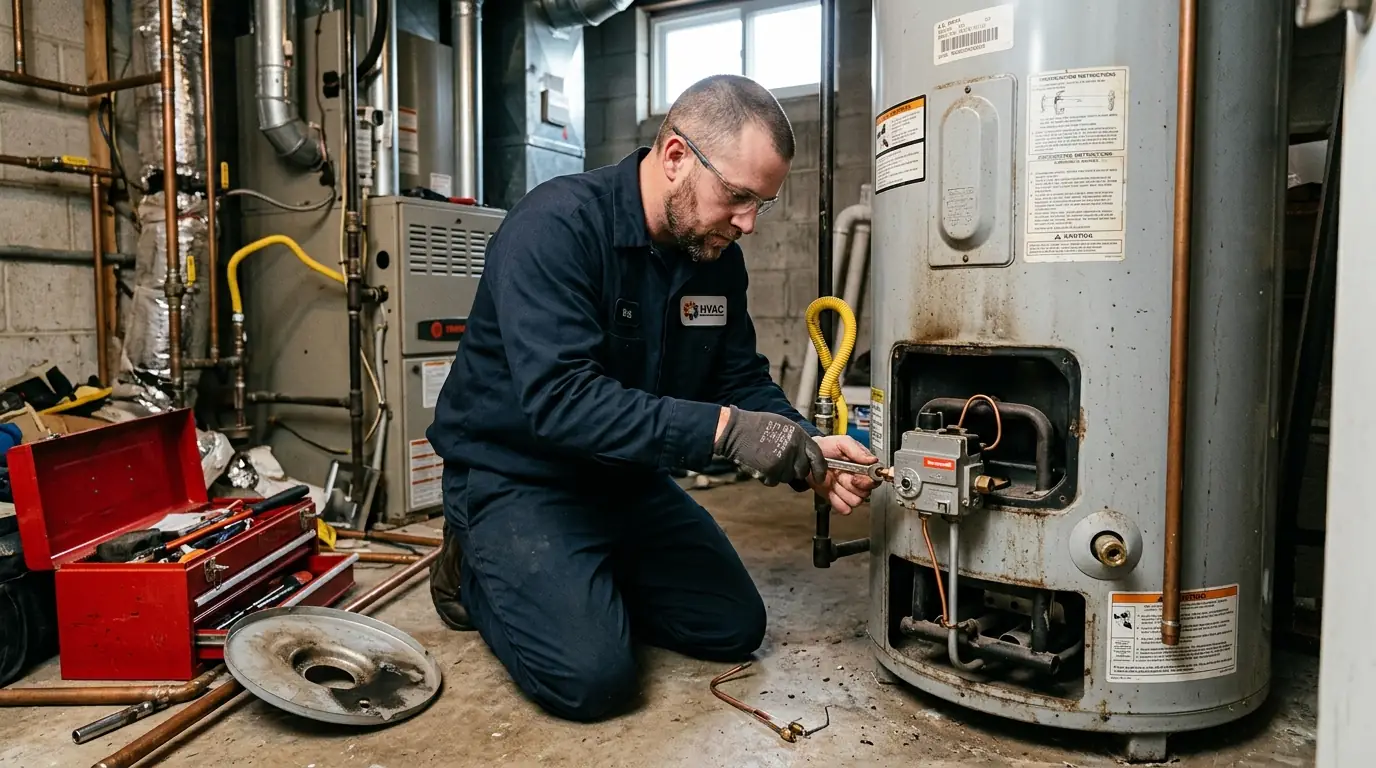
On a gas tank, no hot water usually means the pilot is out or the main burner will not light. On an electric tank, it usually means a tripped high-limit reset or a failed upper element. We start by checking gas supply or power at the unit, then the ignition or heating circuit, then the controls. Partial hot water, where showers go lukewarm quickly, points more often to a failed lower element on electric units or heavy sediment on gas units, and each has a different fix.
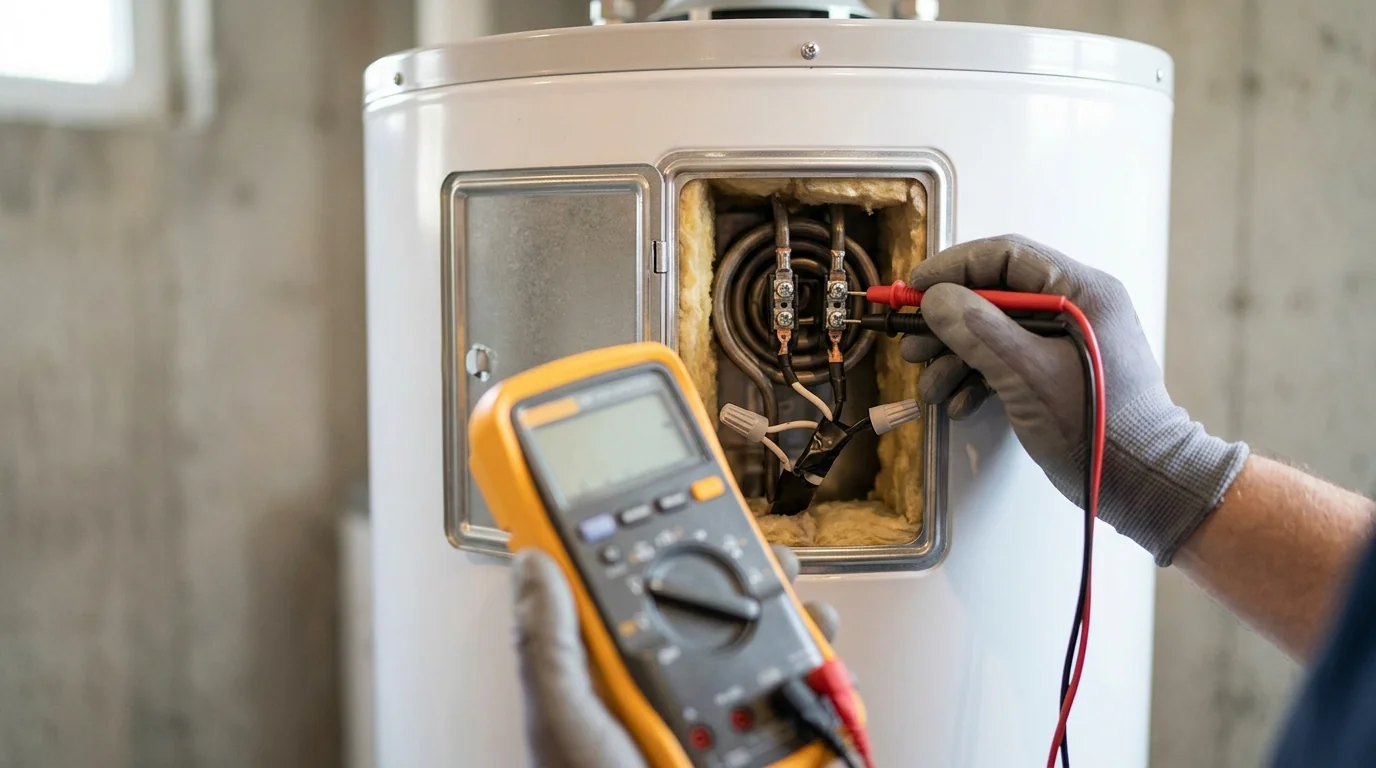
A pilot that lights and then goes out when you let go of the knob is the classic sign of a worn thermocouple, the small sensor that tells the gas valve a flame is present. Newer tanks use a flame sensor or a thermopile instead. Dirty pilot assemblies, a kinked supply tube and poor draft in the flue can cause the same symptom, so we check the venting too. A water heater that backdrafts can put combustion gas into the house, which is why this is never just a part swap.
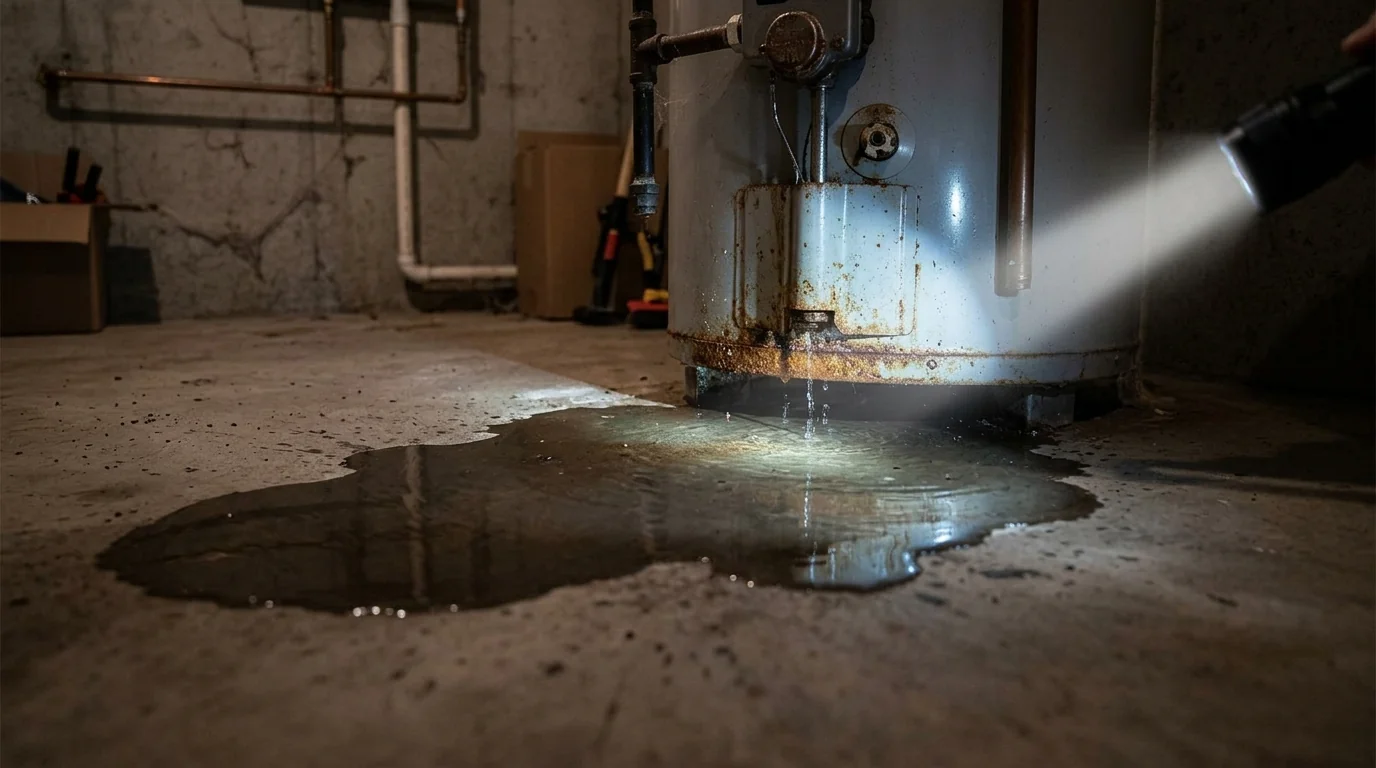
Not every puddle means a dead tank. Water at the top can come from a loose supply fitting; water around the base can come from the temperature and pressure relief valve discharging or a leaking drain valve. Those are fixable. Water seeping from the tank jacket or the bottom seam is not. We dry the area, trace the source and tell you which one you have. If it is the tank, we shut off and drain it safely so it does not flood the basement while you decide.
From the call to a working system
Gas smell or active leak: we shut off gas or water and make it safe.
Gas, ignition, controls, elements and venting checked in order.
You get the repair price and, if the tank is failing, the replacement option.
Part replaced, burner or elements cycled, temperature checked at a tap.
On gas units we confirm the flue is drafting before we leave.
Local conditions
In older Grand Rapids homes, especially around Heritage Hill where most houses predate 1940, gas water heaters often vent into a masonry chimney shared with the furnace. When the furnace is replaced with a high-efficiency model that vents through PVC, the water heater is left alone in a flue sized for two appliances, and weak draft follows. Type-B vent and chimney liners are made right here in the city, so correcting that venting is a normal part of the repair.
Before you pick up a screwdriver
A few checks are safe for any homeowner. Anything involving gas controls, venting or the relief valve belongs with a technician.
| Safe for a homeowner | Leave it to a technician | |
|---|---|---|
| Electric unit dead | Check the breaker and the reset button behind the upper panel | Testing elements and thermostats under power |
| Gas pilot out | Relight once following the label on the tank | Replacing the thermocouple or gas valve |
| Small leak | Shut the cold supply valve and call | Tracing the leak and draining the tank |
| Relief valve dripping | Leave it in place; do not plug it | Testing pressure and replacing the valve |
Brands we service and install
Pricing, explained
Most repairs are priced on the part and the time to diagnose. When the tank is old or leaking, we give you the repair and the replacement numbers together so you can compare them.
Gas controls and sensors differ from electric elements and thermostats.
A thermocouple is inexpensive; a gas control valve costs considerably more.
Past about ten years, a costly repair may not make sense on a tank near its end.
Correcting a backdrafting flue or chimney liner adds to the job.
A tank boxed into a closet or crawlspace takes longer to service.
Questions people ask us
Most often a worn thermocouple or flame sensor, though a dirty pilot or poor flue draft can cause it too.
It can be. Shut the cold supply valve on top and call. A body leak will not stop on its own.
Commonly around ten to twelve years, depending on water quality and maintenance.
Yes. Elements, thermostats and high-limit switches are all routine repairs.
On electric tanks, often a failed lower element. On gas tanks, heavy sediment is a common cause.
Yes, once a year helps limit sediment, especially where water is hard.
Yes. Descaling and service for tankless units is covered on our tankless page.
We answer 24/7. A leaking tank or no hot water can be scheduled outside normal hours.
From our guides: Carbon Monoxide and Your Furnace: Winter Safety Guide
Call now and we will find out whether it is a part or the tank.
Reach us
Service office
3535 3 Mile Rd NW, Grand Rapids, MI 49534