Short cycling
The unit starts and stops every few minutes.
A dead rooftop unit costs a restaurant a dinner service and a shop its afternoon. We answer any hour and work to get the space back to temperature before the next opening.
The short answer
Commercial HVAC repair in Grand Rapids usually starts on the roof: a packaged unit with a failed compressor contactor, a slipped belt, a tripped high-pressure switch or a gas section that will not light. We diagnose on the first visit, make the repair when the part is common, and keep the building running on remaining units while a special part comes in.
What you might notice
The unit starts and stops every few minutes.
A worn or loose blower belt.
A clogged condensate drain or pan.
Failed dampers, a weak stage or airflow problems.
A motor or compressor drawing too much current.
Keep the doors open
Commercial units run longer hours than any house furnace, often with economizers, multiple stages and building controls layered on top. Most failures are wear parts: belts, contactors, capacitors, igniters and condenser fan motors. The difference is the stakes, because a closed dining room or a warm server closet costs money by the hour.
If the equipment is past saving, our commercial HVAC installation page covers replacement. For keeping repairs rare, see rooftop unit service in Grand Rapids.
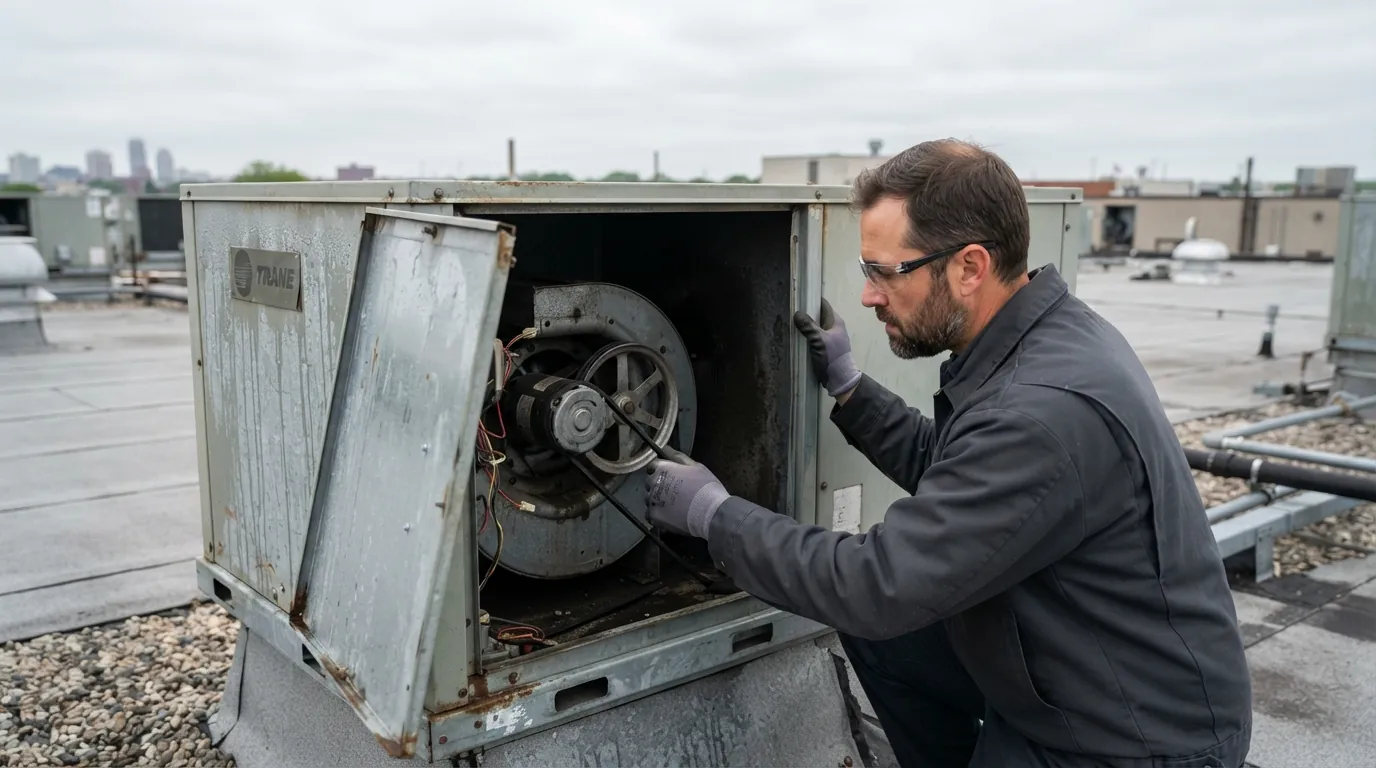
The calls we get most
Packaged rooftop units combine the compressor, condenser, gas heat and blower in one cabinet, so one call can mean any of them. Common failures include a broken or slipped blower belt, a burned contactor, a failed condenser fan motor, a clogged condensate drain that trips the float switch, and gas ignition faults in winter. We check the unit's own fault codes and the building thermostat or controller, then work through power, airflow and refrigerant in order so the fix addresses the cause and not only the symptom.
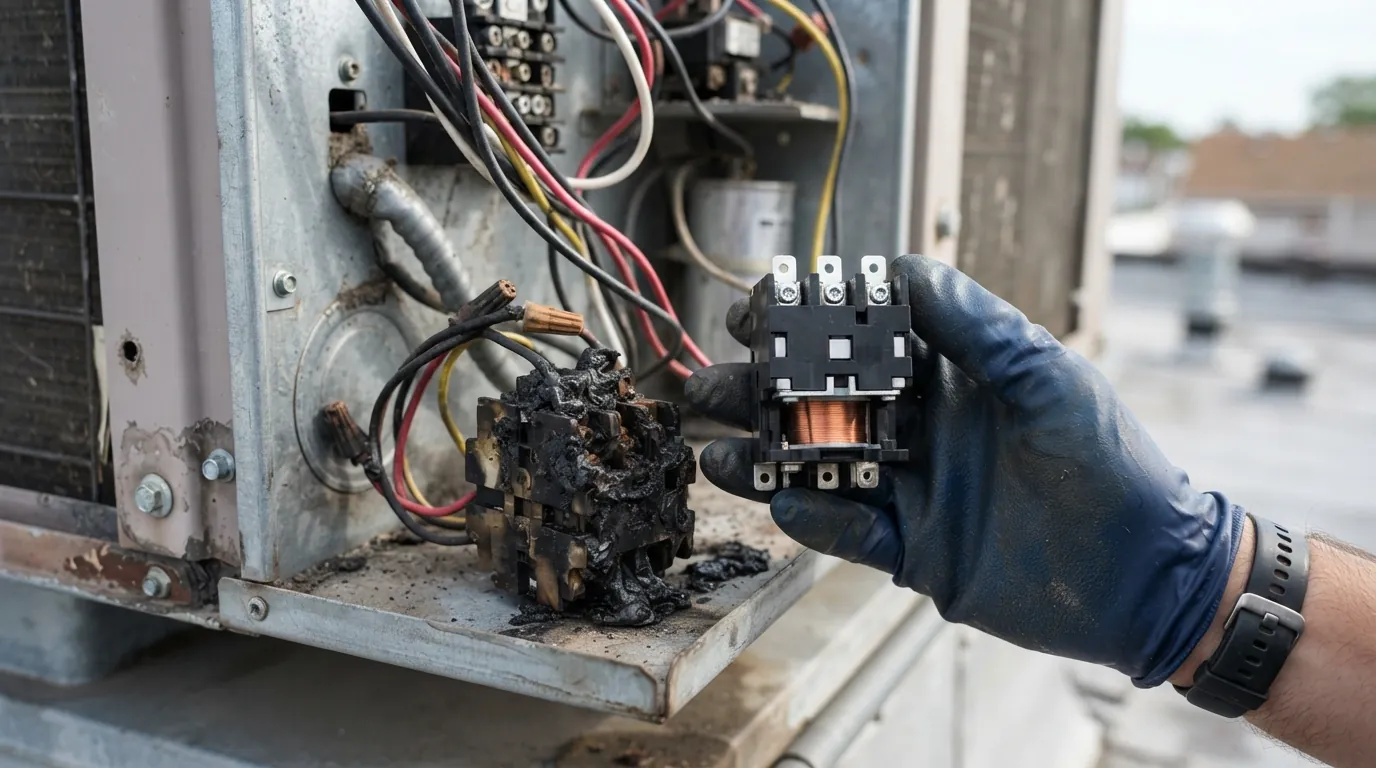
Kitchens and busy stores carry heavy cooling loads from cooking equipment, lighting and people, so a unit that was barely keeping up fails first on a hot Saturday. Dirty condenser coils, grease-loaded filters near a kitchen and undercharged refrigerant are frequent culprits. When a make-up air unit is part of the picture, a building that goes negative pulls hot outside air in through every door. We look at the whole system rather than the one unit that tripped. Related work is on our make-up air page.
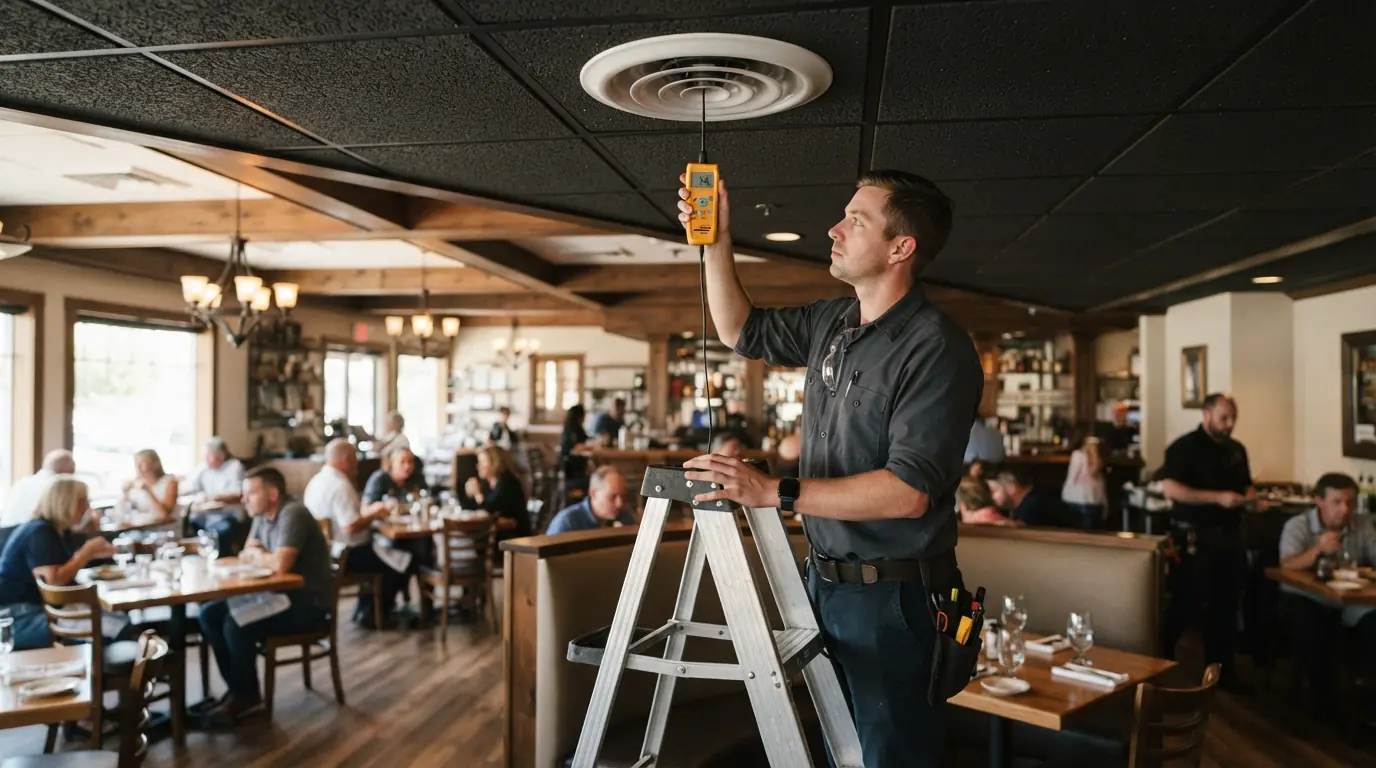
A cold office on a Monday morning usually traces to a gas section that failed to light over the weekend: a bad inducer motor, a pressure switch, a flame sensor or an igniter. Some buildings have a unit heater or split furnace serving one area, and those fail the same ways a home furnace does. We restore heat, test the heat exchanger and flue on gas units, and flag any unit whose age or condition makes a repeat failure likely before the coldest weeks arrive.
From the call to a working system
We ask what the space is doing and whether other units are running.
Fault codes, controls, power, airflow and refrigerant checked in order.
You get the price and any part lead time before work starts.
Unit restarted and run through heating or cooling stages.
What failed, why, and anything else on the unit worth budgeting for.
Timing
Most rooftop repairs involving belts, contactors, capacitors, igniters or drains are finished on the first visit, usually within a couple of hours of arrival. Motor and control board replacements depend on whether the part is available locally.
Compressor and heat exchanger failures are major repairs, and we lay out repair against replacement before the building commits to either.
Local conditions
Grand Rapids averages only about ten days a year at 90 degrees or above, so a rooftop unit that has been limping along often gets through June and then gives out on the first truly hot afternoon. Kentwood, on M-6 and I-96, is roughly half single-family homes, with large apartment buildings and attached rows making up much of the rest, and buildings like those run on packaged or split equipment that needs the same attention before summer.
Brands we service and install
Pricing, explained
Commercial repairs are priced after diagnosis, part by part, and we tell you before starting if a part has a lead time.
A belt or contactor is quick; a compressor or heat exchanger is a major repair.
Larger tonnage and multi-stage equipment take longer to diagnose.
Roof hatches, ladders and fall protection affect time on site.
Night and weekend calls cost more than scheduled weekday work.
Brand-specific control boards may need to be ordered in.
Questions people ask us
Yes. The phone is answered 24/7 for commercial and residential customers.
We service the common commercial brands and older equipment still in use.
We tell you the lead time and look at keeping the space covered in the meantime.
We service the heating, cooling and make-up air, not the cooking line itself.
Scheduled filter, belt and coil service catches most wear before it fails.
We troubleshoot thermostats and unit controllers tied to the HVAC equipment.
Depends on the part and the age. We give you both repair and replacement numbers.
Yes. One number covers every site you manage in our service area.
Call any hour and we will get a technician on the roof.
Reach us
Service office
3535 3 Mile Rd NW, Grand Rapids, MI 49534