Yellow or flickering flame
A clean gas flame burns steady and blue.
Every gas appliance in the house tested for carbon monoxide at the source, with the venting and draft checked from the appliance to the outside.
The short answer
A carbon monoxide inspection in Grand Rapids tests every fuel-burning appliance for CO in its flue gas and in the room around it, then checks that each one vents correctly to the outside. If a CO alarm is sounding right now, leave the house and call 911 before calling us; this service is for checking, not for an active alarm.
Before the heating season
Carbon monoxide comes from incomplete combustion, and it leaves the house through venting that is designed to carry it out. Trouble starts when either side fails: a burner that is dirty or badly adjusted, or a flue that is blocked, disconnected or too big for what is using it.
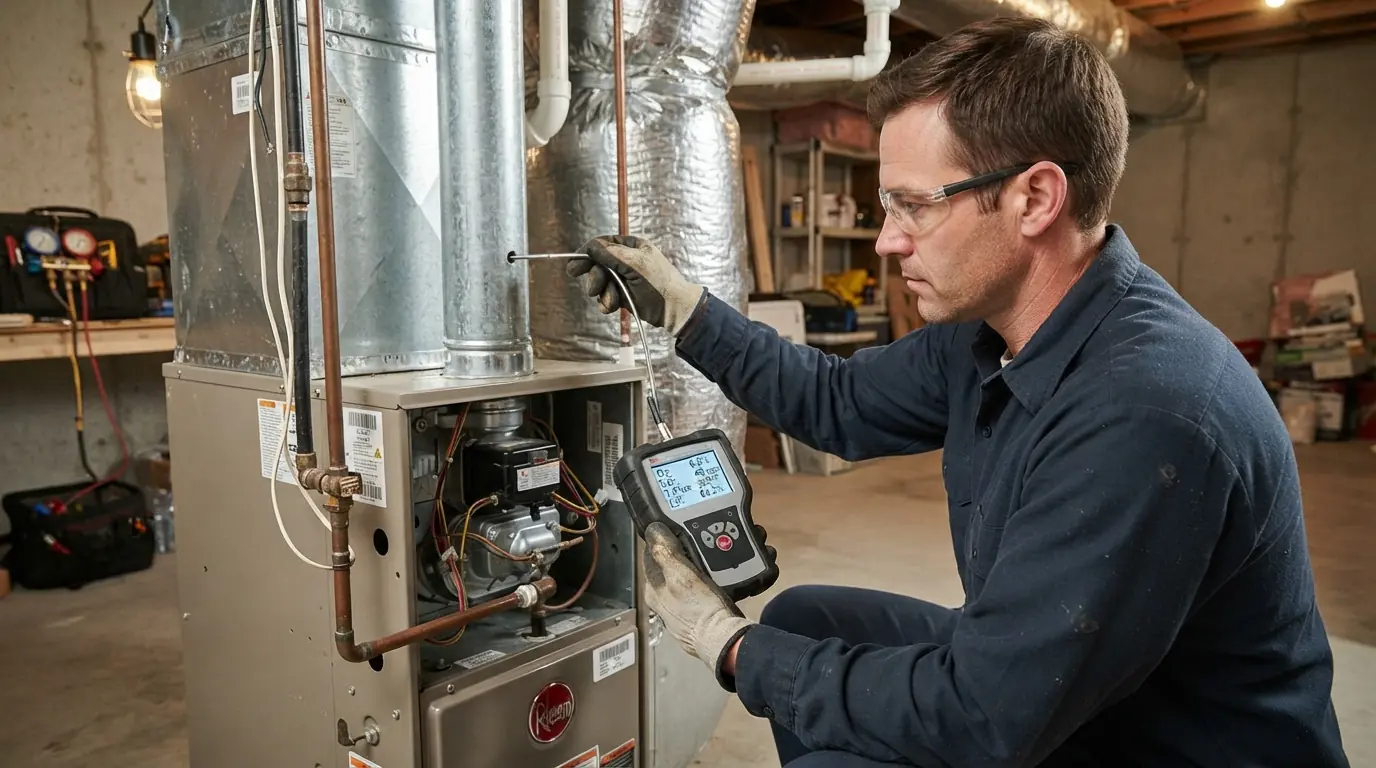
We test the appliances where the problem starts and follow the vent all the way out. The check pairs naturally with a fall furnace tune-up, and we look at your detector placement while we are there.
What the visit covers
The three parts of the inspection
With the furnace running, we sample the flue gas with a combustion analyzer and read carbon monoxide, oxygen and draft. High CO in the flue points to a dirty burner, bad gas pressure or a cracked heat exchanger letting air disturb the flame. We also sample the supply air coming out of the registers. Any CO there is serious and usually means the heat exchanger has failed, in which case we shut the furnace down and explain the options, including furnace repair in Grand Rapids or replacement.
Every gas appliance needs its exhaust to leave the house. We check that metal flue pipes are connected, sloped and sealed, that PVC vents on high-efficiency furnaces are clear, and that a masonry chimney is drafting. Water heaters sharing a chimney with a furnace are the most common problem we find, because a chimney sized for two appliances can draft poorly for one. We test for spillage at the water heater draft hood with the appliances running together, which is how they actually operate.
Carbon monoxide detectors should sit on every sleeping level and near bedrooms, and detectors have a service life printed on the back. We check the dates on yours and suggest where more are needed, including near an attached garage and a finished basement bedroom. We do not sell detectors as a condition of the inspection, and we will point out any unit that has passed its date. A working detector is the backup; an appliance that burns cleanly and vents properly is the actual protection.
Local conditions
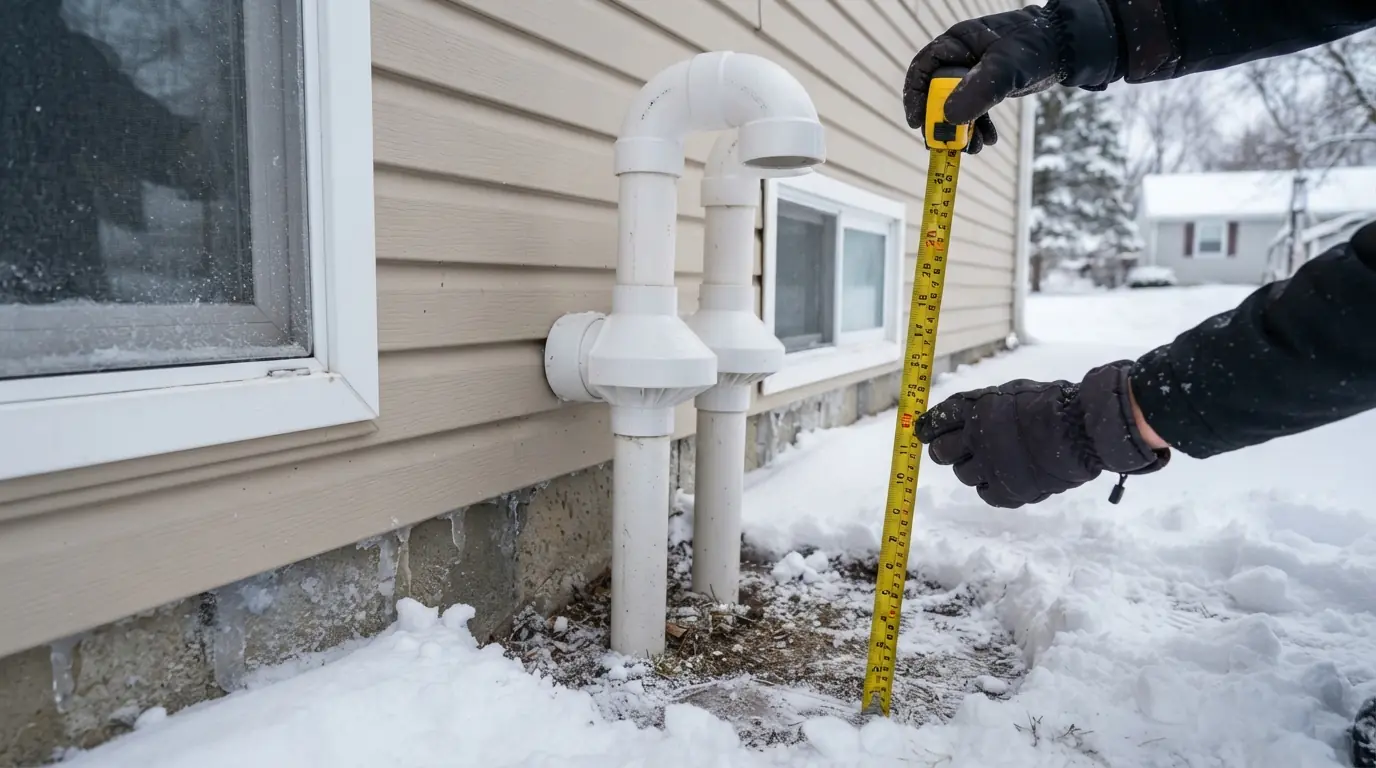
Grand Rapids gets about 77 inches of snow in a normal year, and for more than half of winter days there is snow on the ground. High-efficiency furnaces and water heaters vent through PVC pipes low on the side of the house, and drifts or ice can close them off. Most appliances shut down when that happens, but not all do, so we check terminal height and clearance as part of the inspection before the first hard freeze.
From the call to a working system
We list every fuel-burning appliance and where it vents.
Flue gas CO, oxygen and draft measured on each appliance while running.
Ambient CO checked at the appliances and in living areas.
Connections, slope, terminations and chimney draft inspected.
Written readings, anything unsafe shut off and explained, repairs quoted.
What you might notice
A clean gas flame burns steady and blue.
Dark streaks mean incomplete combustion.
Moisture from combustion gas that is not leaving the house.
Can mean exhaust spilling back into the room.
Leave, get medical advice and have the house tested.
Have every gas appliance tested before the furnace runs all day.
Pricing, explained
The inspection is priced by the number of fuel-burning appliances and how accessible their venting is. Any repair we recommend is quoted separately so you can decide.
Furnace, water heater, boiler, fireplace, range and garage heater each get tested.
Masonry chimneys take longer to evaluate than short PVC vents.
Attic or crawlspace flue runs add time to trace.
Pairing the check with a tune-up saves a separate trip.
Repairs such as a liner or new flue pipe are quoted after the test.
Questions people ask us
Get everyone outside, call 911 and do not go back in until responders clear the house.
Once a year before heating season, and any time an appliance is replaced.
Yes, if it is set up or vented wrong. That is why we test new installs too.
Yes. Vent-free and direct-vent units are both checked for CO and correct operation.
On every level with sleeping areas, near bedrooms and outside a finished basement bedroom.
Headache, dizziness and nausea that improve away from home. Get medical help and have the house checked.
Yes. Keep the PVC intake and exhaust clear of drifts and ice all winter.
Yes. If an appliance is producing dangerous CO, we turn it off and tag it before leaving.
From our guides: Read: carbon monoxide safety
More maintenance & inspection work
Call to book an inspection. If an alarm is sounding now, call 911 first.
Reach us
Service office
3535 3 Mile Rd NW, Grand Rapids, MI 49534