One room always off
The far room is colder in winter and warmer in summer.
When one room never heats and another never cools, the furnace is often fine. The air is leaking out of the ducts before it gets there, or a crushed run is choking it.
The short answer
Duct repair and sealing in Grand Rapids means finding where conditioned air escapes or gets restricted before it reaches the rooms. We test static pressure and airflow, reconnect separated joints, replace crushed flex duct and seal seams with mastic or foil tape rated for ducts. Most homes are finished in a day.
Airflow problems
Ductwork in a basement, attic or crawlspace carries all the heat and cooling the house pays for. Unsealed seams, a joint that fell apart years ago, or a flex duct squashed flat behind a storage shelf all rob the rooms at the far end of the run first.
Sealing and repairs fix what is there. When the layout itself is undersized or missing a return, see ductwork installation. If the problem is dust rather than airflow, see duct cleaning in Grand Rapids.
Pricing, explained
Duct work is priced on accessibility and how many runs need attention. We test first so you pay to fix the runs that matter.
Open basement ducts are simple; attic and crawlspace runs take longer.
Sealing one trunk costs less than every branch in the house.
Torn or crushed flex duct is replaced by the run.
Adding a missing return is a bigger job than sealing.
Airflow and pressure readings before and after are included.
What we repair
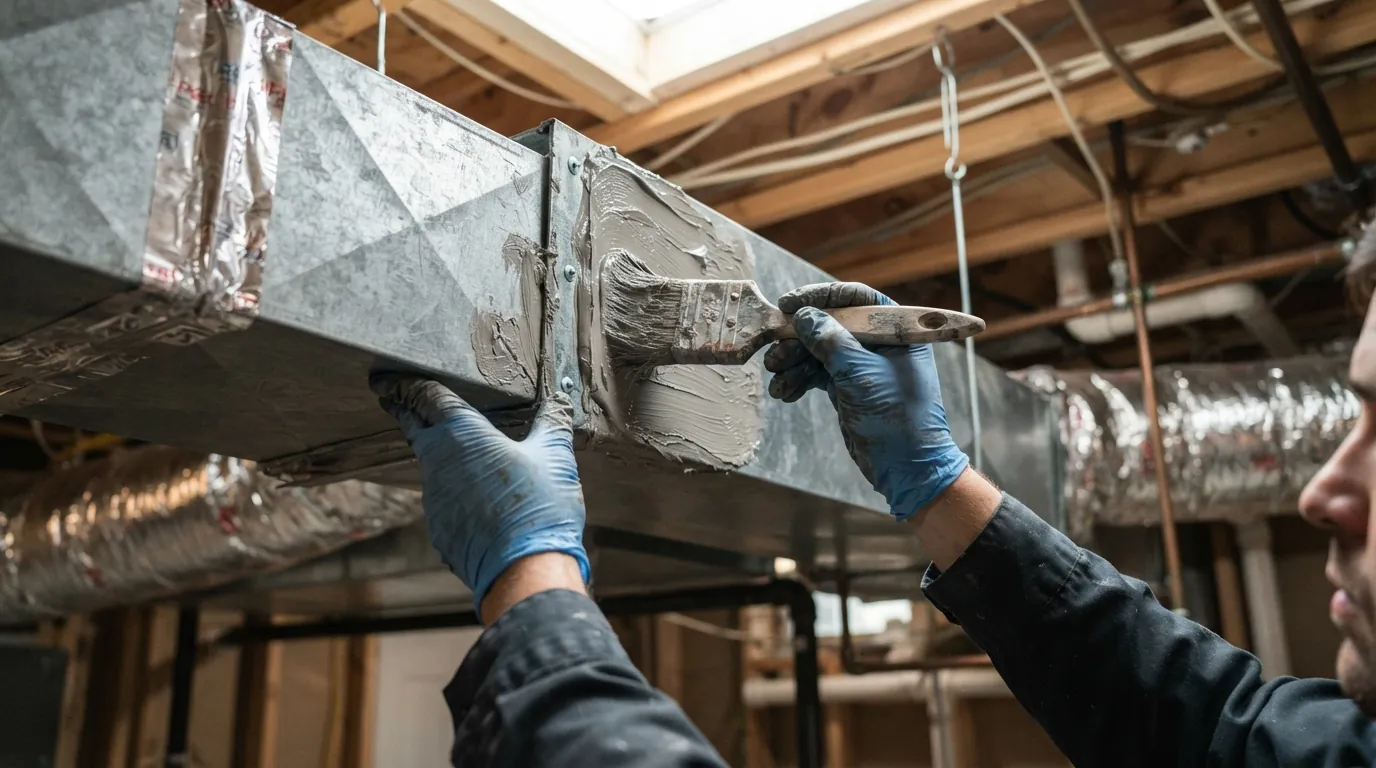
Sheet metal ducts are joined with slip and drive connections and screwed together, and over the years those joints loosen, especially where someone bumped a run during a basement remodel. A fully disconnected branch pours heat into the basement ceiling while the room above stays cold. We find leaks by feel, smoke and pressure readings, refasten the joints and seal them with mastic, which lasts far longer than cloth duct tape that dries and peels off within a few seasons.
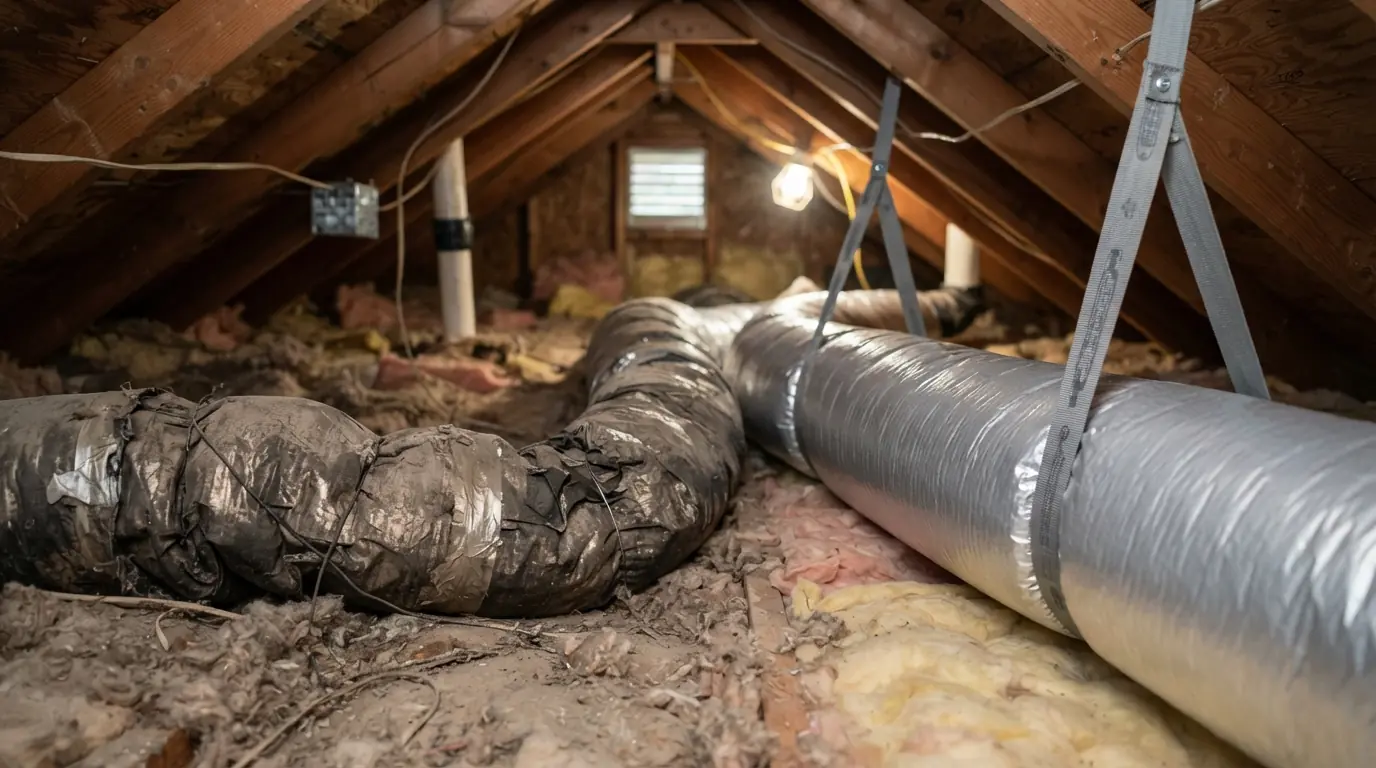
Flexible duct is quick to install and easy to damage. Runs get stepped on in attics, kinked around joists, or pulled so tight at the fitting that the liner tears away. A flex run with a sharp bend or a sag between hangers can lose most of its airflow. We straighten and re-hang runs with proper support, shorten excess length that has been coiled up, and replace sections where the inner liner is torn or the insulation has fallen off.
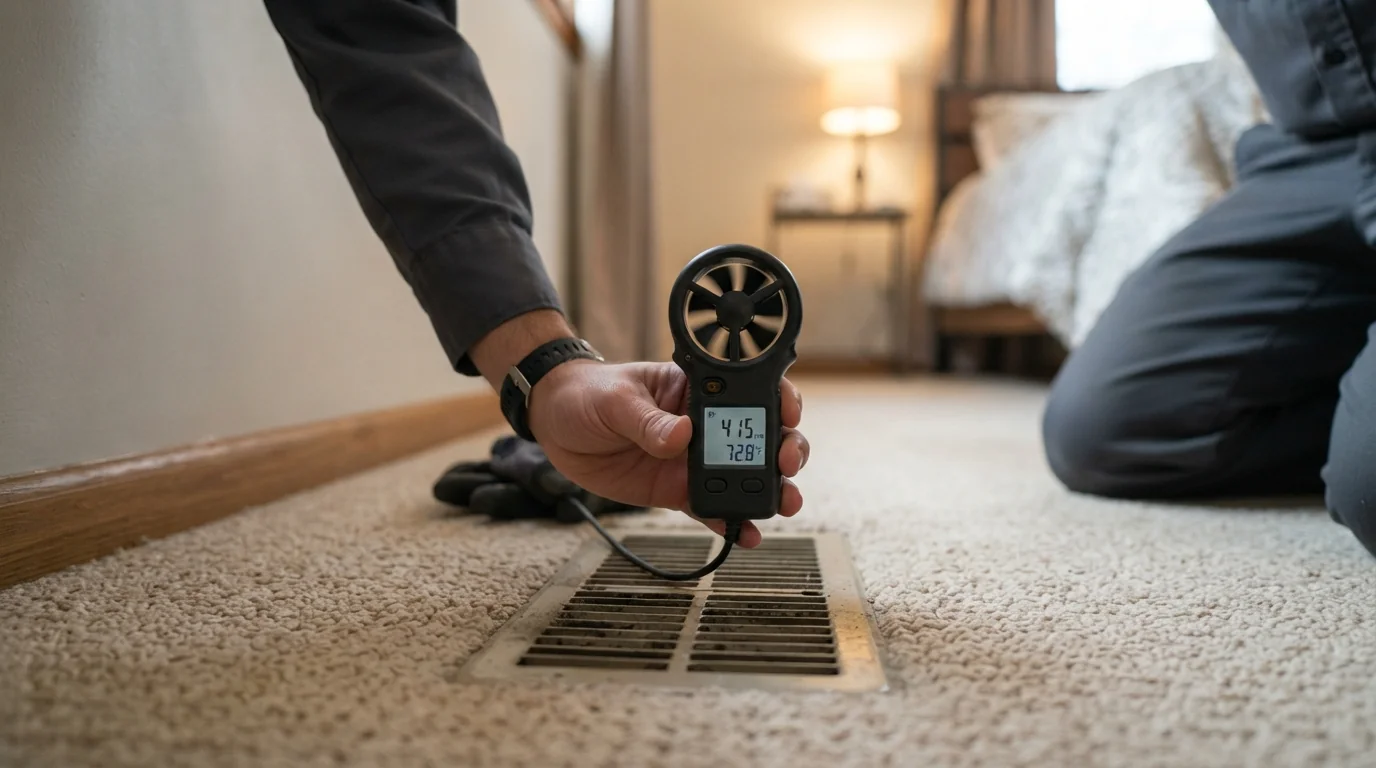
Once leaks are sealed, more air reaches the far rooms, and the house may need rebalancing so the nearest rooms do not get too much. We adjust branch dampers, check each register's airflow and look for rooms that lack a return path, since a closed bedroom door with no return can starve that room of air. The goal is a house where rooms sit within a few degrees of each other without closing half the registers, which only raises duct pressure and strains the blower.
What the visit covers
Local conditions
Kentwood runs from 1950s brick ranches to 1970s split-levels, with the older Mapleview area built largely in the 1950s through the 70s. Ranches on slabs tend to have long trunk runs with small returns, and split-levels put bedrooms half a level above the furnace, so the far bedroom and the upper level are usually the ones that complain. Sealing and rebalancing those runs fixes most of it without a new furnace.
From the call to a working system
Which rooms are uncomfortable and when.
Static pressure, temperature at the registers and visual inspection of runs.
Joints refastened, flex re-hung or replaced, seams sealed with mastic.
Branch dampers set so rooms even out.
Readings compared with the start so you see the change.
What you might notice
The far room is colder in winter and warmer in summer.
Supply air leaking into the joist space.
A crushed or disconnected branch.
Unfiltered air pulled in through leaks.
Air forced through a gap or undersized run.
Questions people ask us
Often a leaking or crushed run, or a room with no return air path.
Cloth duct tape fails on ducts. We use mastic or foil tape rated for ductwork.
Hidden runs are harder to reach; we seal what is accessible at each end.
Less lost air means the system runs less to reach the setting.
Uneven rooms, a hot basement ceiling and dust around registers are common signs.
Yes. Torn, crushed or poorly hung flex runs are replaced and properly supported.
Most basement systems are finished in a day.
Closing many vents can raise duct pressure and strain the blower.
From our guides: Guide: signs a furnace is failing
Call and we will measure where the air is going.
Reach us
Service office
3535 3 Mile Rd NW, Grand Rapids, MI 49534