Signs a furnace is failing include clicking without lighting, short cycling, a yellow or lifting flame, new squealing or grinding, rising gas bills and rooms that no longer get warm. A gas smell, a sounding carbon monoxide alarm or headaches that ease away from home are urgent: leave the house and call the utility or 911 first.
Urgent signs: act now
A few signs are not about furnace wear at all. They are safety problems.
- Gas smell: leave the house and call the gas utility from outside.
- Carbon monoxide alarm: get everyone out and call 911.
- Headaches, dizziness or nausea that ease when you leave: leave, get medical advice and have appliances tested.
- Burning electrical smell or smoke: turn the furnace off at the switch and call.
Noises that mean something
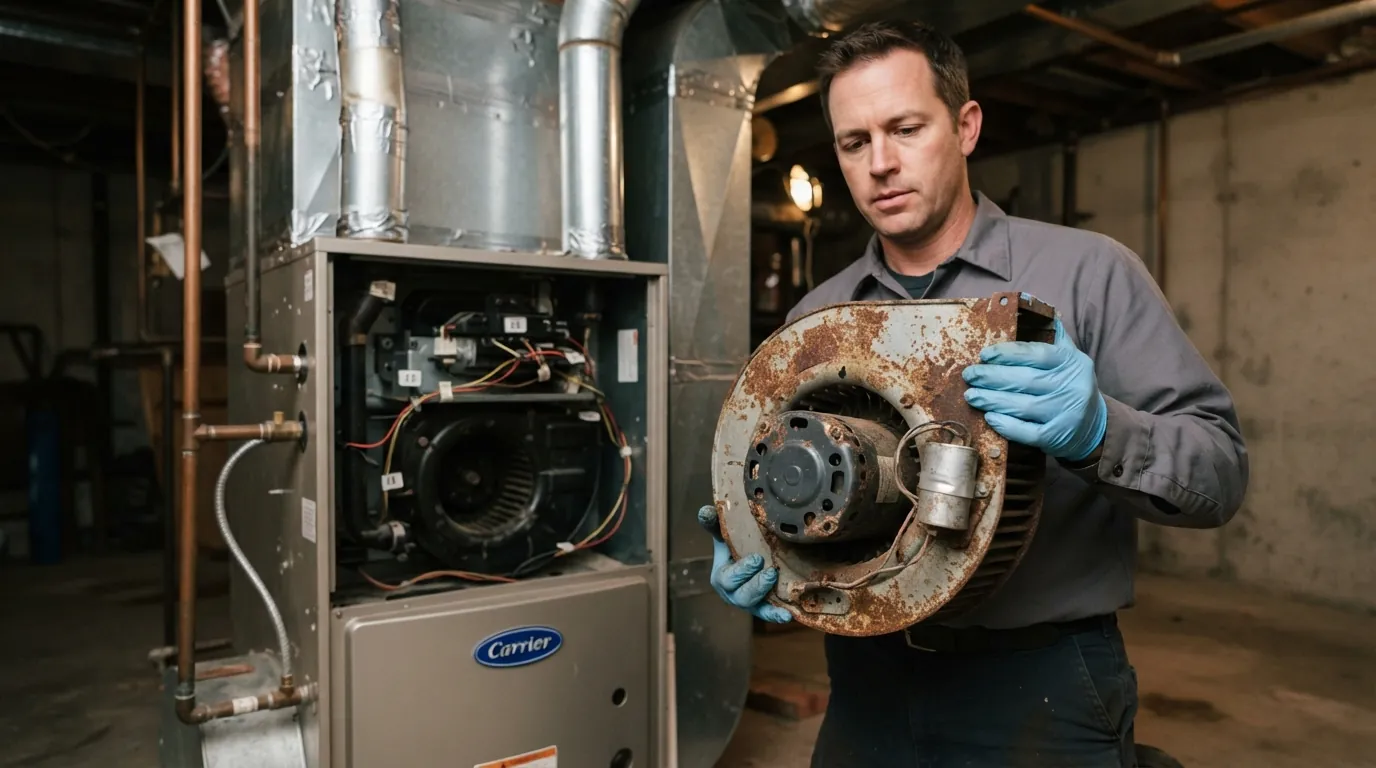
A furnace should make a steady, familiar set of sounds: the inducer starting, a soft whoosh as the burners light, the blower coming on. New sounds usually point to a specific part. Squealing often means a blower motor bearing or belt. Grinding or scraping means a motor bearing is failing or the blower wheel is rubbing. A loud bang when the burners light points to delayed ignition, where gas builds up before lighting, and should be checked soon.
Rattling can be as simple as a loose panel, or a cracked blower wheel. Clicking that repeats without the burners lighting is an ignition problem; see our no-heat guide.
What the flame tells you
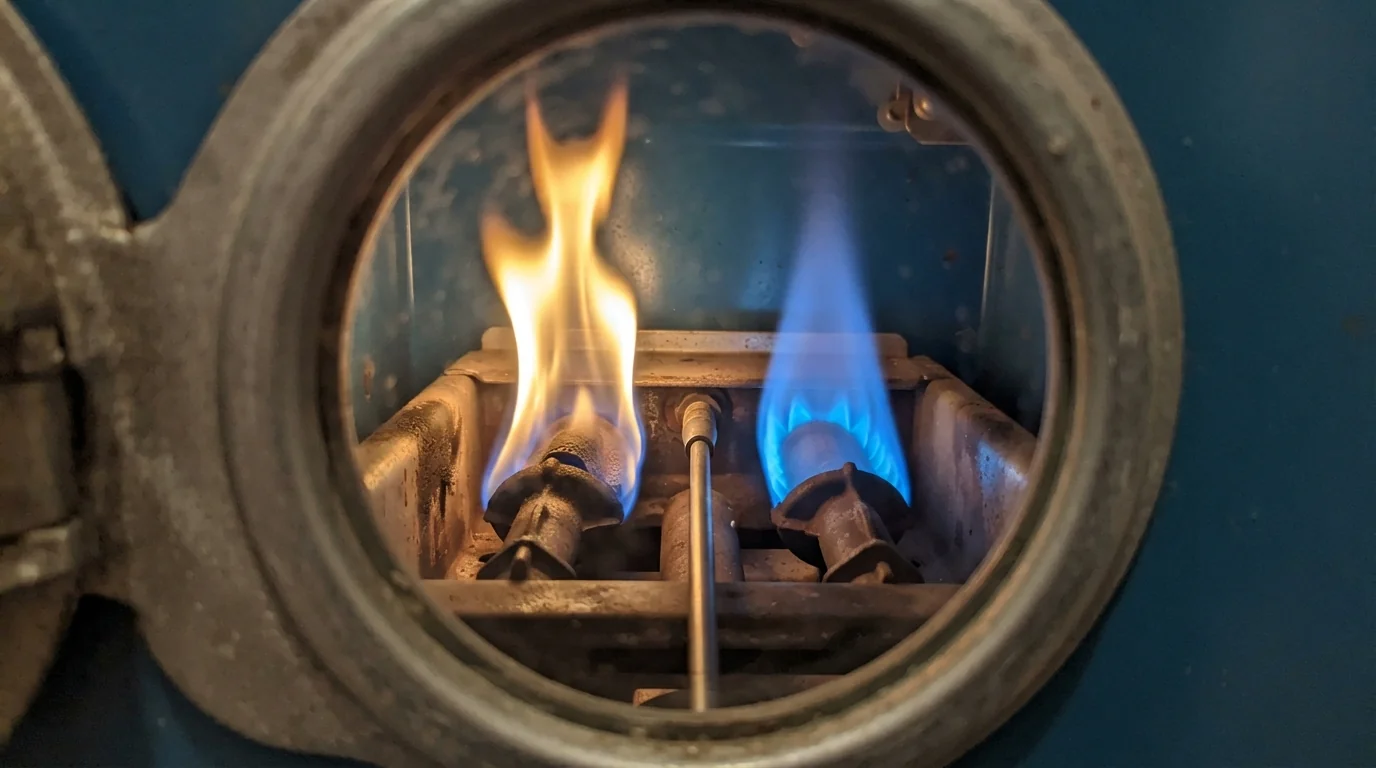
Through the burner window, a healthy gas flame is steady and mostly blue. A yellow, orange or lazy flame points to incomplete combustion from dirty burners, bad gas pressure or a venting problem, and incomplete combustion is where carbon monoxide comes from. A flame that jumps or changes when the blower starts can indicate a cracked heat exchanger. Either one deserves a combustion test before the furnace runs all winter.
Behavior that points to trouble
Many failing furnaces warn you through how they run rather than how they sound.
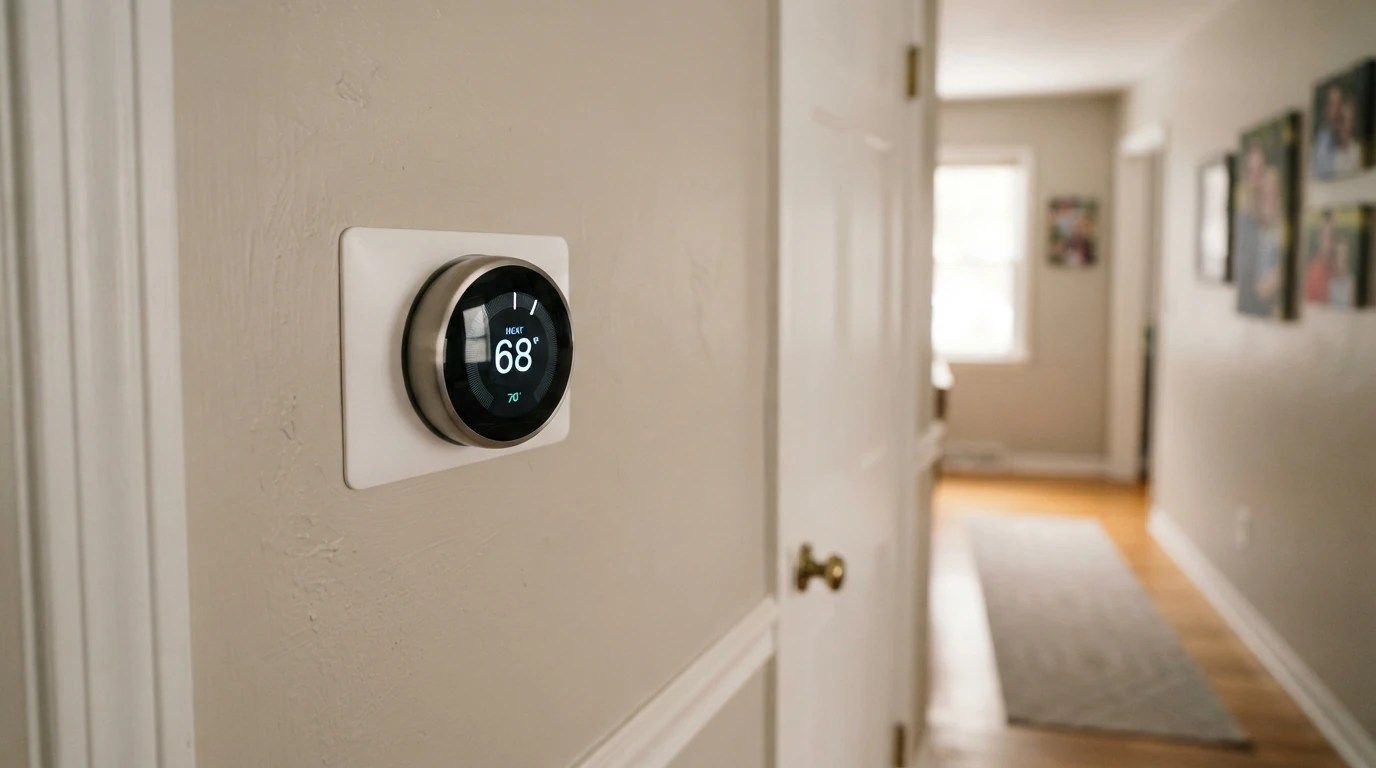
- Short cycling: starting and stopping every few minutes.
- Long run times without reaching the setpoint.
- Some rooms much colder than they used to be.
- The blower running constantly or not at all.
- Gas bills rising with no change in how you use the house.
Age and repair history
A furnace past about 15 years old that has needed several repairs in the last few seasons is a candidate for planned replacement, even if it is running today. Planning lets you choose equipment and timing instead of taking whatever is available during a cold snap. Our repair or replace guide explains how to weigh it. Our guide on typical furnace lifespans covers what wears one out.
Signs that are usually nothing
Not every change is a failure. A burning smell for the first few minutes of the heating season is dust on the heat exchanger burning off. A click or two before the burners light is the ignition sequence. A soft whoosh when the burners light, and a short run of the blower after the burners shut off, are both normal.
Some ticking as ducts expand and contract is normal too. What matters is change: a sound or smell that is new, louder than last year, or lasting longer than it used to. When you are not sure, describe it on the phone and we will tell you whether it can wait for a tune-up.
What to do before the cold arrives
Run the furnace through a full cycle in early fall and pay attention to the signs above. Replace the filter, clear the outside vents and test your detectors, as listed in our fall prep checklist. Then book a furnace tune-up work, which tests combustion, the heat exchanger and every safety switch.
If you notice any of these signs now, call rather than waiting. A small repair in October is easier, cheaper and warmer than the same repair in January. We answer 24/7 through furnace repair.
Furnace warning sign questions
Squealing, grinding, repeated clicking or a bang when the burners light.
It means incomplete combustion and should be tested.
Short cycling from airflow, a flame sensor or an oversized furnace.
Yes. Dirty burners and poor airflow waste fuel.
A technician confirms it with a camera and combustion readings.
Leave the house and call the gas utility from outside.
Usually when an old furnace needs a major component.