When a furnace stops heating in Grand Rapids, check five things first: the thermostat is on heat with fresh batteries, the furnace switch is on, the breaker has not tripped, the filter is not clogged, and the PVC vents outside are clear of snow. If heat does not return after those, turn the furnace off and call; the fault is inside the furnace.
Safety first
If you smell gas, leave the house and call the gas utility from outside. If a carbon monoxide alarm is sounding, get everyone out and call 911. Do not try any of the checks below until the house has been cleared. Everything else on this page assumes neither of those is happening.
The five safe checks
These fix a real share of no-heat calls and take about ten minutes.
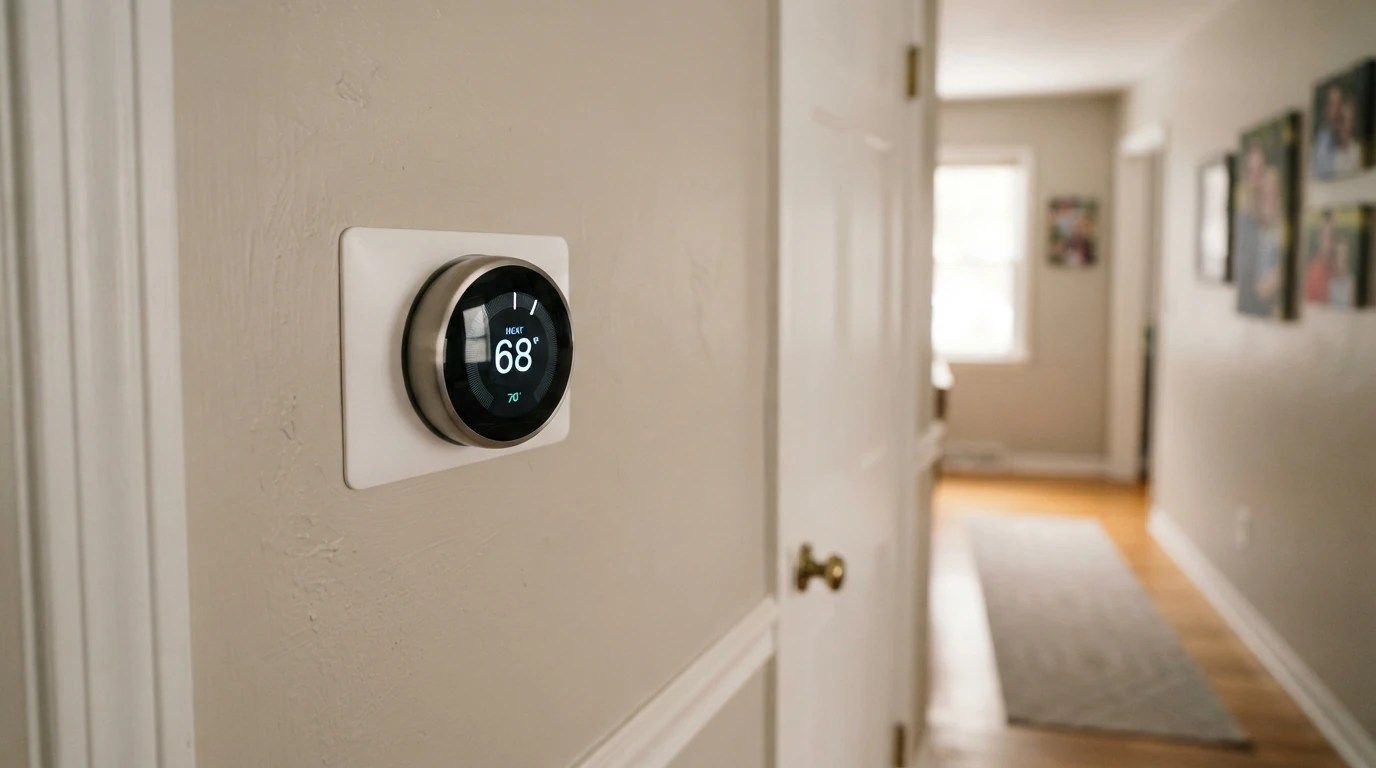
- Thermostat: set to heat, setpoint above room temperature, batteries fresh. A blank screen often just means dead batteries.
- Furnace switch: a light-style switch near the furnace or at the top of the basement stairs. It gets turned off by accident more often than you would think.
- Breaker: check the furnace breaker in the panel. If it trips again right away, leave it off and call.
- Filter: a filter packed solid can make the furnace overheat and shut itself down.
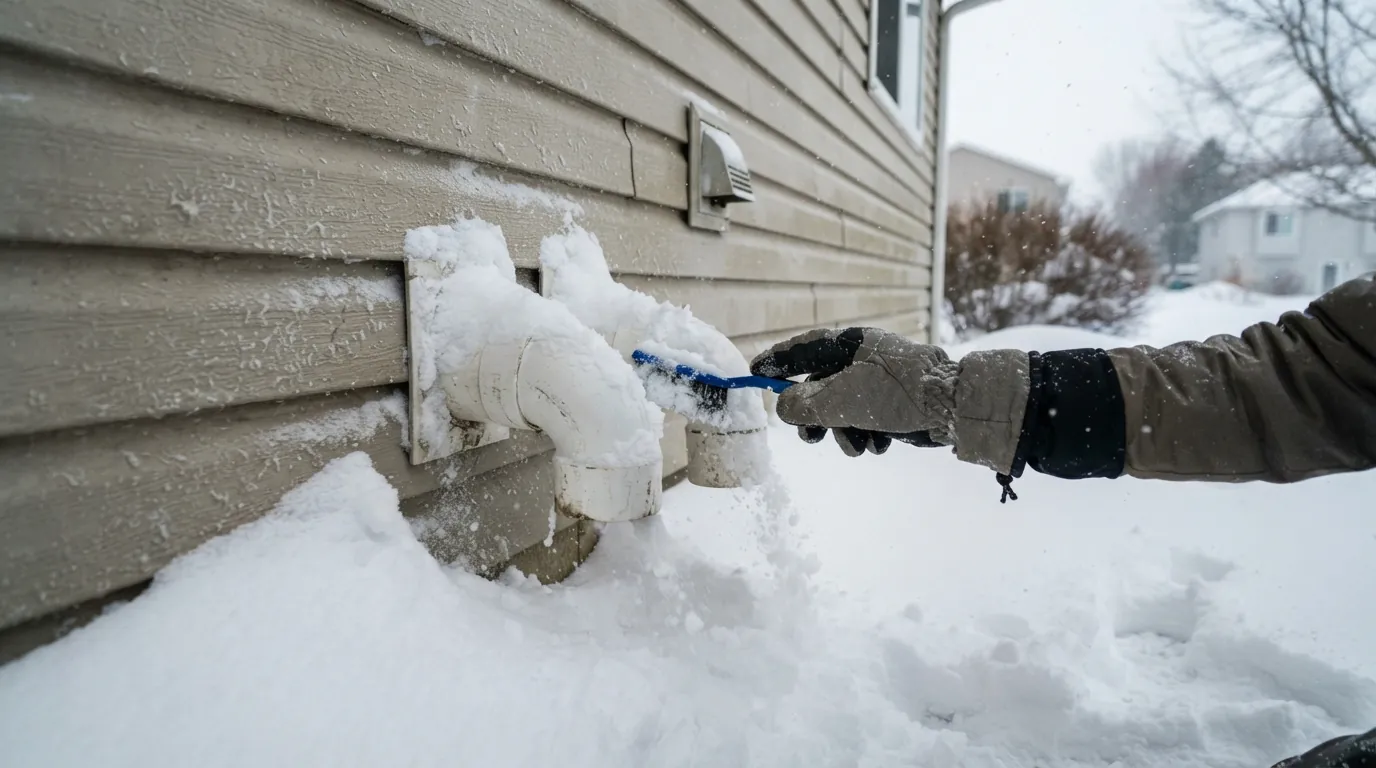
- Outside vents: high-efficiency furnaces vent through two PVC pipes on an outside wall. Snow or ice over them shuts the furnace off.
What the furnace is telling you
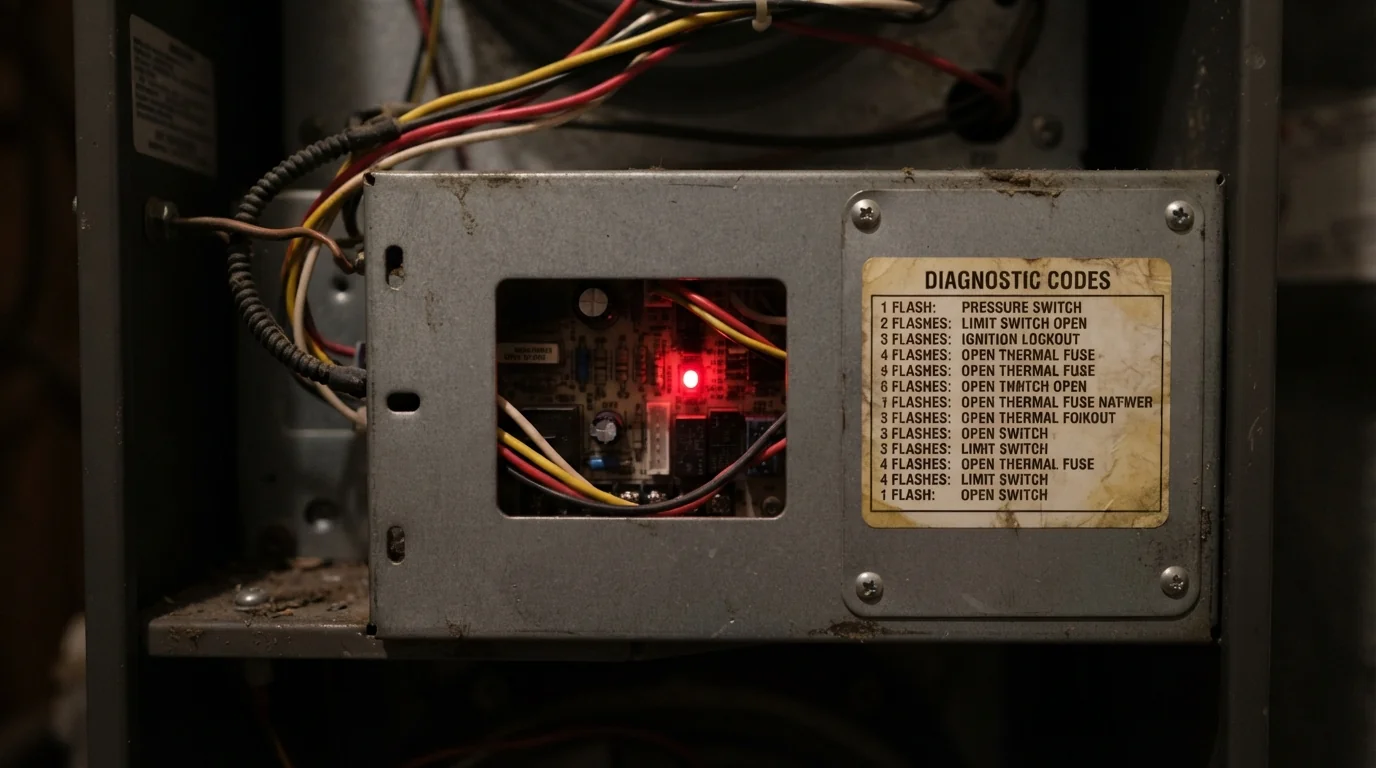
Most modern furnaces have a small window with a blinking LED on the control board and a code chart on the door. Count the blinks and note the pattern before you call; it narrows the fault down and saves time on the visit.
Sounds help too. Clicking with no ignition often means an ignitor or gas valve problem. Burners that light and go out after a few seconds usually point to a dirty flame sensor. A furnace that runs, then stops with the blower still going, may be tripping its high limit from poor airflow. See furnace repair work for how each is fixed.
Common causes by furnace age
Furnace age is a useful clue. In the first few years, most no-heat calls are installation or setup problems: a condensate drain that freezes or clogs, a vent terminated too close to the snow line, or a thermostat configured for the wrong equipment. Between about five and fifteen years, wear parts take over: hot surface ignitors crack, flame sensors coat over, inducer motors get noisy and capacitors weaken.
Past fifteen years, the same wear parts keep failing, and larger failures such as control boards, blower motors and heat exchangers become more likely. That is the point where repair and replacement are worth pricing side by side, which our furnace cost guide walks through.
What not to do
Resetting a furnace once by turning the power off and back on is fine. Resetting it over and over is not, because a furnace that keeps locking out is protecting itself from something, and repeated resets can flood the heat exchanger with unburned gas or overheat it.
Do not remove panels and start jumping safety switches, do not heat the house with a gas oven, and do not run an outdoor heater or generator indoors. Those are how a cold night turns into an emergency room visit. Our carbon monoxide guide covers why.
Keeping the house safe while you wait
Close curtains and blinds, keep interior doors open so any heat spreads, and gather everyone in one room. On outside walls, open the cabinet doors under sinks so warmer room air reaches the pipes, and let a faucet drip slightly on the coldest nights. Electric space heaters are fine if they are plugged directly into the wall and kept away from anything that burns.
When you call, tell us the furnace age if you know it, what the thermostat shows, any blink code and what you have already checked. We answer 24/7, and no-heat calls are scheduled ahead of routine work through our emergency HVAC repair page.
No-heat questions
Often ignition or flame sensing is failing, or the high limit tripped. Check the filter first.
Turn the furnace switch off for 30 seconds and back on, once. Repeated lockouts need a technician.
Yes. Blocked PVC vents make high-efficiency furnaces shut down.
Usually dead batteries or a furnace switch that was turned off.
It depends on the walls and pipes; keep cabinet doors open and faucets dripping on outside walls.
Electric heaters plugged directly into the wall and kept clear of fabric are fine.
The blink code, what the thermostat shows, the furnace age and what you already checked.