Most gas furnaces last roughly 15 to 20 years, and well-maintained ones sometimes longer. Long Michigan heating seasons, dirty filters, oversizing and skipped maintenance shorten that. Age alone is not a reason to replace a furnace, but once it passes 15 years, rising repairs, a cracked heat exchanger or failing safety tests usually make replacement the better choice.
The typical range
Most gas furnaces in Michigan homes last somewhere around 15 to 20 years. Some run well past that with good care, and some fail early because of installation or maintenance problems. The age on the data plate is a guide, not a deadline.
High-efficiency condensing furnaces have a second heat exchanger and a condensate system, and they reward regular maintenance more than older 80 percent models do.
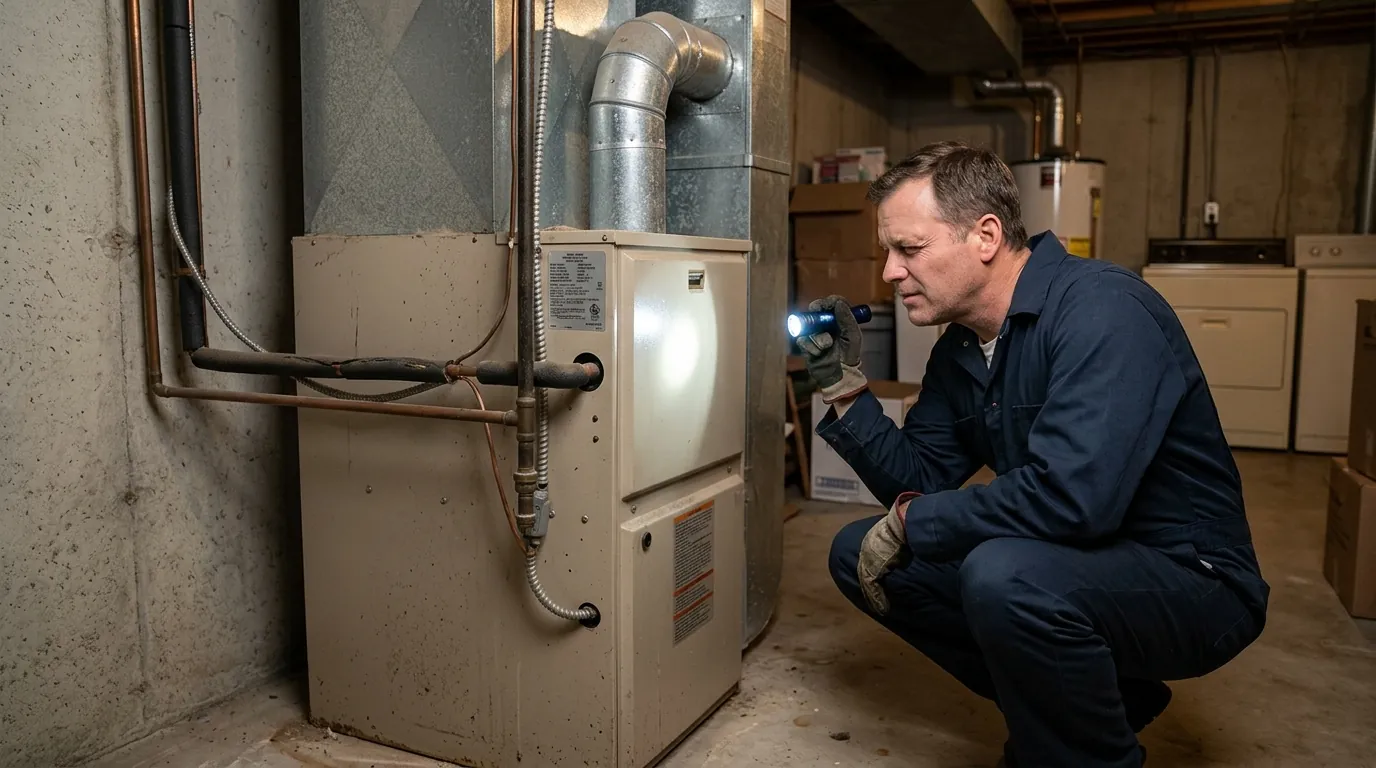
What wears a furnace out here
A Grand Rapids furnace works hard. With 133 nights a year at or below freezing and more than 50 days that stay below freezing all day, it runs for a large share of the year, and every hour adds wear to the blower, igniter, inducer and heat exchanger.
- Dirty filters: restricted airflow overheats the heat exchanger.
- Oversizing: short cycling multiplies starts and stops.
- Skipped maintenance: dirty burners and sensors strain parts.
- Poor venting or combustion air: corrosion and cracking.
- Damp basements: rust on cabinets, burners and controls.
What keeps a furnace going longer
The habits that stretch a furnace's life are simple. Change the filter on schedule, keep the area around the furnace clear and dry, and have it serviced every fall before the heating season.
A yearly furnace tune-up in Grand Rapids catches worn parts while they are cheap and tests combustion and the heat exchanger. Our fall prep checklist covers what you can do yourself.
Signs an older furnace is near the end
Age matters most when it comes with symptoms. Watch for these in a furnace past about 15 years.
- Repairs every season, or one large repair quoted.
- Rising gas bills with no change in use.
- Rooms that no longer get warm.
- Rust, soot or water around the cabinet.
- A cracked heat exchanger or failed combustion test.
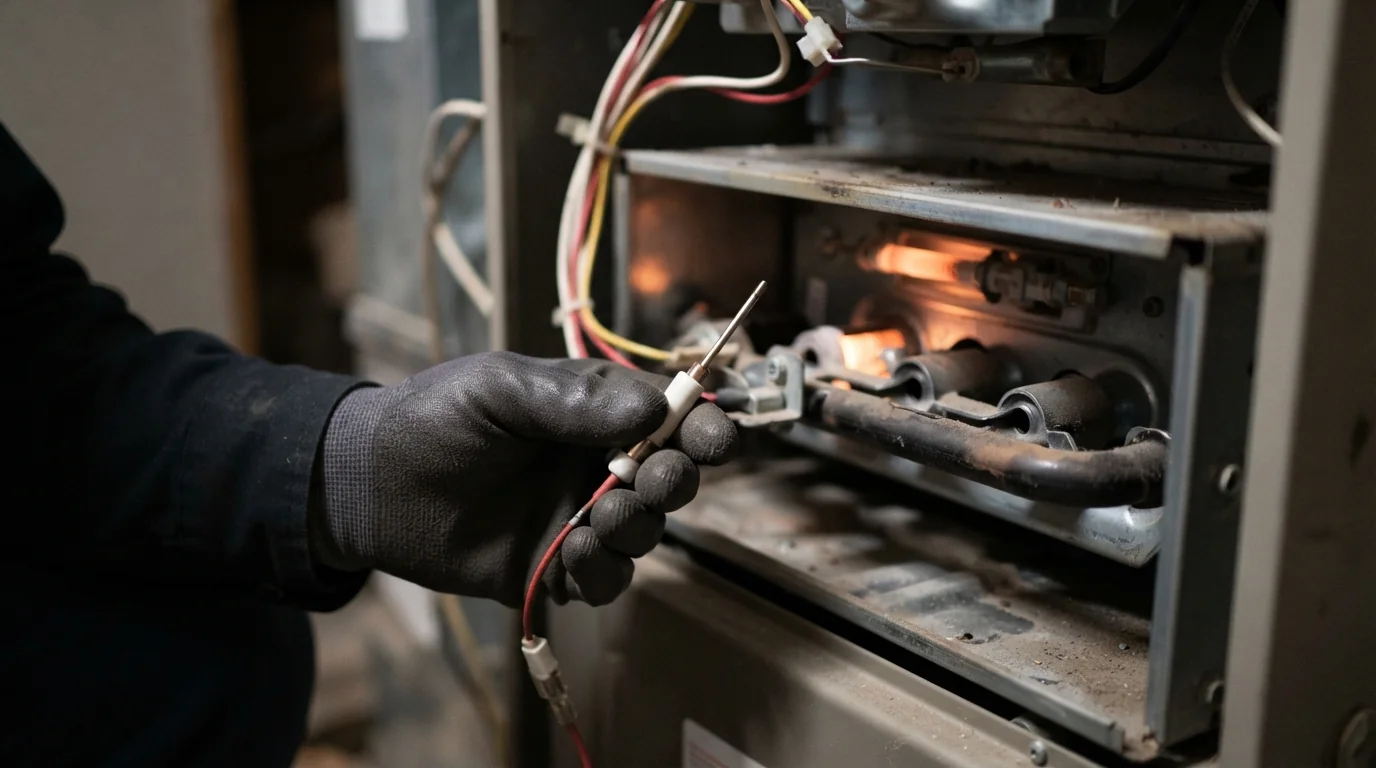
The heat exchanger decides it
The heat exchanger separates the flame from the air you breathe. When it cracks, combustion gases can reach the house air, and the furnace has to be shut down. On an older furnace, a cracked heat exchanger almost always means replacement, because the repair costs close to a new furnace and the rest of the unit is just as old.
That is why combustion and carbon monoxide testing are part of every service visit. Our carbon monoxide safety guide explains the warning signs.
Repair or replace?
A common rule of thumb compares the repair cost with the furnace's age: when the repair cost multiplied by the age passes the cost of a new furnace, replacement usually wins. It is a starting point, not a verdict, and safety problems override it.
Our repair or replace guide walks through the decision in more detail, including when to replace the air conditioner at the same time.
Planning ahead beats a January breakdown
Furnaces tend to fail on the coldest nights, when they run hardest. If yours is past 15 years and showing signs of wear, getting a replacement quote in the fall gives you time to compare options and schedule the work instead of choosing under pressure.
Michigan installs typically run $3,000 to $9,500, and a planned replacement leaves room to consider efficiency, sizing and rebates rather than taking whatever is available that day.
Furnace lifespan questions
Roughly 15 to 20 years, sometimes longer with good care.
Not on age alone; look at repairs, efficiency and safety.
Dirty filters, oversizing, skipped maintenance and venting problems.
On an older furnace, replacement is almost always the answer.
Yes. Clean, adjusted furnaces wear more slowly.
Ideally in the fall, before it fails in a cold snap.
From the data plate or the serial number.