To prepare a furnace for a Grand Rapids winter, replace the filter, test the thermostat in heat mode, clear the outside PVC vents, check carbon monoxide detectors, open the humidifier bypass damper and book a tune-up in September or October. Run the heat for a full cycle before the first cold night so problems show up while help is easy to schedule.
Why fall is the time
Grand Rapids averages about 133 nights a year at or below freezing, and the first cold snap sends every furnace in the region into long cycles at once. Parts that were weak last spring fail then, and every heating company's phones ring at the same time. Finding a problem in early October means an easy appointment; finding it the night of the first frost means waiting in line with a cold house.
The homeowner checklist
All of these are safe and take less than an hour.
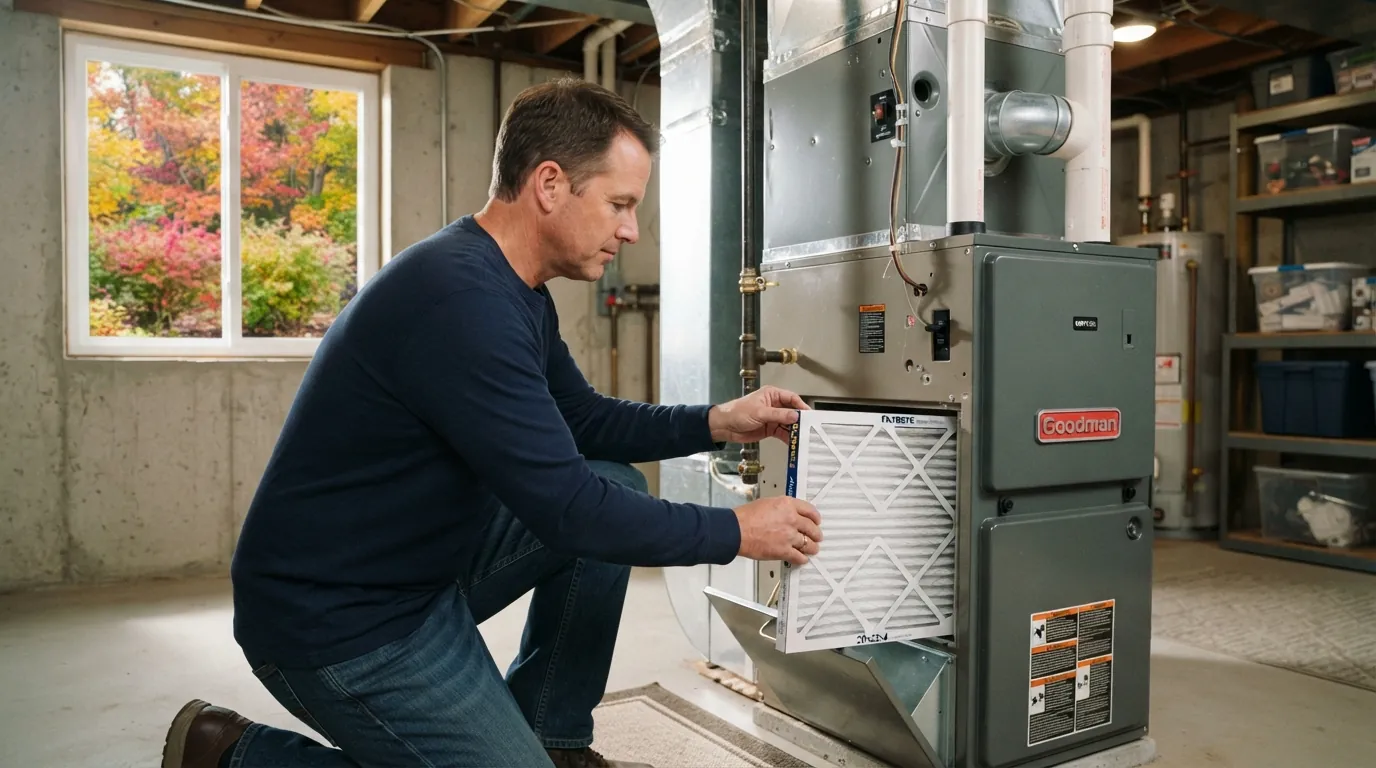
- Replace the furnace filter, and note the size on the cabinet.
- Switch the thermostat to heat, raise the setpoint and confirm the furnace starts and warm air comes out.
- Replace thermostat and carbon monoxide detector batteries, and check detector dates.
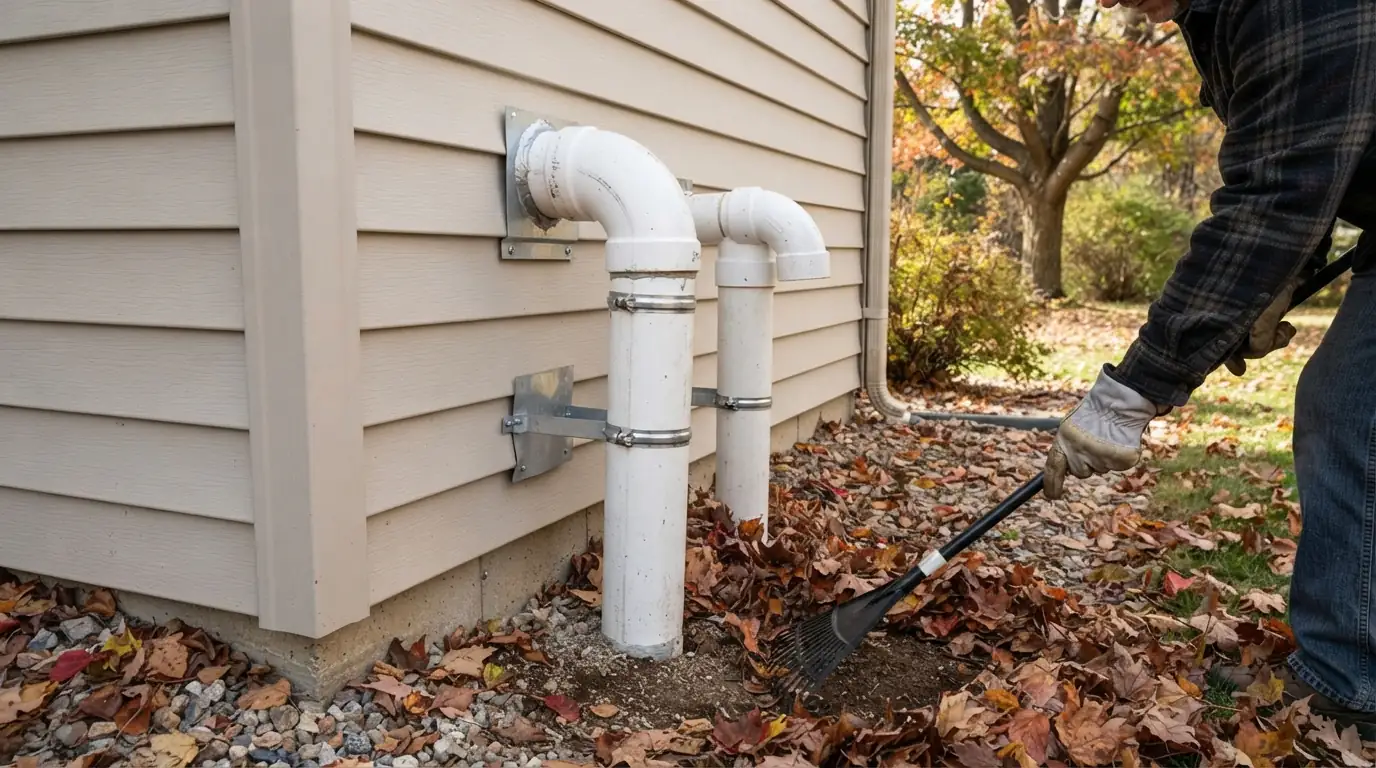
- Clear leaves and debris from the PVC intake and exhaust pipes outside.
- Open the humidifier bypass damper and replace the humidifier pad.
- Move stored items away from the furnace and water heater.
- Open supply registers and make sure returns are not blocked by furniture.
What a tune-up adds
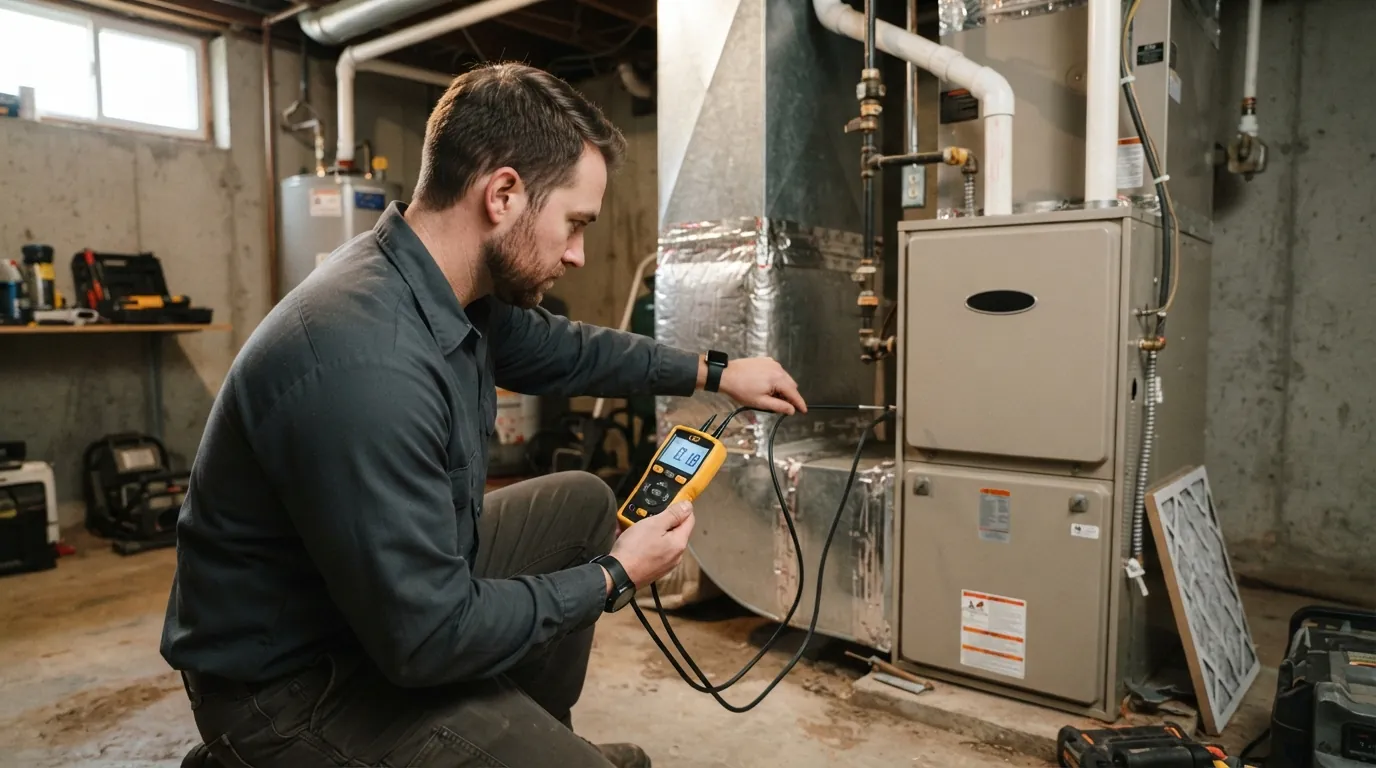
A homeowner can confirm the furnace runs. A technician confirms it runs safely and efficiently. A furnace tune-up in Grand Rapids tests combustion with an analyzer, inspects the heat exchanger, cleans the flame sensor and burners, tests the ignitor and safety switches, and measures airflow. Those are the parts most likely to fail in the first cold weeks.
If you have a heat pump, the fall visit also checks defrost and backup heat; see heat pump tune-up. Boilers get pressure, relief valve and radiator checks through a boiler tune-up work.
Vents and snow
High-efficiency furnaces vent through two white PVC pipes on an outside wall, often low to the ground. Grand Rapids averages about 77 inches of snow a year, and drifts or ice over those pipes shut the furnace down. Before winter, check where they are, make sure nothing is stacked in front of them and plan to keep them clear after every storm.
If your pipes sit low enough that snow covers them every winter, a technician can extend or relocate the termination. Our carbon monoxide guide explains why venting matters as much as the flame.
Signs to act on before winter
If you notice any of these during the fall test run, call before the cold arrives rather than hoping it lasts.
- The furnace clicks, tries to light and shuts down.
- The flame is yellow or lifting instead of steady blue.
- The furnace starts and stops every few minutes.
- New squealing, grinding or rumbling noises.
- A burning smell that lasts beyond the first few minutes of the season.
Heat pumps, boilers and humidifiers
Heat pumps need an extra fall step: check the outdoor unit sits on its stand with clear space around it, and that nothing will block airflow when snow piles up. Switch the thermostat to heat and confirm the heat pump, not only the backup, is warming the house.
Boiler homes should check the pressure gauge, bleed any radiator that gurgles or stays cool at the top, and look for drips under the relief valve. Homes with a whole-house humidifier should replace the pad, open the bypass damper and set the humidistat for winter, following our winter humidity guide.
If something goes wrong anyway
Even a well-maintained furnace can fail. Start with the safe checks in our no-heat guide, and if heat does not come back, call. We answer 24/7 and schedule no-heat calls ahead of routine work. A first-of-the-season burning smell from dust on the heat exchanger is normal for a few minutes; a smell that persists is not.
Fall furnace questions
September or early October, before steady cold weather.
For a few minutes, from dust. A lasting smell is not.
Every one to three months, depending on the filter type.
Yes. It catches failing parts before the cold.
Whatever is comfortable; steady settings suit most furnaces.
A top cover against falling ice is fine; do not wrap it airtight.
Clear them. If it happens every year, have them extended.