Indoor humidity in a Grand Rapids winter is comfortable around 30 to 40 percent, set lower on the coldest nights so windows do not sweat. Below about 25 percent, static shocks, dry skin and gapping floors become common. A whole-house humidifier on the furnace is the usual fix; an air leak or a failed humidifier pad is the usual cause of trouble.
Why a heated house dries out
Cold air holds very little water. When the furnace pulls in cold outdoor air through leaks and heats it, the same amount of water is spread across much warmer air, and relative humidity falls sharply. Grand Rapids winters are long, cold and mostly cloudy, so a furnace here runs for months and the house keeps drying out.
Older, leakier houses dry out fastest because they swap more outdoor air. Newer, tighter houses dry out less and can have the opposite problem: too much moisture and condensation on the windows.
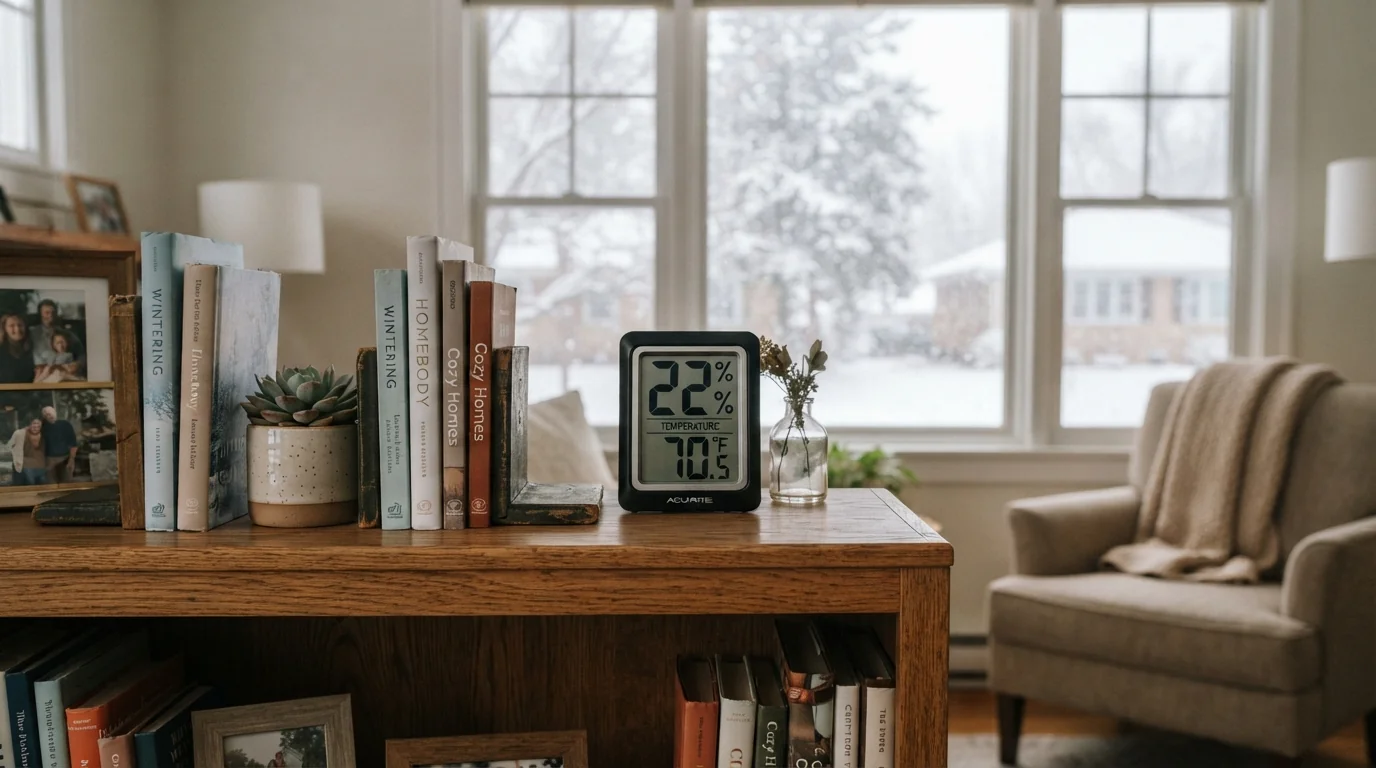
The range to aim for
There is no single right number, because the colder it gets outside, the colder your window glass gets and the less humidity it can take without condensation.
- Mild winter days: around 35 to 40 percent.
- Cold days: around 30 to 35 percent.
- The coldest nights: around 25 to 30 percent, or lower if windows start to sweat.
- Summer: 45 to 50 percent, handled by the air conditioner or a dehumidifier.
Signs your house is too dry, or too damp
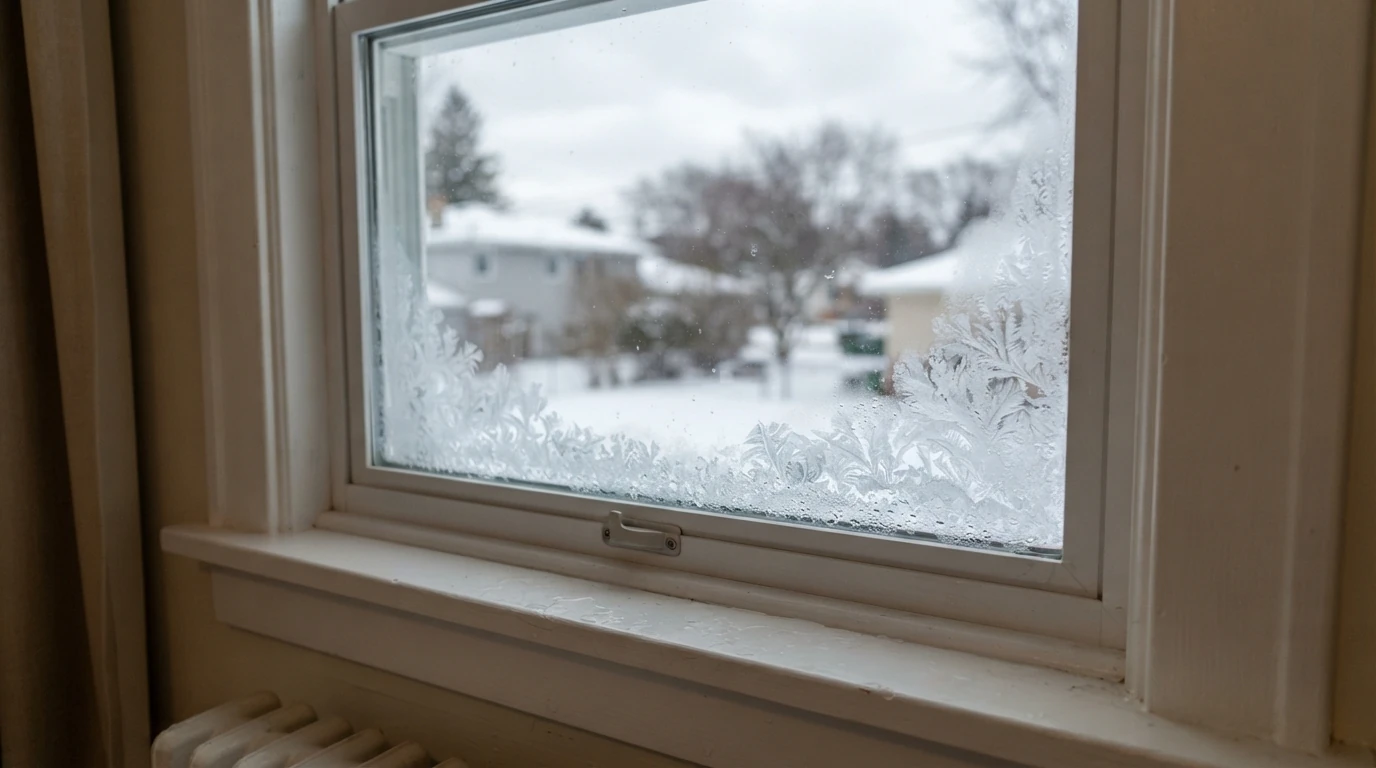
Too dry looks like static shocks off door handles, dry sinuses and cracked lips, hardwood floors with new gaps, and instruments that will not hold their tuning. Too damp looks like water or frost on the inside of windows, especially on the north side, and damp spots or mold on window frames.
An inexpensive hygrometer tells you which you have. Put it in a main living area, not the kitchen or bathroom, and check it morning and evening for a week. If it is in the teens, a humidifier will help. If windows sweat at 35 percent, ventilation matters more than moisture; see fresh-air ventilation.
Portable units versus a whole-house humidifier
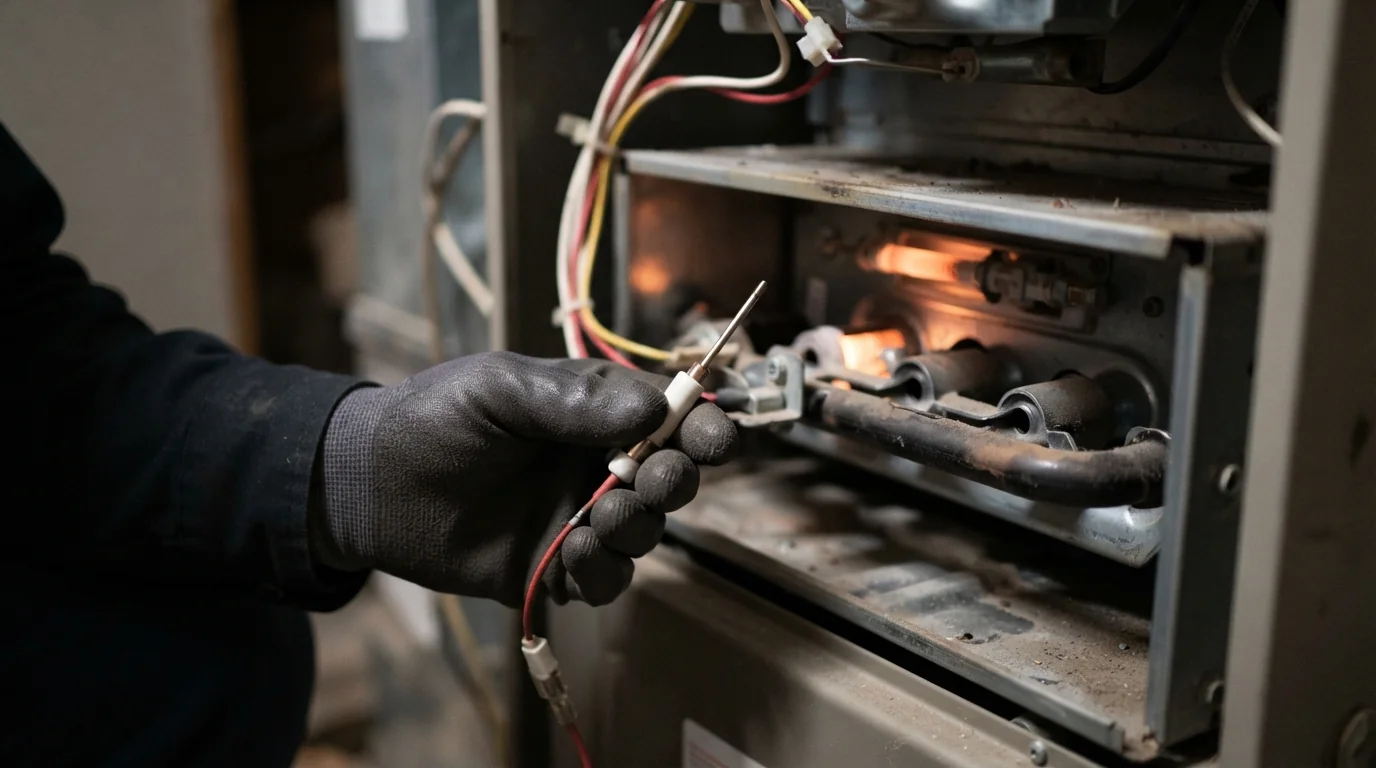
Portable humidifiers help one room and need filling every day. A whole-house humidifier mounts on the furnace ductwork, is fed by a water line, drains what it does not use and treats every room the furnace serves. Bypass models are the simplest; steam models hold humidity most precisely and suit heat pumps.
The details are on our our whole-house humidifier page page. If you already have one and the house is still dry, the pad is probably scaled, the water valve stuck, or the humidistat still set for summer.
Tight new homes have the opposite problem
Many newer Grand Rapids homes are built tight enough that they hold moisture in rather than losing it. Cooking, showers, laundry and people add water to the air every day, and without enough ventilation it has nowhere to go. That shows up as condensation on windows at humidity levels an older house would welcome.
In those houses, adding a humidifier makes things worse. The fix is controlled ventilation, often a heat recovery ventilator that exchanges stale, humid air for fresh air while keeping most of the heat. Measure before you buy either one: the hygrometer reading, and whether windows sweat, tell you which direction the house needs to go.
Keeping humidity right all winter
A few habits make a humidifier work well.
- Use a control with outdoor reset, or lower the setting yourself on cold nights.
- Replace the humidifier pad once a season.
- Open the bypass damper in fall and close it in spring.
- Seal obvious air leaks; they dry the house faster than any humidifier can keep up with.
- Run bathroom fans after showers so moisture goes out, not into the walls.
Winter humidity questions
About 30 to 40 percent, lower on the coldest nights.
Indoor humidity is too high for the outdoor temperature.
Yes, on cold surfaces like window frames and outside walls.
Yes, though steam humidifiers perform better with cooler heat pump air.
Once per heating season in most homes.
A scaled pad, a stuck valve, a closed damper or the control set too low.
For one room. A whole-house unit treats every room the furnace reaches.