Heat pump water heaters for Grand Rapids basements
An electric water heater that pulls heat from the surrounding air instead of heating with elements alone. It uses much less electricity and dehumidifies the basement as it runs.
The short answer
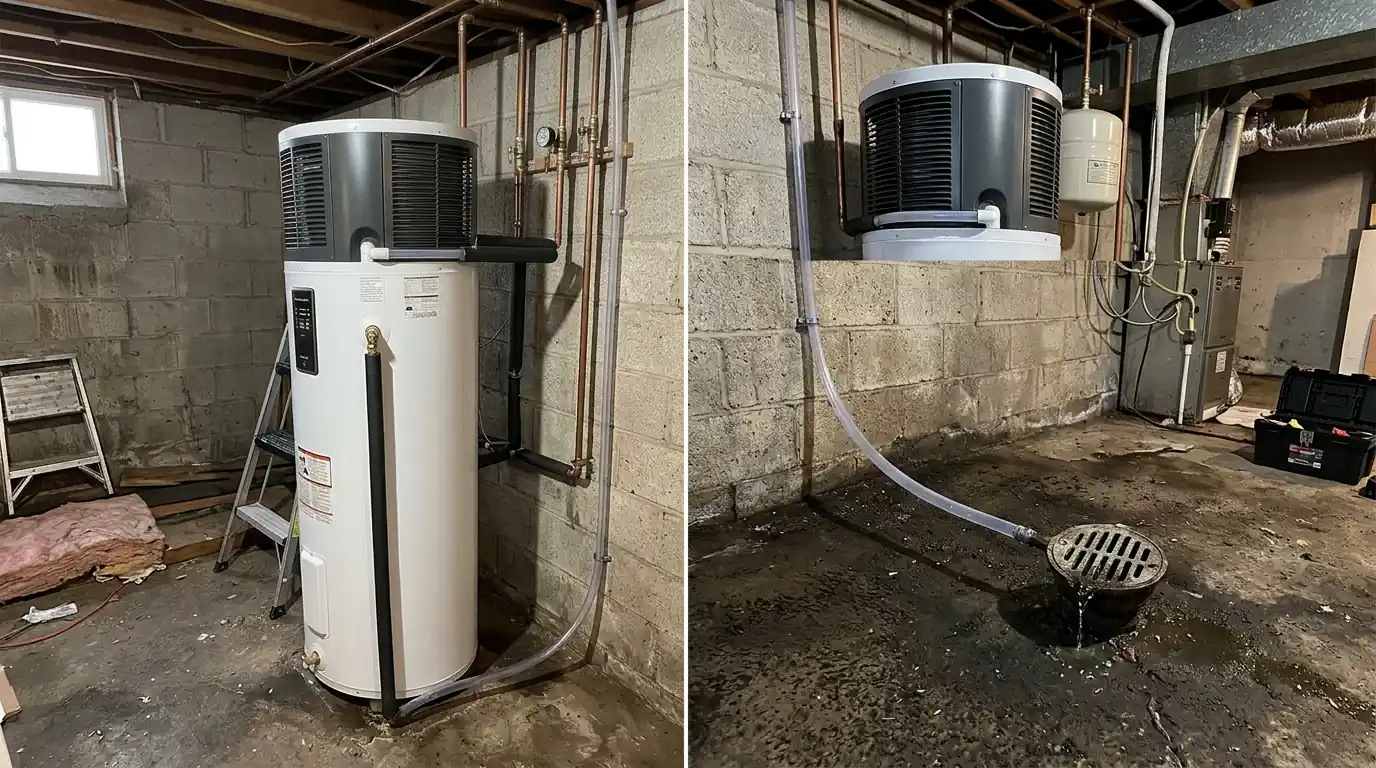
A heat pump water heater in Grand Rapids works like a small heat pump on top of an electric tank: it pulls heat from the basement air into the water, falling back on electric elements when demand is high. It uses far less electricity than a standard electric tank, needs enough surrounding air volume and a condensate drain, and suits most full basements.
Hot water with less electricity
How a heat pump water heater works
A standard electric water heater makes heat with resistance elements. A heat pump water heater moves heat instead, using a compressor and fan on top of the tank to pull warmth from the surrounding air. That is why it uses a fraction of the electricity, and why it cools and dries the room it sits in.
It is the natural upgrade from an electric tank. For gas tanks, compare a gas tank replacement and tankless work options first.
Pricing, explained
What a heat pump water heater costs depends on
Pricing depends on the tank size, the electrical work, the drain route and whether a gas tank is being replaced. We quote after seeing the basement and the panel.
Tank size
Larger tanks cost more and rely less on backup elements.
Electrical
An existing electric tank circuit often works; gas swaps need a new circuit.
Condensate drain
A nearby floor drain avoids a pump.
Gas removal
Capping gas and correcting furnace venting when replacing a gas tank.
Placement
Ducting or relocation adds to the job.
Choosing between options
Heat pump, standard electric or gas
Each suits a different house.
| Heat pump water heater | Standard electric | Gas tank | |
|---|---|---|---|
| Energy use | Lowest electricity | Highest electricity | Gas |
| Space needs | Open basement with airflow | Anywhere | Needs venting |
| Drain needed | Yes, condensate | No | No |
| Upfront cost | Highest | Lowest | Middle |
What a proper install involves
Sizing and basement placement
A heat pump water heater needs a surrounding air volume large enough to draw heat from, typically an open basement rather than a small closet, and it works best where the air stays above about 40 degrees. Most Grand Rapids basements qualify. We size the tank to household demand, usually 50 to 80 gallons for families, since a larger tank lets the heat pump do more of the work before the backup elements come on, and we choose a spot with clearance for airflow and service.
Condensate and airflow needs
Pulling heat from the air also pulls out moisture, so the unit produces condensate that needs a drain, either to a floor drain or through a small condensate pump. The fan and compressor make a hum similar to a dehumidifier, which matters if the tank sits near a finished room. In a basement that runs damp in summer, the dehumidifying effect is a bonus. In a small finished space, ducting the intake or exhaust can solve both noise and cooling concerns.
Replacing a gas or electric tank
Swapping an electric tank for a heat pump model is usually straightforward, since the power circuit is often already suitable; we confirm the breaker and wire size match the new unit. Replacing a gas tank takes more planning: a new electric circuit, capping the gas line and dealing with the old flue so the furnace venting stays correct. We walk through that trade-off honestly, including whether a gas unit still makes more sense for your house and how the running costs compare.
What the visit covers
What every install includes
- Air volume and temperature check
- Tank sized to household demand
- Circuit and breaker verified
- Condensate drain or pump
- Old tank drained and hauled away
- Expansion tank and drain pan where required
- Operating mode set and explained
Local conditions
Full basements and seasonal air
Most Grand Rapids homes have a full basement with the water heater in it, which is exactly the space a heat pump water heater needs. In summer the unit helps dry a damp basement; in winter it takes a little heat from the basement air, which the furnace makes up. Placement away from bedrooms and with room for airflow makes the difference between a quiet unit and an annoying one.
Brands we service and install
From the call to a working system
How the install runs
Check the space
Air volume, temperature, drain and electrical checked.
Size the tank
Household demand sets the capacity.
Remove the old tank
Drained, disconnected and hauled away.
Install
New tank set, water, power and condensate connected.
Set the mode
Heat pump, hybrid or high-demand mode explained and set.
Questions people ask us
Heat pump water heater questions
Yes, in most full basements that stay above about 40 degrees.
It hums like a dehumidifier while the compressor runs.
Slightly, and it dehumidifies, which helps in summer.
Yes, for condensate, to a floor drain or a small pump.
Yes, with a new electric circuit and the gas line capped.
Most families use 50 to 80 gallons.
Yes, as backup for high demand.
With filter cleaning and care, similar to a standard tank or longer.
Replacing an electric water heater?
Call and we will check whether a heat pump model fits your basement.