Garage heater installation for Grand Rapids winters
A properly vented gas unit heater or infrared tube heater turns a cold garage into a usable workshop through a Michigan winter, safely and without a space heater on an extension cord.
The short answer
Garage heater installation in Grand Rapids means choosing between a gas-fired unit heater that warms the air and an infrared tube heater that warms surfaces and people, then running the gas line, venting the heater to the outside and mounting it at the right height and clearances. Most installs take a day.
Heat where you work
Choosing the right heater for a garage
A garage used for projects, a home gym or a vehicle that should start easily in January needs real heat, not a portable electric heater. The two practical options are a forced-air unit heater and an infrared tube heater, and the right one depends on the garage's size, ceiling height, insulation and how often the door opens.
Gas lines and venting are the parts that need care. For heated slabs, see radiant floor heating in Grand Rapids.
Pricing, explained
What a garage heater install costs depends on
Pricing depends on the heater type and size, the gas line run from the house and the venting route. We quote after seeing the garage and the house piping.
Heater type
Unit heaters cost less than infrared tube heaters.
Heater size
Sized to the garage's heat loss and insulation.
Gas line length
The run from the house piping is often the largest variable.
Venting
Wall or roof venting and termination location.
Electrical
Unit heaters need power for the fan and controls.
Choosing between options
Unit heater or infrared tube heater
Both work well in the right garage.
| Gas unit heater | Infrared tube heater | |
|---|---|---|
| How it heats | Warm air blown across the space | Radiant heat onto surfaces and people |
| After the door opens | Slower to recover | Recovers quickly |
| Ceiling needs | Modest | Higher, with clearance |
| Best for | Insulated, closed garages | Shops with frequent door use |
The three parts of the job
Unit heaters
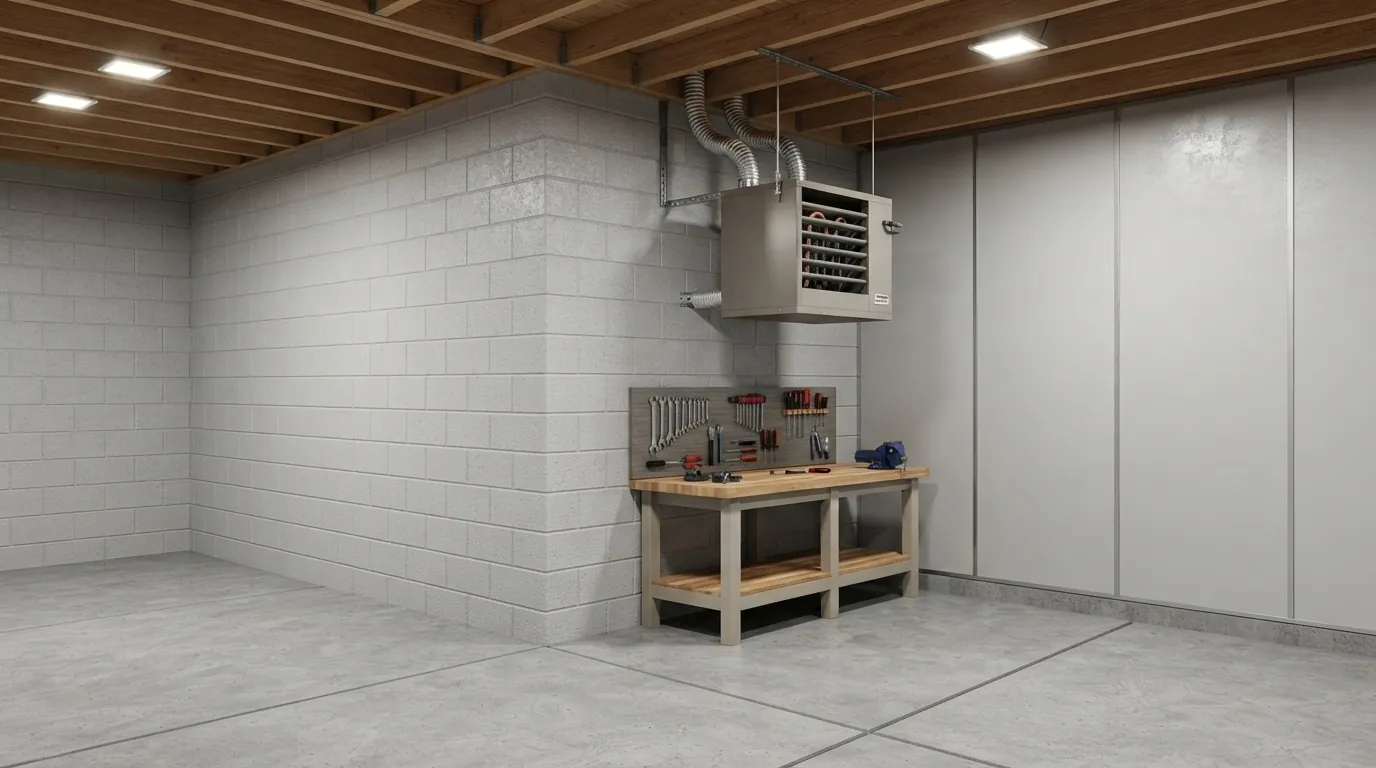
A gas unit heater hangs from the ceiling or a wall bracket, burns natural gas or propane, and blows warm air across the garage with a fan. It heats the air quickly and suits insulated garages where the door stays closed while you work. Separated-combustion models draw air from outside, which keeps dust and fumes away from the burner and is the better choice in a workshop. We size the heater to the garage's heat loss so it keeps up on the coldest days without oversizing.
Infrared tube heaters
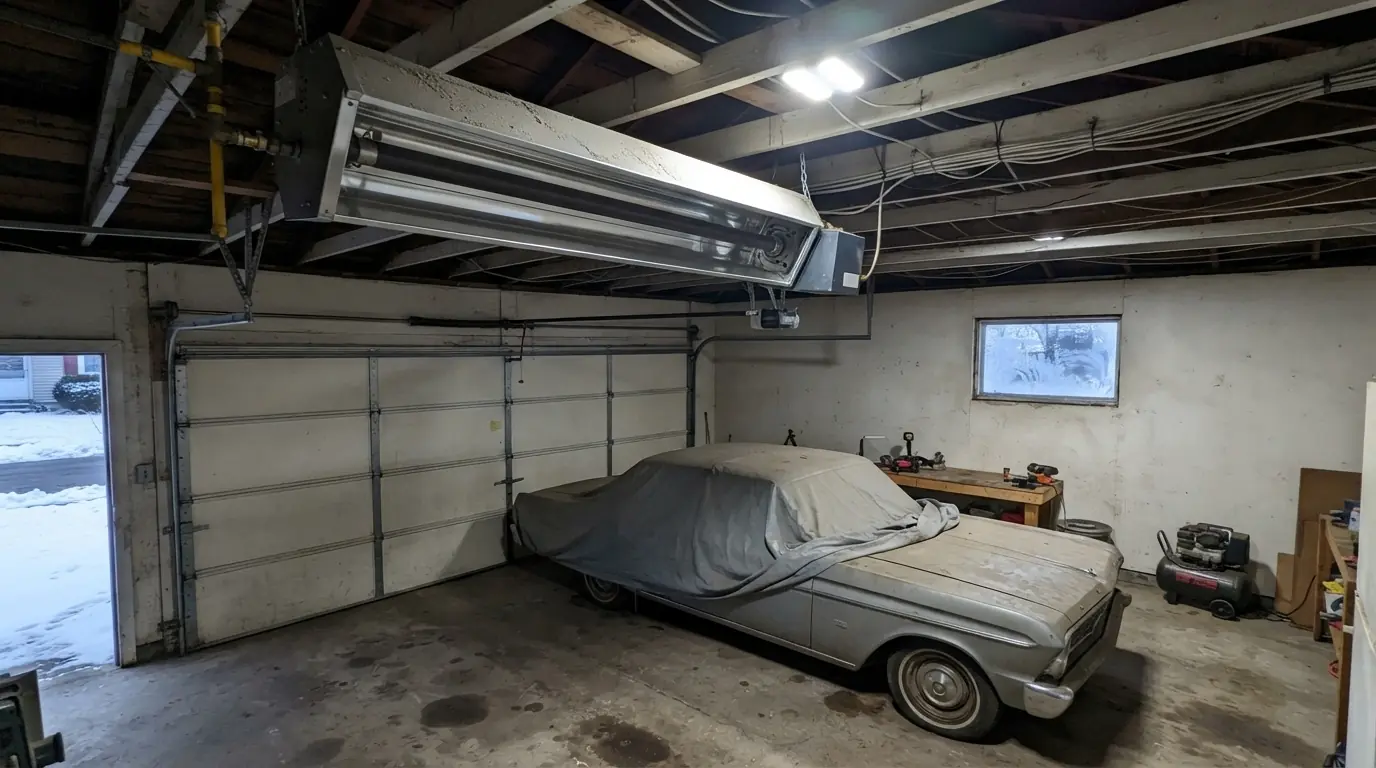
An infrared tube heater runs a burner inside a long steel tube mounted high on the ceiling, and a reflector sends radiant heat down onto the floor, cars, tools and people. It feels warm even when the air is cool, recovers quickly after the big door opens, and keeps the slab warm, which helps snow melt off vehicles. It needs more ceiling height and clearance than a unit heater, so we check the layout, door tracks and storage before recommending it.
Gas line and venting for garage heat
Most garages have no gas line, so a new line is run from the house piping, sized for the heater's full input, with a shutoff and sediment trap at the unit. Heaters are vented through the wall or roof to the manufacturer's rules, with terminations kept clear of windows, doors and the snow line. Garage heaters must also be installed at the required height and away from stored fuel and vehicles, which we plan before mounting anything, together with where the thermostat goes so it reads the space you actually work in.
What the visit covers
What every garage heater install includes
- Heat loss sizing for the garage
- Gas line sized and run with shutoff
- Sediment trap at the heater
- Vent run to manufacturer clearances
- Mounting height and clearances checked
- Thermostat wired and tested
- Permit and combustion test
Local conditions
Long winters and working garages
Grand Rapids winters are long enough that an unheated garage is out of use for months, and a car parked there starts cold and carries snow in every day. Many households here use the garage as a shop or gym, which is why garage heater requests arrive every fall. A heater sized to the space and vented correctly makes the garage usable from November to March.
Brands we service and install
From the call to a working system
How a garage heater install runs
Measure the garage
Size, ceiling height, insulation and door layout checked.
Choose the heater
Unit heater or infrared, sized to the space.
Run gas and power
Gas line sized and run; circuit and thermostat wired.
Mount and vent
Heater hung at required clearances; vent run to the outside.
Test
Gas pressure, combustion and thermostat control checked.
Questions people ask us
Garage heater questions
Unit heaters warm air fast; infrared warms people and surfaces and recovers after the door opens.
Yes. Vented gas heaters exhaust outside.
Yes, with a propane-configured heater and supply.
It depends on insulation; we size to the temperature you want.
Yes. Every install includes a thermostat.
For small, well-insulated garages with the right circuit.
Yes. Gas and heater installs are permitted and inspected.
Yes, with a gas line run to the building.
Want the garage usable this winter?
Call and we will plan a heater sized to it.