Clicking with no ignition
The ignitor or gas valve is not completing startup.
Ignitors, flame sensors, blower motors and pressure switches cause most no-heat calls. We test before replacing anything and check the heat exchanger while the furnace is open.
The short answer
Furnace repair in Grand Rapids most often comes down to a cracked hot surface ignitor, a dirty flame sensor, a failed inducer or pressure switch, or a blower motor or capacitor. We read the furnace's fault code, test each part in the sequence of operation, replace what has failed and check the heat exchanger and flue before leaving.
What you might notice
The ignitor or gas valve is not completing startup.
A combustion or gas pressure problem.
Blower bearing, belt or motor wear.
The furnace starts and stops every few minutes.
Dirty burners, a failing blower or ducts losing heat.
Heat back on
A gas furnace starts in a fixed sequence: the thermostat calls, the inducer fan purges the heat exchanger, a pressure switch proves draft, the ignitor glows, the gas valve opens, the flame sensor proves flame, and the blower starts. Wherever that sequence stops is where the fault is, and most modern furnaces flash a code that narrows it down.
We test the part rather than swapping parts until the heat comes back. When a repair costs a large share of a new furnace on an older unit, we show you replacement work numbers too. A yearly tune-up work catches most of these failures in October instead of January.
The four failures we see most
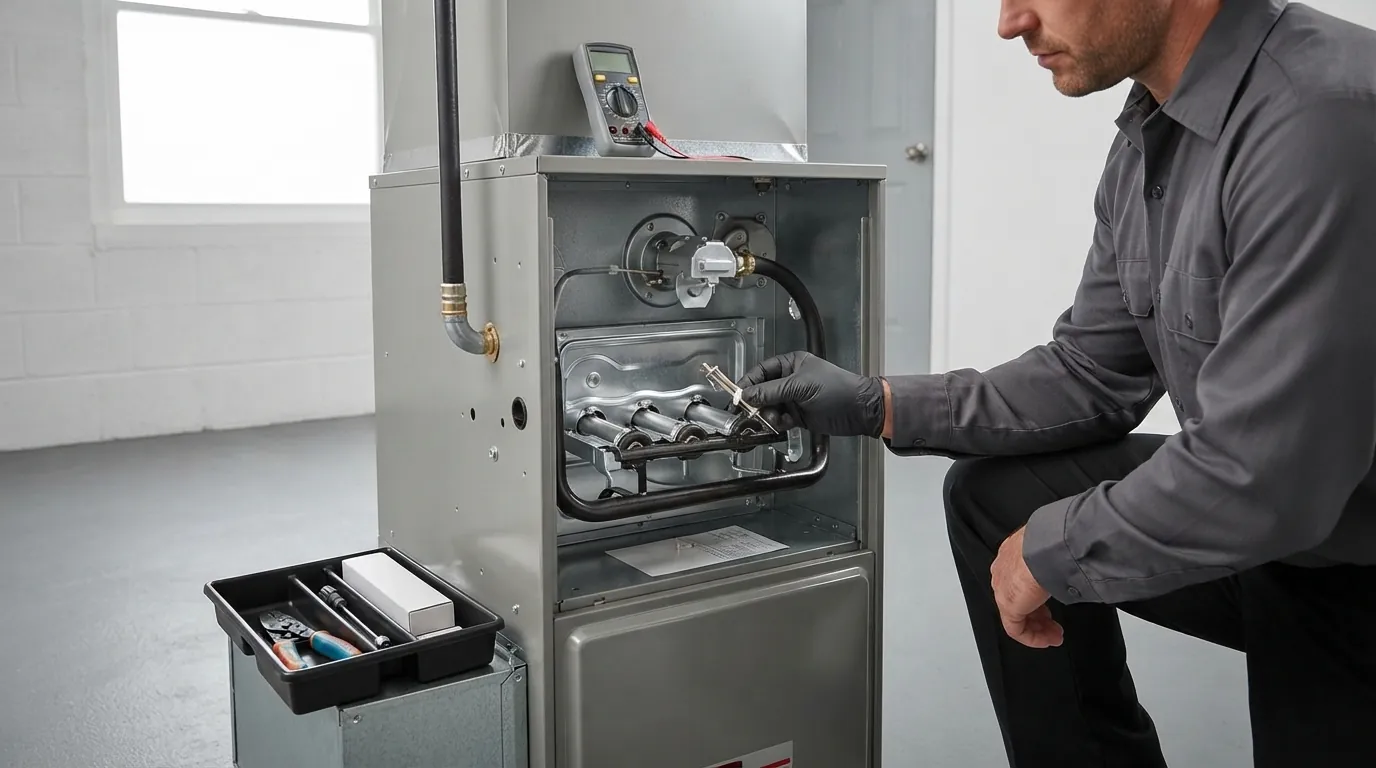
A furnace that tries to start, clicks, glows and then shuts down is usually failing at ignition or flame proving. Hot surface ignitors crack with age and stop glowing hot enough. Flame sensors build up a coating that stops them reading the flame, so the gas valve closes a few seconds after lighting. Cleaning a sensor or replacing an ignitor is a routine repair, but we also check gas pressure and burner condition, because a weak flame can mimic a sensor fault.
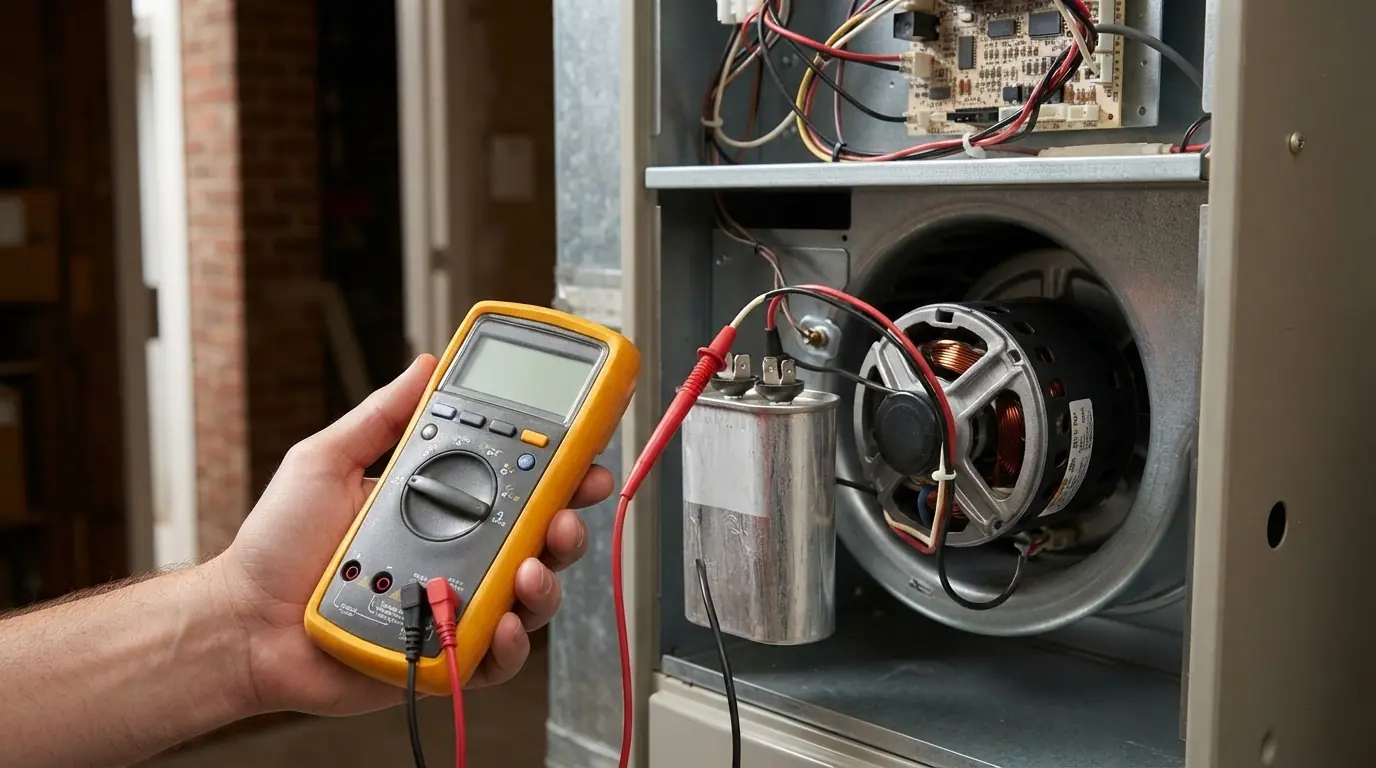
If the burners light but no warm air comes out, or the furnace shuts off on its high limit after a few minutes, the blower is the suspect. A failing run capacitor makes a PSC motor hum and start slowly; a failed motor stops entirely. Variable-speed ECM motors fail differently and are tested through their control module. We check amperage, capacitor rating and the blower wheel itself, since a wheel caked with dust overheats the furnace even when the motor is healthy.
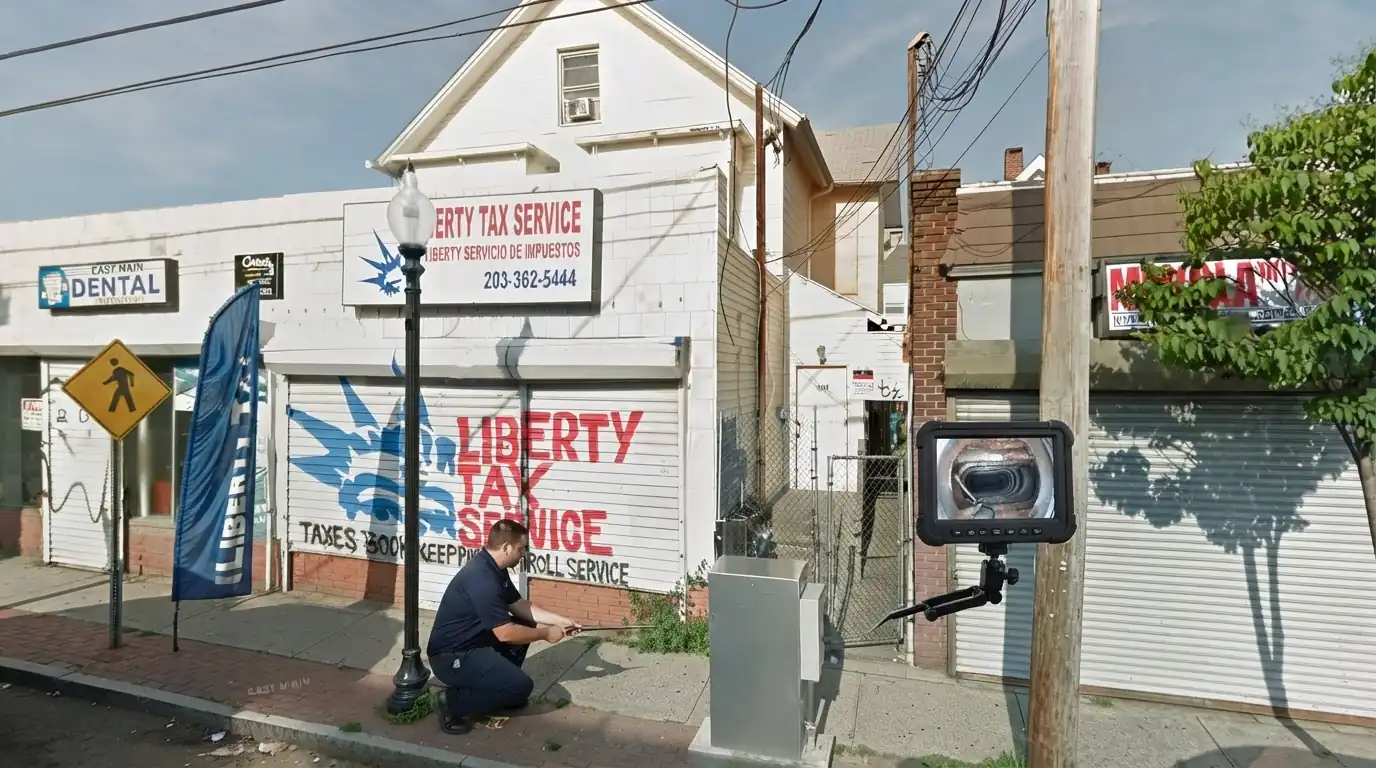
A cracked heat exchanger can let combustion gas into the airstream, and it is the one furnace finding where we recommend shutting the furnace off. We look for it with a camera, a combustion analyzer and a flame check with the blower running. Not every rust mark is a crack, and we show you what we found rather than asking you to take our word for it. A confirmed crack on an older furnace almost always means replacement, while a newer furnace may still be covered by the manufacturer's heat exchanger warranty.
A furnace that starts and stops every few minutes wears itself out and never heats the house evenly. The usual causes are a clogged filter or closed registers restricting airflow, an oversized furnace, a failing flame sensor, or a thermostat placed near a heat source. When the high limit trips repeatedly, the furnace is overheating, and the cause is almost always airflow. We measure static pressure and temperature rise across the furnace to confirm which it is before recommending any fix.
From the call to a working system
We ask what the furnace is doing and walk you through a filter and switch check.
Fault code read and each stage of startup tested.
Repair price, and replacement numbers if the furnace is old.
Part replaced and the furnace run through full heating cycles.
Heat exchanger, flue draft and CO levels checked before we leave.
Local conditions
Grand Rapids averages around 133 nights a year at or below freezing, and a furnace here can log more run hours in one winter than a furnace down south logs in several. That is why ignitors and inducer motors wear out on a steady schedule here. With a median home value near $225,500, many owners weigh a large repair on a 15-year-old furnace against replacement, so we price both on the same visit.
Before you pick up a screwdriver
These checks are safe and fix a surprising number of no-heat calls. Anything past them needs a technician.
| Safe for a homeowner | Leave it to a technician | |
|---|---|---|
| No heat at all | Thermostat set to heat, batteries fresh, furnace switch on | Testing ignition, gas valve and control board |
| Weak airflow | Replace a clogged filter; open registers | Blower motor and capacitor testing |
| Furnace locked out | Turn power off and on once | Repeated resets; diagnosing the fault code |
| Gas smell | Leave the house and call the gas utility | Everything after the utility clears it |
Brands we service and install
Pricing, explained
Furnace repairs are priced after diagnosis, and you approve the price before we replace anything.
A flame sensor cleaning is minor; an inducer or ECM motor costs more.
Two-stage and modulating furnaces use costlier controls and motors.
Some control boards and motors are only available through the manufacturer.
Night and holiday calls cost more than scheduled daytime work.
On an old unit a major repair may not be worth it; we show both options.
Questions people ask us
Often a failed ignition, a dirty flame sensor or a tripped limit. Check the filter first.
Short cycling is usually airflow, a flame sensor or an oversized furnace.
Yes. We repair Carrier, Lennox, Trane, Rheem, Goodman, Bryant, Amana and more.
It can leak combustion gas. We shut the furnace off and explain the options.
We give you both prices so you can compare cost against age and condition.
The filter, the thermostat batteries and setting, and the furnace power switch.
We answer 24/7 and schedule no-heat calls ahead of routine work.
Commonly 15 to 20 years with regular maintenance.
From our guides: Furnace not working guide
More emergency & repair work
Reach us
Service office
3535 3 Mile Rd NW, Grand Rapids, MI 49534