Ductless mini split repair in Grand Rapids
Blinking lights, error codes, an indoor head that runs but will not heat or cool, or water dripping down the wall. We diagnose ductless systems by the code and fix the cause.
The short answer
Mini split repair in Grand Rapids usually starts with the error code or blink pattern the indoor head is showing. Common causes are a communication fault between the indoor and outdoor units, a failed sensor, a dirty indoor coil or blower wheel, a clogged condensate line, or a refrigerant leak at the flare fittings. Most are repaired in one visit.
Read the code first
How ductless systems tell you what is wrong
Ductless systems diagnose themselves more than most HVAC equipment. The indoor head or remote displays a code, or a light blinks in a pattern, and each manufacturer publishes what it means. The code narrows the search, but it names a symptom, so we still test the part it points to.
If the system is old or the leak is large, compare the cost with a new ductless system. For the same refrigerant faults on central systems, see refrigerant leak repair.
The three faults we see most
Error codes and communication faults
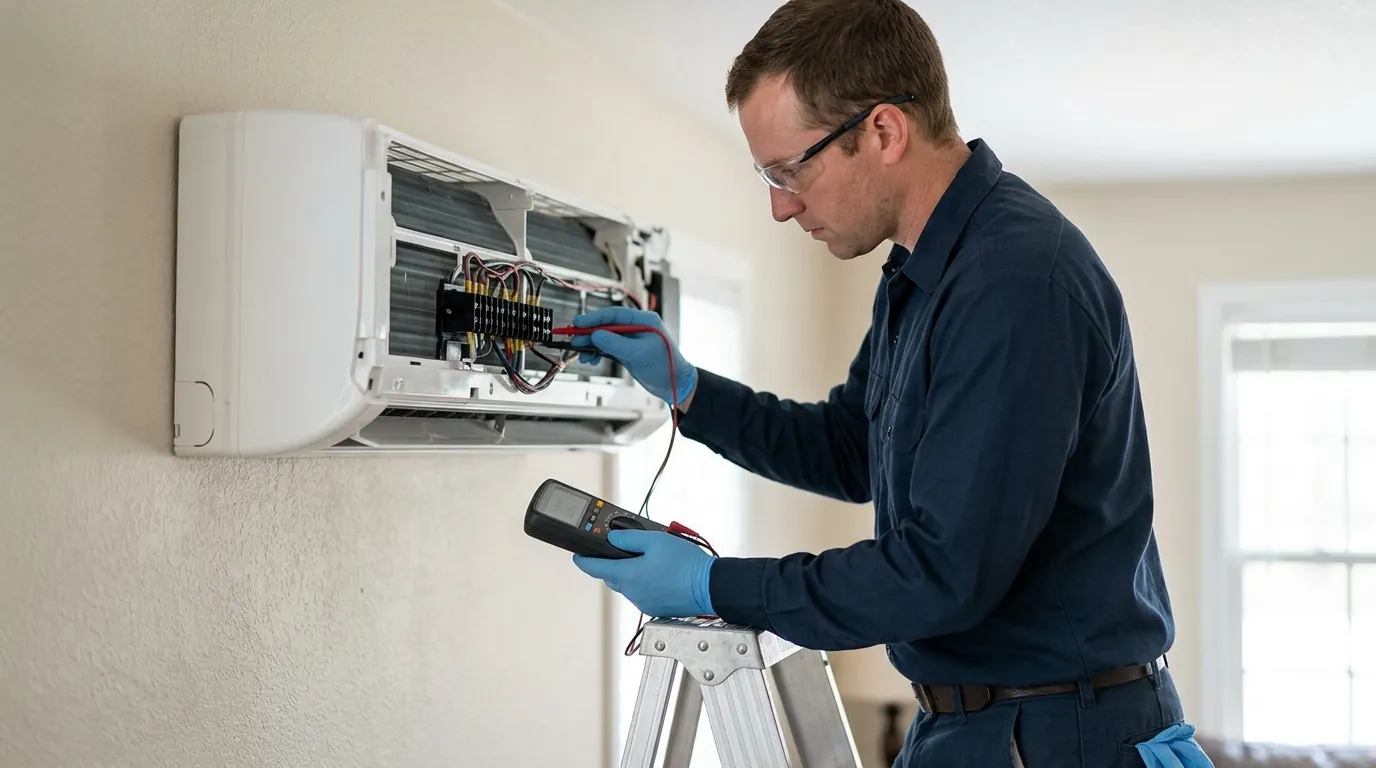
A communication error means the indoor head and the outdoor unit are not talking. The cause can be a loose or corroded wire at either terminal block, a failed board, a surge that damaged a component, or wiring that was spliced during an earlier repair. We check voltage and the communication signal between the units, tighten and clean connections, and replace the failed board only after the wiring checks out. Sensor error codes are handled the same way, by measuring the sensor rather than assuming it has failed.
Blinking lights and no cooling
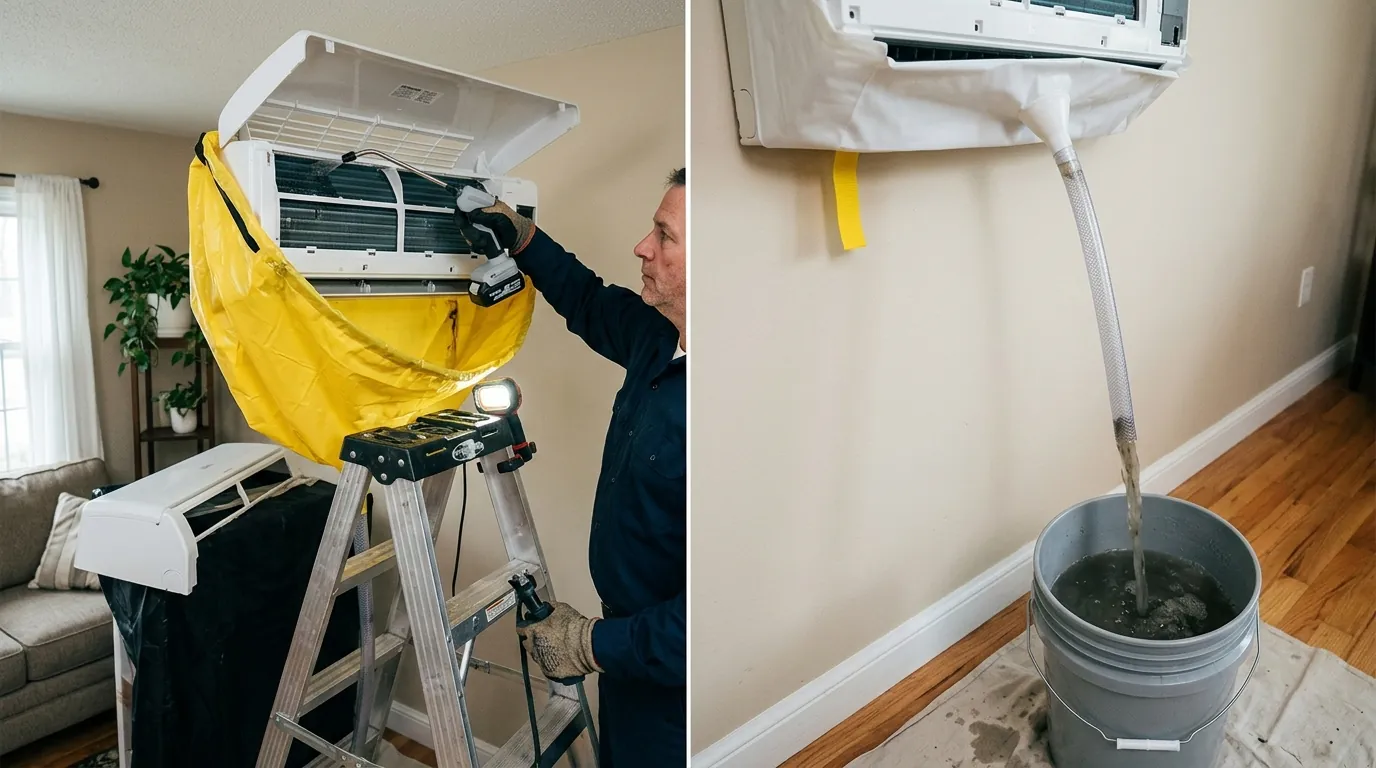
A head that powers on and blows air without cooling or heating may be protecting itself: a dirty coil or filter causing a freeze-up, an outdoor unit tripped on high pressure because its coil is packed with cottonwood, or low charge from a leak. Indoor coils and blower wheels on wall units collect dust and mold that ordinary filter cleaning never reaches. We clean the indoor coil and wheel with a coil cleaning bag system, clear the outdoor coil and check pressures before replacing anything.
Line set leaks
Mini split line sets connect with flare fittings at both the indoor head and the outdoor unit, and a flare that was not made or torqued correctly is the most common leak point in ductless systems. The indoor flare is hidden behind the head, so a leak there often goes unnoticed until cooling fades. We leak test both ends, remake the flares with the correct torque, pressure test, pull a deep vacuum and recharge by weight, which is how the system should have been commissioned in the first place.
From the call to a working system
How a mini split repair runs
Read the code
Error code or blink pattern recorded from the head or remote.
Test the part
Wiring, sensors, boards and pressures checked.
Price the fix
Repair price, and replacement numbers on old systems.
Repair
Part replaced, flares remade or coil cleaned.
Run every head
Heating and cooling checked on each zone.
Timing
How long the repair takes
Sensor, wiring and cleaning repairs are usually finished on the first visit. Control boards depend on availability for your brand.
Flare leak repairs take most of a visit because the system is recovered, repaired, pressure tested, evacuated and recharged by weight.
Local conditions
Line sets on historic facades
In Heritage Hill, where exterior changes have been reviewed under a preservation ordinance since 1973, mini split line sets and outdoor units were often placed on rear or side walls to keep the street view unchanged. Those routes tend to be longer, with more bends, and a long run with extra flares has more places to leak. When we repair a system there, we keep the approved route and check every connection along it.
Before you pick up a screwdriver
What you can check before calling
A few checks are safe for any owner. Anything electrical or refrigerant-related needs a technician.
| Safe for a homeowner | Leave it to a technician | |
|---|---|---|
| No response | Replace remote batteries; check the breaker | Testing boards and communication wiring |
| Weak airflow | Wash the indoor filters | Deep cleaning the coil and blower wheel |
| Error code | Write it down and turn power off and on once | Diagnosing the fault the code points to |
| Water dripping | Turn the unit off to stop the leak | Clearing the drain and pan |
Brands we service and install
Pricing, explained
What a mini split repair costs depends on
Ductless repairs are priced after we read the code and test the part it points to. You approve the price before we replace anything.
The failed part
Sensors are minor; control boards and compressors cost more.
Brand parts
Some brands' boards are only available through their distributors.
Leak repair
Flare remakes add recovery, vacuum and recharge time.
Deep cleaning
Coil and blower wheel cleaning is priced per head.
Number of heads
Multi-zone systems take longer to diagnose.
Questions people ask us
Mini split repair questions
Each brand uses its own codes. Tell us the code when you call.
Usually a protection mode, sensor fault or communication error.
A clogged condensate line or a dirty coil freezing and thawing.
We repair most common ductless brands, including Mitsubishi Electric and Daikin.
Yes. Coil and blower wheel cleaning fixes many airflow problems.
Defrost cycles are normal; long no-heat periods point to a fault.
Depends on the part and the age. We give you both numbers.
We answer 24/7 for ductless heating and cooling calls.
From our guides: Read: heat pumps in winter
More heat pumps & ductless work
Other heat pump and ductless work
Mini split blinking at you?
Call with the error code and we will get it running again.