Heat pumps keep heating in a Grand Rapids winter, but their output and efficiency drop as it gets colder. Grand Rapids averages 133 nights a year at or below freezing but only about four at or below zero. Cold-climate models handle most of that range, and a furnace or electric backup covers the coldest hours.
How a heat pump makes heat in the cold
A heat pump does not make heat; it moves it. Even at 20 degrees there is plenty of heat in outdoor air, and the refrigerant in the outdoor coil is colder still, so it absorbs that heat and carries it inside. As the outdoor temperature falls, there is less heat to collect and the compressor works harder, so output and efficiency both drop.
Standard heat pumps lose a lot of capacity in hard cold. Cold-climate models use variable-speed compressors and are tested to keep producing useful heat at 5 degrees and below.
How cold Grand Rapids actually gets
Local climate normals put the question in perspective. Grand Rapids averages 133 days a year with a low at or below freezing and 50.5 days with a high that never gets above freezing, but only 4.4 days a year with a low at or below zero.
So most of a Grand Rapids heating season sits between the 20s and the 40s, where a cold-climate heat pump runs efficiently. The very cold hours are real but few, and that is what backup heat is for.
Defrost is normal
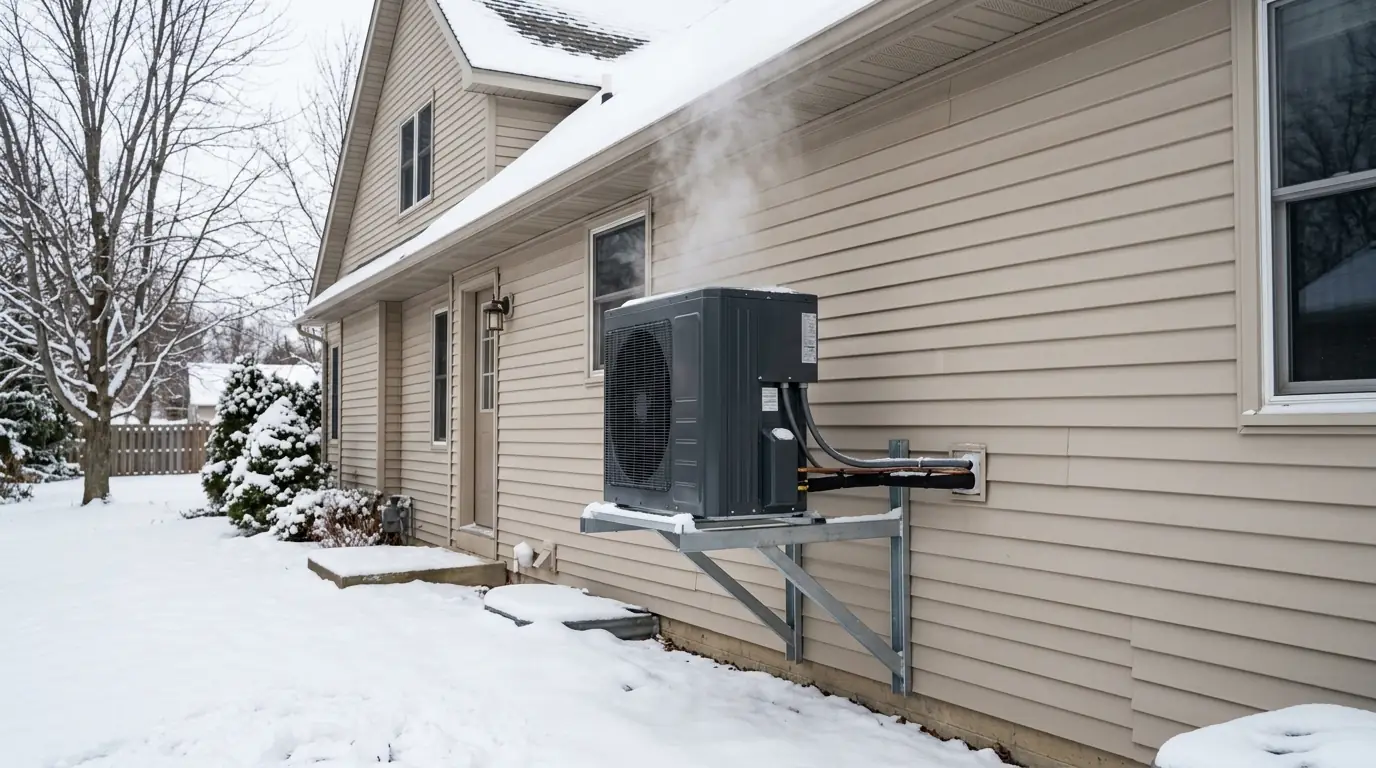
In cold, damp weather, frost builds on the outdoor coil. The heat pump clears it by switching briefly into cooling mode, and you may see steam rising from the outdoor unit or hear a whoosh when it switches. That is normal.
Heavy ice that does not clear, or a unit that stays frozen solid, is not. It points to a defrost control, a sensor or a refrigerant problem; see heat pump repair.
Where backup heat comes in
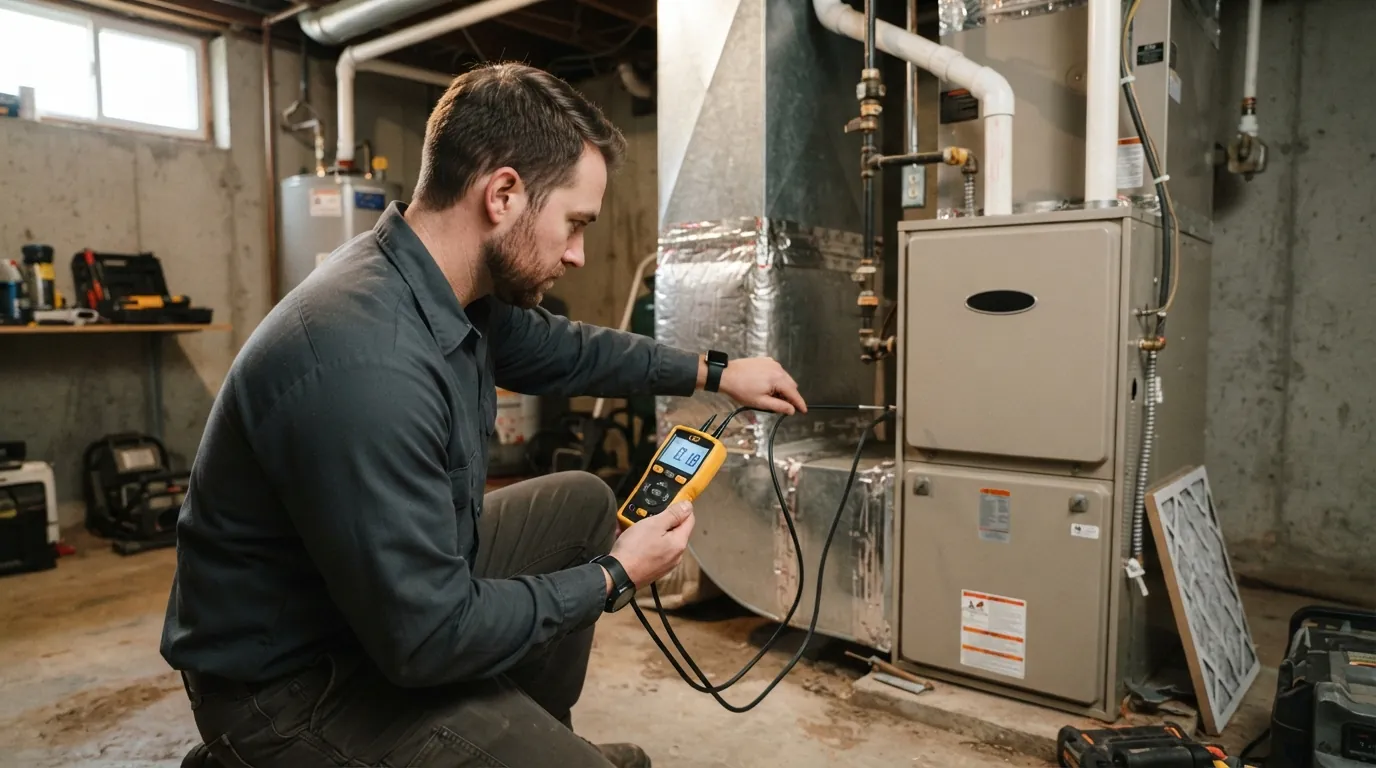
Below a certain outdoor temperature, called the balance point, a heat pump alone can no longer keep up with the house. Backup heat fills the gap, and there are two common ways to provide it.
- Electric heat strips in the air handler: simple, but expensive to run for long periods.
- A gas furnace in a dual-fuel setup: the furnace takes over on the coldest days.
- A well-sized cold-climate heat pump keeps the backup to a few hours a year.
- The changeover temperature is set at install and can be tuned later.
Snow and the outdoor unit
Grand Rapids averages 77.6 inches of snow a year, and an outdoor unit buried in a drift cannot breathe or drain its defrost water. Heat pumps here should sit on a raised stand or wall brackets, clear of drifting and roof runoff, with space to shovel around them.
After a heavy snow, clear the top and sides of the unit gently. Never chip ice off the coil with a tool.
Is a heat pump right for your house?
Heat pumps work best in reasonably tight, well-insulated homes and in houses replacing an air conditioner anyway, since one unit does both jobs. Homes with gas often pair one with the existing furnace; homes on propane or electric heat often see the biggest savings.
Our heat pump or gas furnace guide compares running costs, and dual-fuel systems work covers the paired setup.
Getting the install right
A heat pump has to be sized for heating, not just cooling, using a heat loss calculation and the Grand Rapids design temperature. A unit sized only to replace an old air conditioner is usually too small for winter and leans on backup heat far more than it should.
Ask for the model's rated capacity at 5 degrees, the planned backup heat and the changeover setting in writing, alongside the price.
Heat pump winter questions
Yes. Cold-climate models heat well through most of the season.
Output drops as it gets colder; backup heat covers the coldest hours.
It is defrosting, which is normal.
Yes, electric strips or a gas furnace.
About four nights a year on average.
Yes, above drifting snow and roof runoff.
Yes, that is a dual-fuel system.