Humming, not starting
Often a failed capacitor at the outdoor unit.
Most summer breakdowns are a capacitor, a contactor, a frozen coil or a refrigerant leak. We find which, fix it and tell you if the system is nearing the end of its life.
The short answer
AC repair in Grand Rapids usually traces to one of four faults: a failed run capacitor or contactor at the outdoor unit, a frozen evaporator coil from low airflow, a condenser fan motor that has stopped, or a refrigerant leak. We test each in turn, repair the one that failed and check the charge and airflow before leaving.
What you might notice
Often a failed capacitor at the outdoor unit.
Low airflow or low refrigerant.
Condenser fan motor or its capacitor.
A clogged condensate drain.
Dirty coils, low charge or a failing compressor.
Cooling back on
Central air has two halves: the outdoor condenser with the compressor, fan and electrical parts, and the indoor coil on the furnace. The fault usually shows itself by which half stops. A silent outdoor unit points to electrical parts; an outdoor unit running while the house stays warm points to refrigerant or airflow.
When the leak is the problem, see refrigerant leak repair in Grand Rapids. When an old system needs a compressor or coil, we give you replacement in Grand Rapids numbers alongside the repair.
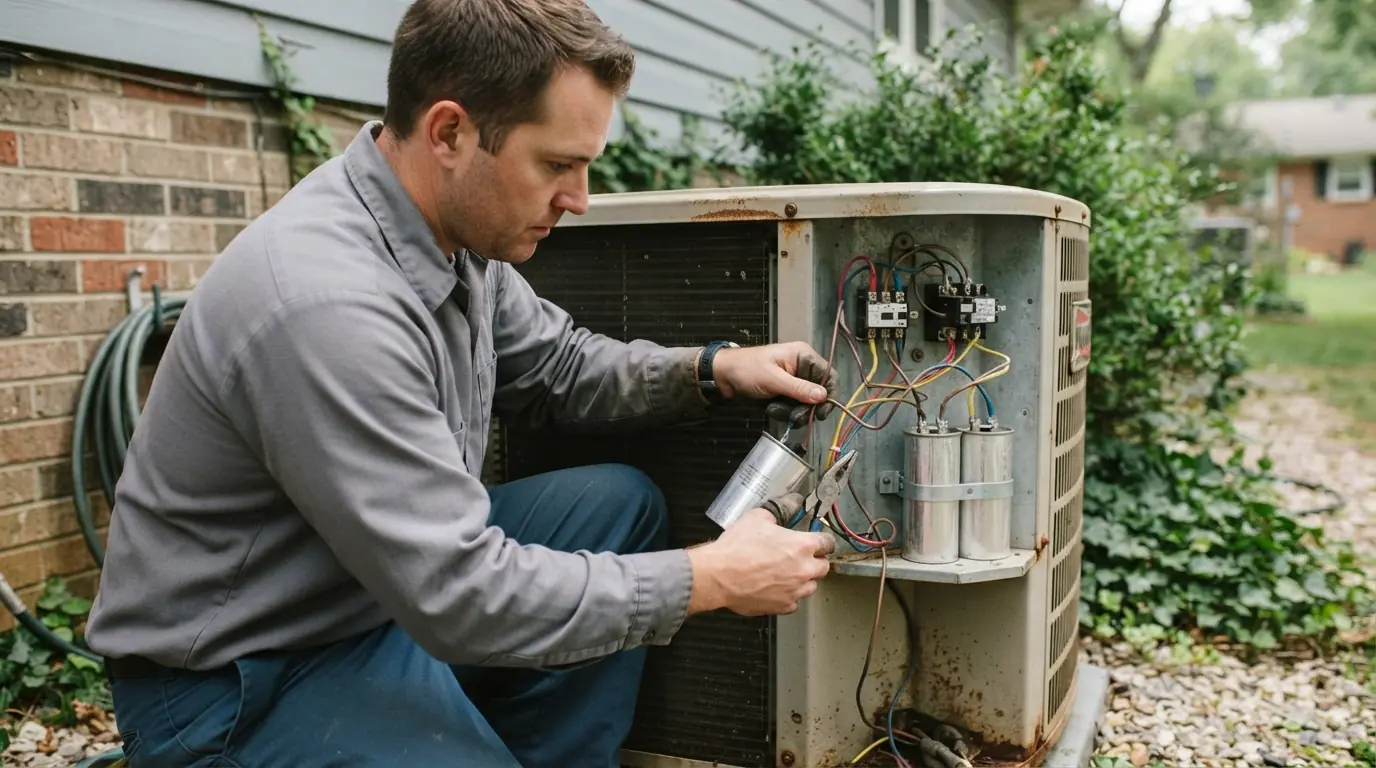
The four repairs we make most
The run capacitor helps the compressor and fan motor start, and it is the most common single part to fail in summer. A condenser that hums without starting, or a fan that spins only when pushed, usually has a weak capacitor. The contactor is the switch that powers the outdoor unit when the thermostat calls, and its contacts pit and burn with age. Both are tested with a meter and replaced in one visit, and we check the compressor's amperage afterward to be sure it is healthy.
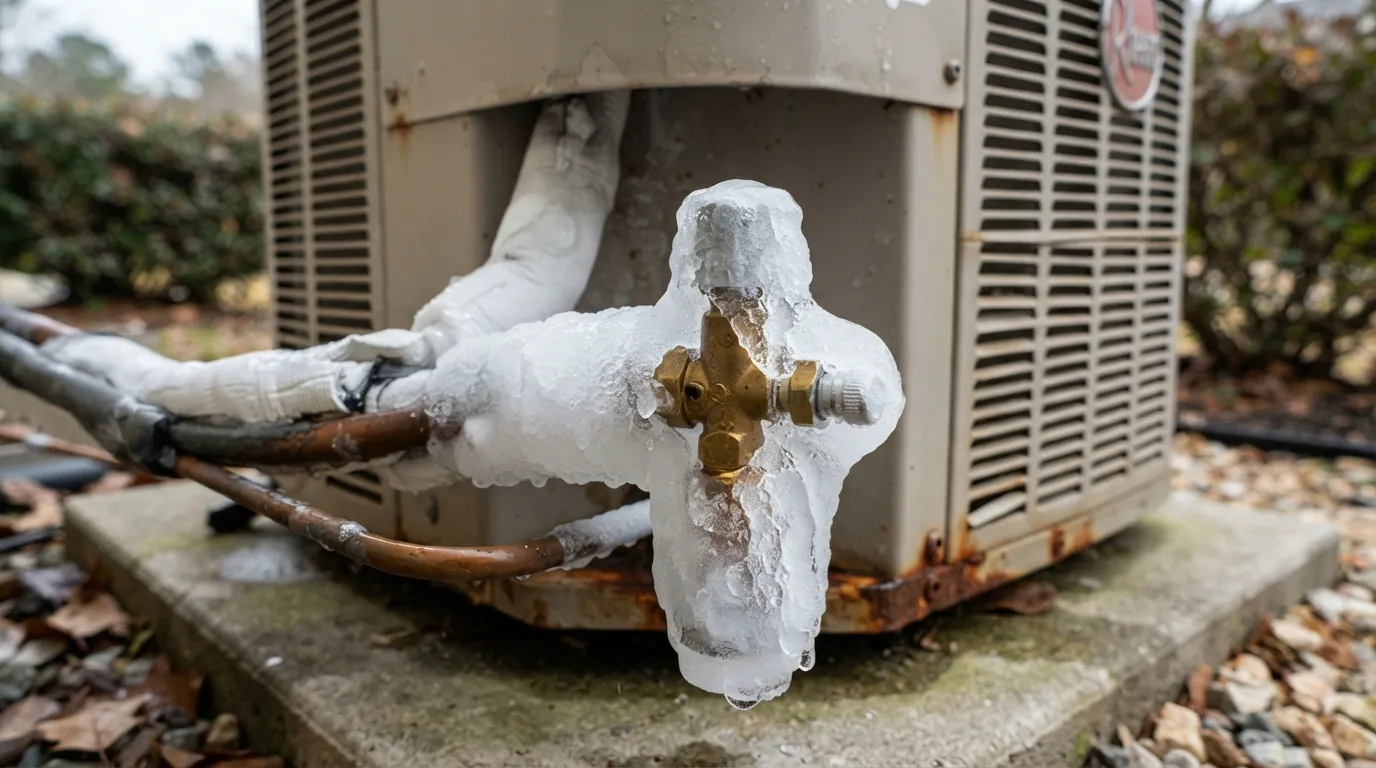
Ice on the copper line at the outdoor unit or on the indoor coil means the coil dropped below freezing. The cause is usually low airflow from a clogged filter or failing blower, or a low refrigerant charge. Running the system while frozen can damage the compressor, so the first step is shutting cooling off and running the fan to thaw. We then find the cause, since clearing the ice without fixing airflow or charge just means it freezes again tomorrow.
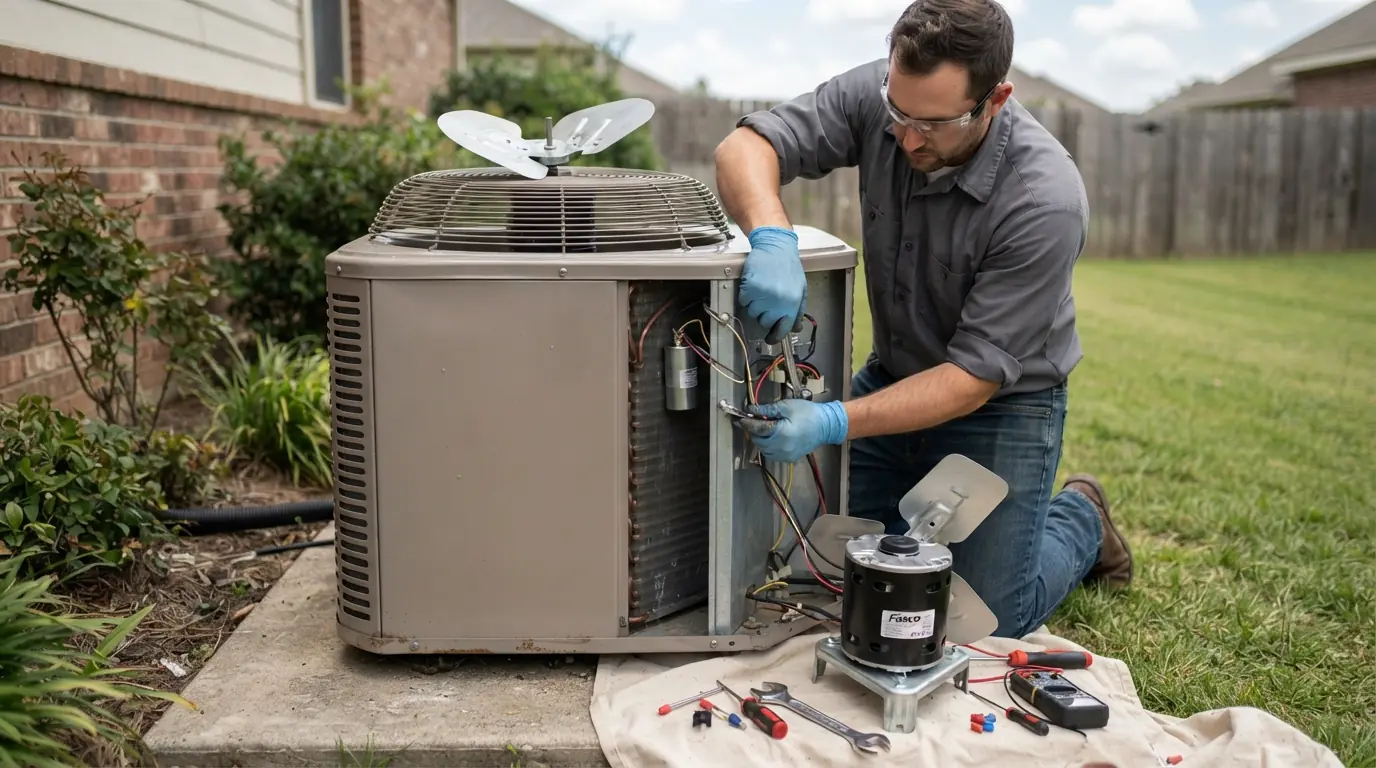
If the outdoor unit hums and gets hot but the top fan is not turning, the compressor is running without anything carrying heat away, and it will trip on high pressure or overheat. The fan motor, its capacitor or a seized bearing is the likely cause. We replace the motor, capacitor and blade assembly as needed, clean the condenser coil while the top is off, and confirm head pressure and compressor amperage are normal once the fan is running again.
A system that needs refrigerant has a leak, since refrigerant is not used up. Adding refrigerant without finding the leak is a short-term fix that costs more over the following summers. We check pressures and temperatures to confirm low charge, then search with an electronic detector, bubble solution or nitrogen pressure test. Common spots include the indoor coil, service valves and brazed joints. Older R-22 systems face a different decision, because that refrigerant is no longer produced and a recharge costs far more.
From the call to a working system
We walk you through the filter, thermostat and breaker first.
Electrical parts, fan, coil, airflow and pressures checked.
Repair price, and replacement numbers on older systems.
Failed part replaced; coil cleaned while the unit is open.
Temperature split and charge checked with the system running.
Timing
Capacitor, contactor and fan motor repairs are usually finished on the first visit. A frozen coil needs several hours to thaw before we can confirm the cause and the charge, so we often start the fan-only thaw during the phone call.
Leak repairs take longer, since the system has to be repaired, pressure tested and evacuated before it is recharged.
Local conditions
Grand Rapids averages only about ten days at 90 degrees or above each year, so a weak capacitor or contactor can get through a mild June and then fail on the first truly hot afternoon. In Kentwood's split-levels from the 1950s through the 70s, the bedroom level sits well above the furnace and is usually the first part of the house to overheat when the AC weakens, which is often how owners notice the problem.
Brands we service and install
Pricing, explained
AC repairs are priced after testing, and you approve the price before we replace any part.
Capacitors and contactors are minor; fan motors and coils cost more.
R-22 systems are costly to recharge because the refrigerant is no longer made.
A service valve leak is simpler than a leaking indoor coil.
On an older system a major repair is weighed against replacement.
Night and holiday calls cost more than scheduled daytime work.
Questions people ask us
Often the outdoor unit is not running, or the system is low on refrigerant.
Usually low airflow or low charge. Turn cooling off and run the fan.
Yes. We repair Carrier, Trane, Lennox, Rheem, Goodman, Amana and more.
Small repairs, yes. A major leak usually points toward replacement.
The filter, thermostat setting, and both breakers and the outdoor disconnect.
We answer 24/7 and schedule no-cooling calls ahead of routine work.
Commonly 12 to 15 years depending on use and maintenance.
A top cover against falling ice is fine; do not wrap it airtight.
From our guides: Guide: ac frozen over
More emergency & repair work
Call any hour and we will get the AC cooling again.
Reach us
Service office
3535 3 Mile Rd NW, Grand Rapids, MI 49534