Water heater replacement in Grand Rapids
A new gas, power-vent or electric tank sized to your household, installed with the right venting, expansion protection and permit. Leaking tanks get moved to the front of the day.
The short answer
Water heater replacement in Grand Rapids usually takes a few hours: we drain and remove the old tank, set a new gas, power-vent or electric model sized to your household, connect water and gas or power, correct the venting, add expansion protection where required, and test the relief valve and temperature before leaving. The job is permitted and inspected.
Replacing, not just swapping
What a proper replacement includes
Most tank water heaters give ten to twelve years of service. When the tank leaks from its body, replacement is the only fix. When an older tank is still working, replacing it on your schedule beats replacing it after it floods the basement.
If the problem might be a part rather than the tank, see water heater repair in Grand Rapids first. For unlimited hot water, compare a tankless water heater.
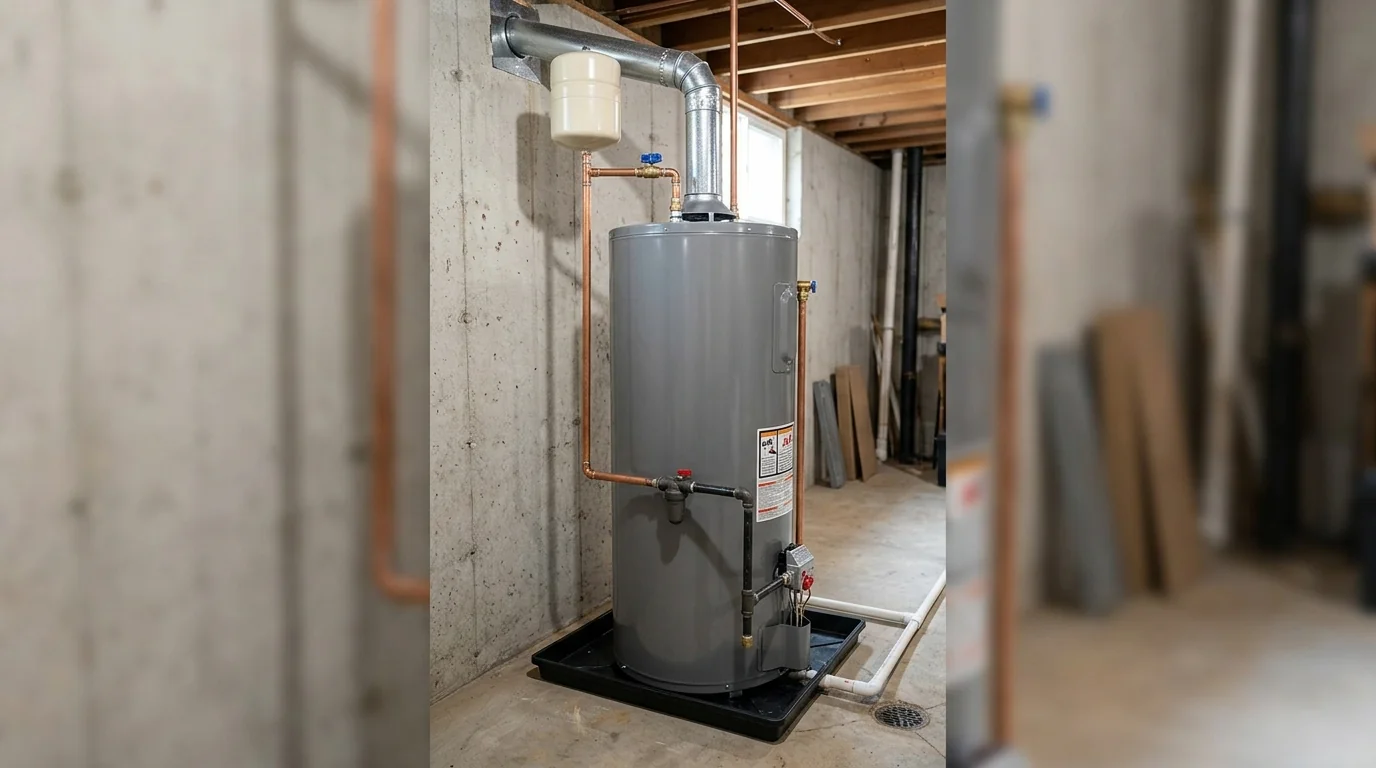
Pricing, explained
What a water heater replacement costs depends on
Replacement pricing depends on the tank type and size, the venting, and any code updates the install requires. You get the price before the old tank comes out.
Tank type
Atmospheric gas, power-vent, electric and heat pump models differ.
Capacity
40 and 50 gallon tanks differ; larger households may need more.
Venting
Chimney liners or new PVC venting add to the job.
Code updates
Expansion tanks, drain pans or new shutoffs where required.
Access
Tight closets or stairs slow removal and install.
Choosing between options
Atmospheric, power-vent or electric
The venting you have usually narrows the choice.
| Atmospheric gas | Power-vent gas | Electric | |
|---|---|---|---|
| Venting | Chimney or metal flue | PVC out a wall | None |
| Needs power | No | Yes, for the fan | Yes, dedicated circuit |
| Recovery | Fast | Fast | Slower |
| Best for | Existing good flue | No usable chimney | No gas service |
The three types we install
40 and 50 gallon gas tanks
Atmospheric gas tanks are the most common water heaters in Grand Rapids basements. A 40 gallon tank suits smaller households and a 50 gallon suits most families. We match the new tank's venting to the existing flue, check that the flue drafts properly, and confirm that the gas line and shutoff are correct for the new unit. If the furnace was recently replaced with a high-efficiency model, the water heater may now be alone in an oversized chimney, which we correct with a proper liner.
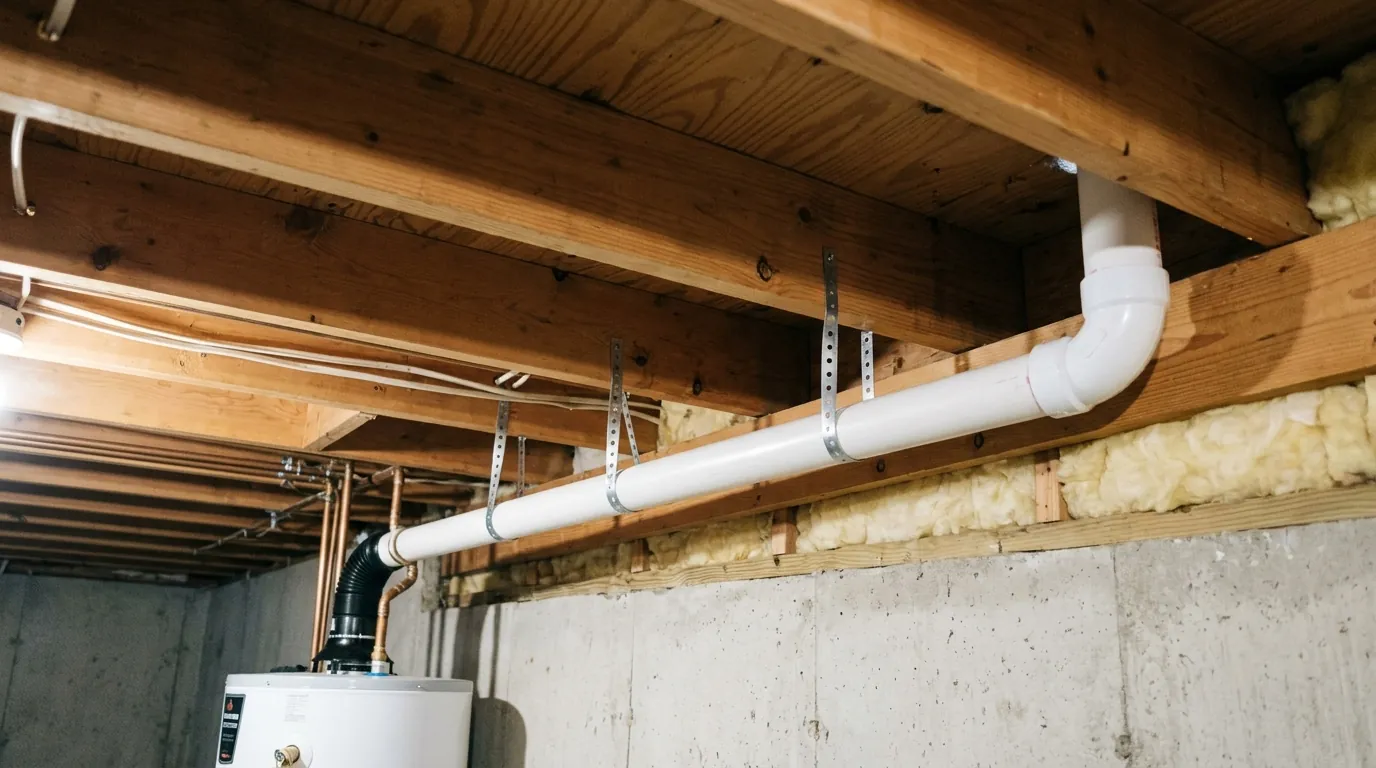
Power-vent water heaters
A power-vent water heater uses a fan to push exhaust through PVC pipe out a side wall, so it does not need a chimney at all. It is the usual choice when the furnace no longer uses the chimney, when the chimney is in poor shape, or when the water heater is moving to a new location. It needs a nearby outlet for the fan and a vent route that meets clearances from windows and doors. Power-vent models cost more than atmospheric tanks but solve venting problems cleanly.
Electric tank replacement
Electric water heaters suit homes without gas or where a gas line would be costly to run. They have no venting, which makes placement flexible, but they recover more slowly than gas, so sizing matters for larger households. We confirm the circuit and wire size match the new unit, since larger or higher-wattage tanks sometimes need electrical upgrades. Heat pump water heaters are another electric option worth discussing where the basement has enough space and air volume, and they also dehumidify the basement slightly as a side effect.
What the visit covers
What every replacement includes
- Tank sized to the household
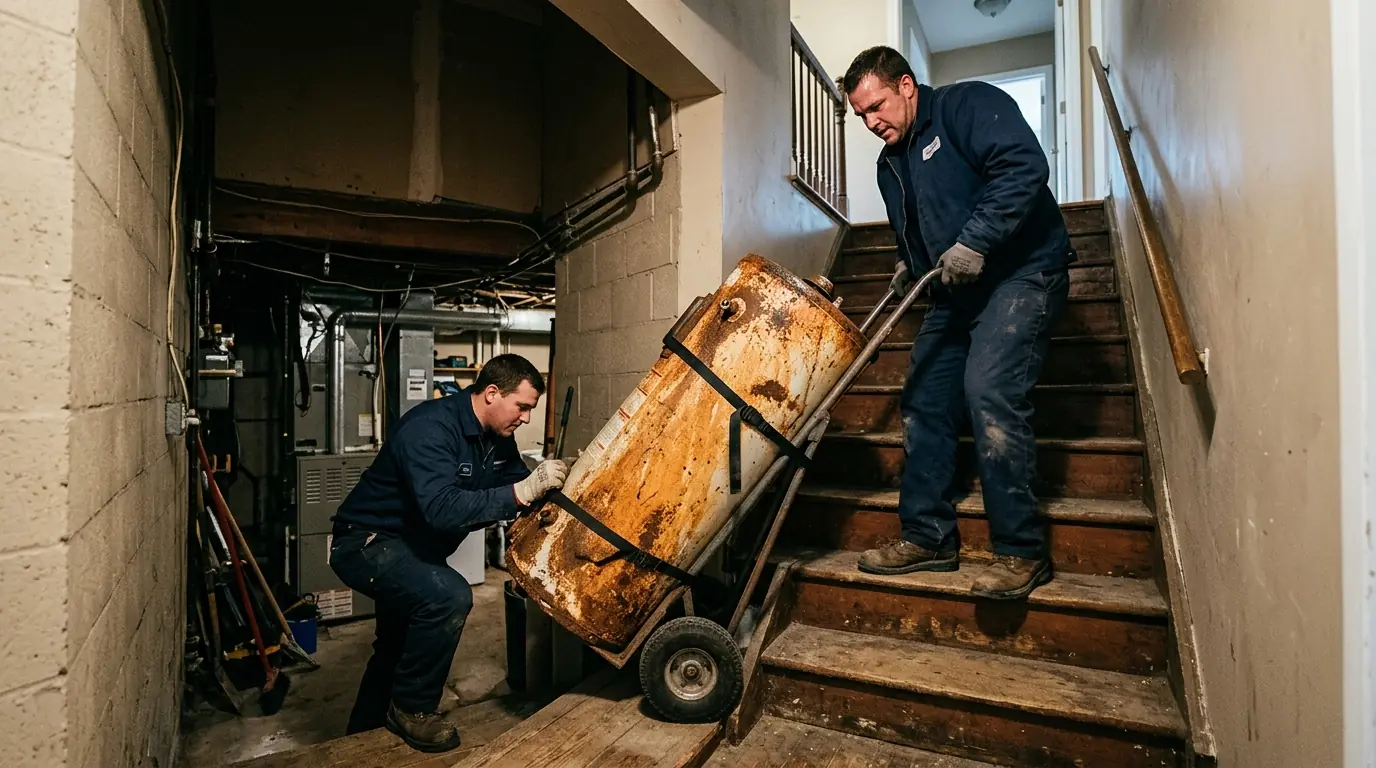
- Old tank drained, removed and hauled away
- Water connections with new shutoff valve
- Gas connection with sediment trap, or circuit check
- Venting and draft verified
- Expansion tank and drain pan where required
- Permit, inspection and relief valve test
Local conditions
Basement water heaters in Grand Rapids
In most Grand Rapids houses the water heater sits in the basement next to the furnace, often sharing its chimney. That shared chimney is the detail that changes a simple swap into a venting question, because once the furnace is replaced with a high-efficiency model, the water heater is left alone in a flue sized for two. We check that relationship on every replacement.
Brands we service and install
From the call to a working system
How a water heater replacement runs
Size and choose
Household size and fuel decide the tank type and capacity.
Drain and remove
Old tank shut off, drained, disconnected and hauled away.
Set and connect
New tank set; water, gas or power connected.
Vent and protect
Venting corrected, expansion tank and drain pan added as needed.
Test
Relief valve checked, burner or elements run, draft confirmed.
Questions people ask us
Water heater replacement questions
Usually a few hours for a like-for-like tank.
40 gallons for smaller households, 50 for most families.
Yes, with the right circuit; recovery is slower.
A gas tank that vents through PVC with a fan, no chimney needed.
Many homes do, especially with a check valve on the water line.
Yes. Removal is part of the job.
Yes. Water heater replacements are permitted and inspected.
We schedule leaking tanks first and work to replace them quickly.
From our guides: Guide: repair or replace
Water heater leaking or getting old?
Call and we will size and install a replacement.