No heat below freezing
Pipes and people are both at risk.
No heat at 2 a.m., an AC that quit on the hottest day, or a furnace making a noise that worries you. Call any hour and a person answers.
The short answer
Emergency HVAC repair in Grand Rapids means a person answers the phone 24 hours a day, walks you through the safe checks first, and schedules no-heat and no-cooling calls ahead of routine work. If a carbon monoxide alarm is sounding or you smell gas, leave the house and call 911 or the gas utility before calling us.
What you might notice
Pipes and people are both at risk.
Leave and call the gas utility first.
Leave and call 911 first.
Turn the system off at the switch.
Shut off the system and the water supply if you can.
When it cannot wait
No heat when it is freezing outside is an emergency, because pipes freeze and houses get dangerously cold. So is no cooling during a heat wave in a home with elderly residents, infants or health conditions. A burning smell, a gas smell or a sounding CO alarm is an emergency for the fire department or utility first.
Most emergency calls end up being furnace or AC repairs; see our furnace repair page and our AC repair page for the common causes.
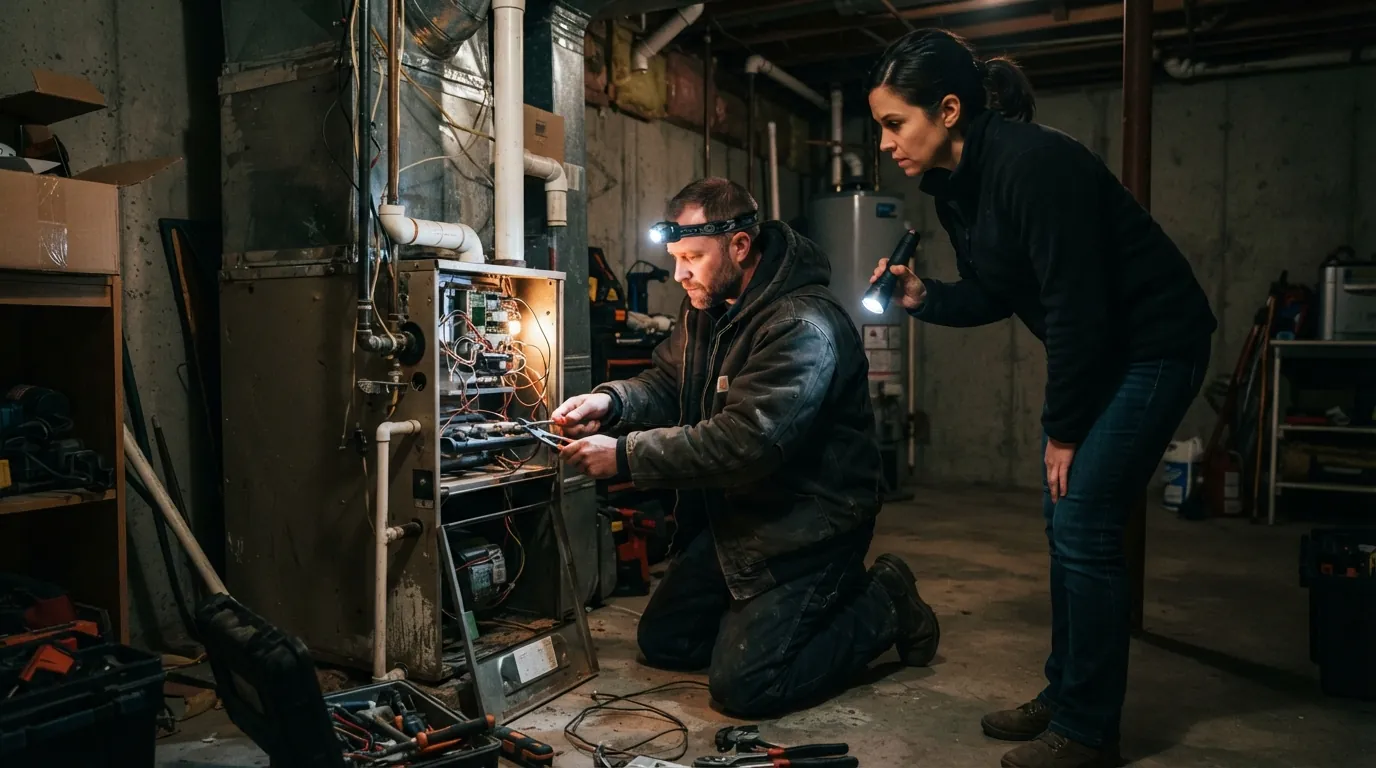
The emergencies we handle
Before you call, check the thermostat is on heat with fresh batteries, the furnace switch is on, the breaker has not tripped and the filter is not clogged solid. If that does not bring heat back, call. While you wait, close curtains, keep interior doors open so heat spreads, and open cabinet doors under sinks on outside walls so pipes stay warmer. Never use a gas oven or an outdoor heater indoors to heat the house. Most no-heat calls are ignition, sensor or blower faults we repair on the first visit.
Check the thermostat, the filter, both breakers and the outdoor disconnect. If there is ice on the refrigerant lines, turn cooling off and run the fan only to thaw the coil, which protects the compressor. Keep blinds closed on sunny sides and move to the lowest floor. For anyone at health risk from heat, a cooler place to stay matters more than waiting for the repair. Capacitors, contactors and fan motors are the usual summer failures, and most are repaired in one visit.
The phone is answered around the clock, including nights, weekends and holidays, by someone who can schedule the work. We ask what the system is doing, walk through the safe checks, and give you an honest arrival window. After-hours calls cost more than scheduled weekday work, and we tell you that before booking. When we are fully booked during a cold snap or heat wave, the call may be passed to another trusted local company so you are not left waiting.
If a CO alarm sounds, get everyone out of the house, call 911 and do not go back in until responders say it is safe. After the fire department clears the house, call us. We test every fuel-burning appliance for carbon monoxide at the source, check the venting from each appliance to the outside, and shut off and tag anything unsafe. Common causes include a cracked heat exchanger, a blocked flue or vent, or a water heater backdrafting into the basement. See our carbon monoxide inspection page.
From the call to a working system
A person answers and asks what the system is doing.
Thermostat, filter, breaker and switch checked with you.
An honest arrival window; no-heat and no-cooling calls first.
The fault found and the repair priced before work starts.
System run until the house is heating or cooling again.
Timing
Most emergency repairs, including ignitors, flame sensors, capacitors, contactors and fan motors, are finished on the first visit, and the house starts recovering temperature right away.
Larger failures such as a heat exchanger or compressor may mean a replacement, and we explain the options and timeline before leaving.
Save the number. We answer 24 hours a day, every day.
Local conditions
Grand Rapids emergency calls are run from our service office on 3 Mile Rd NW, on the northwest side where the city meets Walker, and lakeshore calls from the head office in Stevensville. Berrien County lakeshore towns near Stevensville see even heavier snowfall than Grand Rapids, so winter emergencies there often involve buried heat pump units and snow-blocked furnace vents rather than failed parts.
Pricing, explained
Emergency repairs are priced after diagnosis, with the after-hours rate explained on the phone before we book. You approve the repair price before we start.
Nights, weekends and holidays cost more than weekday scheduling.
Ignitors and capacitors are minor; motors and boards cost more.
Furnace, boiler, heat pump or AC repairs differ.
Brand-specific parts may need to be sourced.
Shutting down an unsafe appliance may lead to replacement.
Questions people ask us
Yes. A person answers 24/7, including holidays.
Thermostat, batteries, filter, breakers and the furnace switch.
Leave the house and call the gas utility from outside.
Get out, call 911, and call us after responders clear the house.
Open cabinet doors on outside walls and let faucets drip slightly.
Yes, and we tell you the rate before booking.
We say so, and may pass the call to another trusted local company.
Yes. See our commercial HVAC repair page.
From our guides: Guide: furnace not working
More emergency & repair work
Reach us
Service office
3535 3 Mile Rd NW, Grand Rapids, MI 49534