Spring AC tune-ups for Grand Rapids homes
An hour in spring catches the weak capacitor, the dirty coil and the low charge before they strand you on the first hot weekend of the year.
The short answer
An AC tune-up in Grand Rapids is a spring start-up: we clean the outdoor condenser coil, check the indoor coil and drain, test the capacitor, contactor and fan motor, measure refrigerant charge by superheat or subcooling, and confirm the temperature split at the registers. It takes about an hour and catches most parts that would otherwise fail in the first heat.
Before the first hot week
What an AC tune-up actually checks
Air conditioners sit idle all winter and then get asked to run flat out in the first warm spell. Capacitors that weakened last summer fail on start-up, condenser coils packed with cottonwood and leaves run hot, and drains clogged over the winter overflow the first time the coil sweats.
Many owners pair this with a fall furnace visit through a maintenance plan work. If the tune-up finds a failed part, AC repair work covers the common ones.
What the visit covers
What every AC tune-up includes
- Outdoor coil cleaned
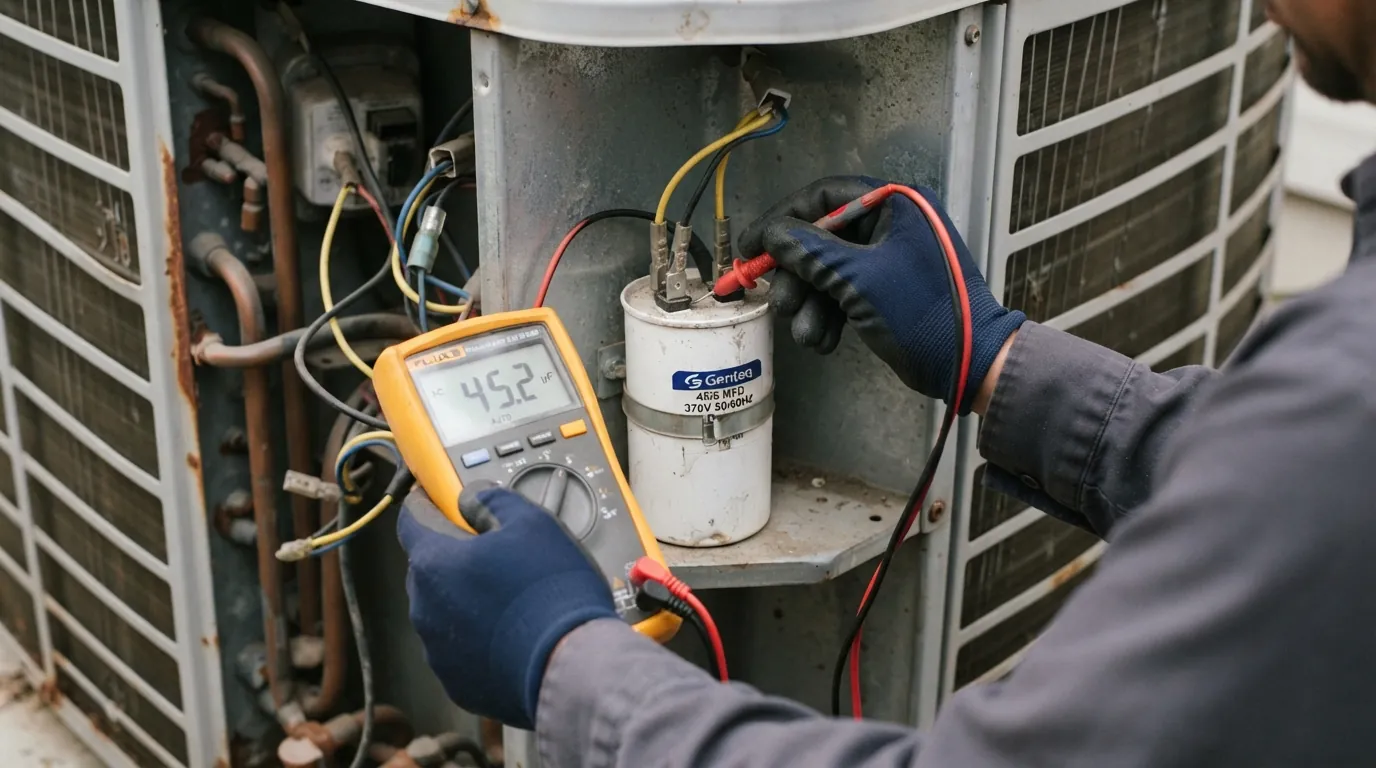
- Capacitor tested against its rating
- Contactor and wiring inspected
- Compressor and fan amperage measured
- Charge checked by superheat or subcooling
- Condensate drain and trap flushed
- Supply and return temperature split recorded
The three parts of the visit
Spring start-up service
We check the outdoor unit before it starts: the disconnect, the wiring, the contactor's contacts and the run capacitor's rating against its label. A capacitor that tests weak in April will almost certainly fail in July, and it is a cheap part to change now. Then we start the system, listen to the compressor and fan, and measure amperage on both. Indoors, we check the blower, the filter and the thermostat's cooling operation, and make sure the furnace fan is set for cooling airflow.
Coil cleaning
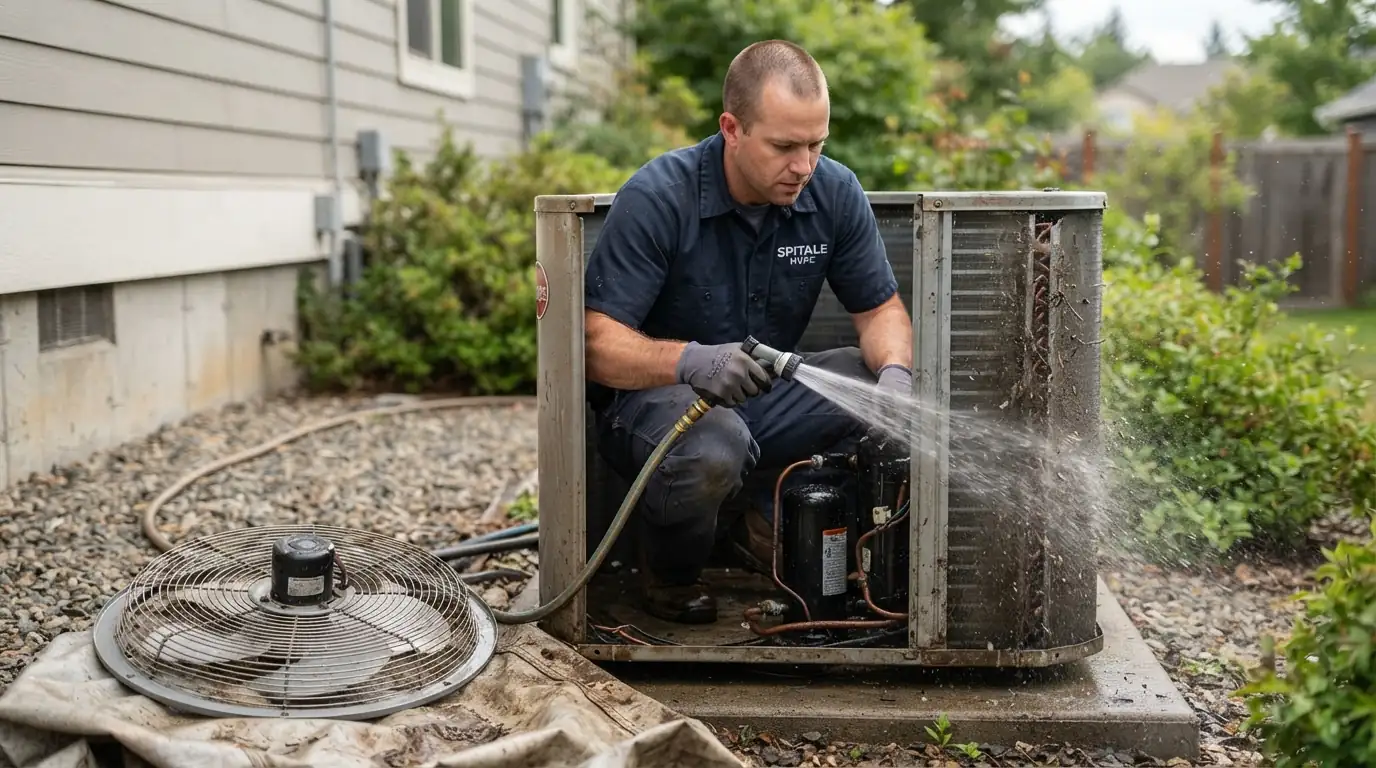
The outdoor condenser coil rejects all the heat taken out of the house, and anything blocking it, like cottonwood, grass clippings or dryer lint, makes the compressor run hotter and draw more power. We clean the coil with a coil cleaner and water from the inside out so debris leaves the way it came in. Where access allows, we inspect the indoor evaporator coil for dust and growth, and clear and flush the condensate drain and trap so the first humid day does not overflow the pan.
Refrigerant charge check
We check the charge with gauges and temperature readings, using superheat or subcooling depending on the system's metering device, rather than guessing from pressure alone. A correct charge is what makes the rated efficiency real. If the charge is low, the system has a leak, and we say so rather than quietly topping it off, since a leak should be found and fixed. We also measure the temperature split between return and supply air as a quick check on overall performance.
Local conditions
New homes and first tune-ups
Grand Rapids authorized 859 new residential units in 2024, far more than five years earlier, and a lot of those homes are now heading into their second or third cooling season. First-owner systems often have never had a tune-up at all, and a construction-dust coated coil or a charge that was never verified after the build is exactly what a spring start-up is designed to catch.
From the call to a working system
How a tune-up visit runs
Check before start
Disconnect, wiring, capacitor and contactor inspected.
Clean the coil
Outdoor coil washed; drain cleared and flushed.
Start and measure
Amperage, pressures and temperatures recorded.
Check indoors
Blower, filter, coil and thermostat checked.
Written results
Readings and any recommended repairs explained.
Before you pick up a screwdriver
What you can do between tune-ups
Owners can keep the easy parts clear. Electrical and refrigerant work needs a technician.
| Safe for a homeowner | Leave it to a technician | |
|---|---|---|
| Outdoor unit | Keep plants and debris two feet away | Cleaning the coil fins properly |
| Filter | Change it every one to three months | Upgrading to a media filter |
| Drain line | Check the pan is dry | Flushing and clearing the trap |
| Weak cooling | Check the thermostat and filter | Testing charge and capacitors |
Pricing, explained
What an AC tune-up costs depends on
Tune-ups are priced per system. Any part we recommend replacing is quoted separately so you can decide.
Number of systems
Each outdoor unit and indoor coil is checked separately.
Coil condition
Heavily packed coils take extra cleaning time.
Access
Tight spaces or rooftop condensers add time.
Plan membership
A maintenance plan bundles spring and fall visits.
Parts found
Capacitors or contactors are quoted on the spot.
Questions people ask us
AC tune-up questions
In April or May, before steady cooling starts.
About an hour for a typical system.
Only after telling you; low charge means a leak.
You can hose off debris gently with the power off.
A clean coil and correct charge run more efficiently.
Yes. First-year systems benefit from a charge check.
We explain it and quote the repair separately.
Yes. Heat pumps get a similar visit with defrost checks.
From our guides: Ac frozen over guide
More cooling work