If your air conditioner is frozen, turn cooling off at the thermostat and set the fan to on so warm indoor air thaws the coil, which usually takes a few hours. Then check the filter and make sure supply and return vents are open. If it freezes again after thawing, the cause is low refrigerant or a blower problem, and it needs a technician.
Two steps to take now
Running a frozen air conditioner can damage the compressor, the most expensive part of the system.
- Turn cooling off at the thermostat, so the compressor stops.
- Set the fan to on, so warm indoor air flows over the coil and melts the ice faster.
- Put towels around the furnace base; melting ice can overflow the drain pan.
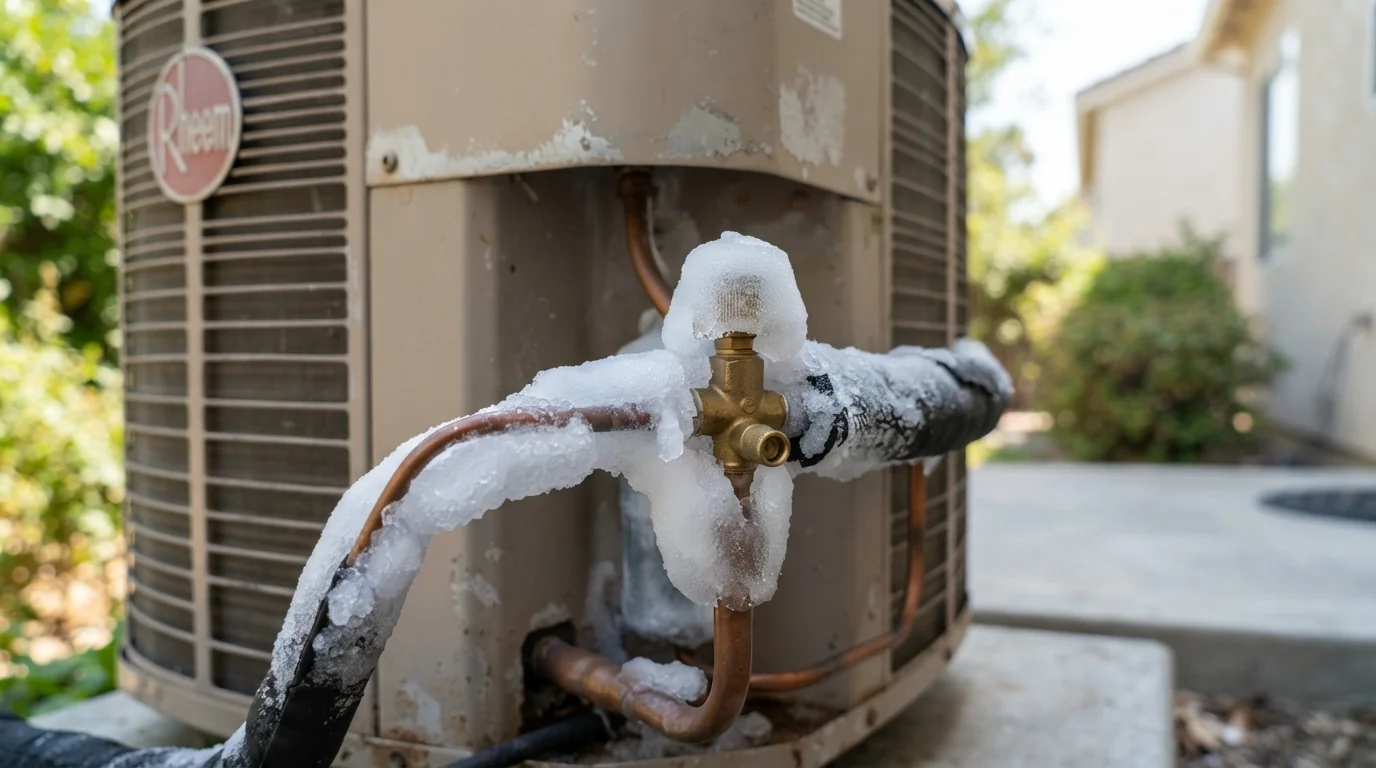
- Wait until the copper line at the outdoor unit is free of ice before trying cooling again.
Why a coil freezes on a hot day
The indoor coil runs cold, a little above freezing, and warm house air flowing across it keeps it from icing up. If too little air flows across it, or if the system is low on refrigerant, the coil drops below freezing, moisture from the air turns to frost, the frost blocks more airflow, and within hours the coil is a block of ice.
So the causes fall into two groups: airflow problems and refrigerant problems. Airflow problems are often something you can fix. Refrigerant problems always need a technician.
Airflow causes you can check
Start here once the coil has thawed.
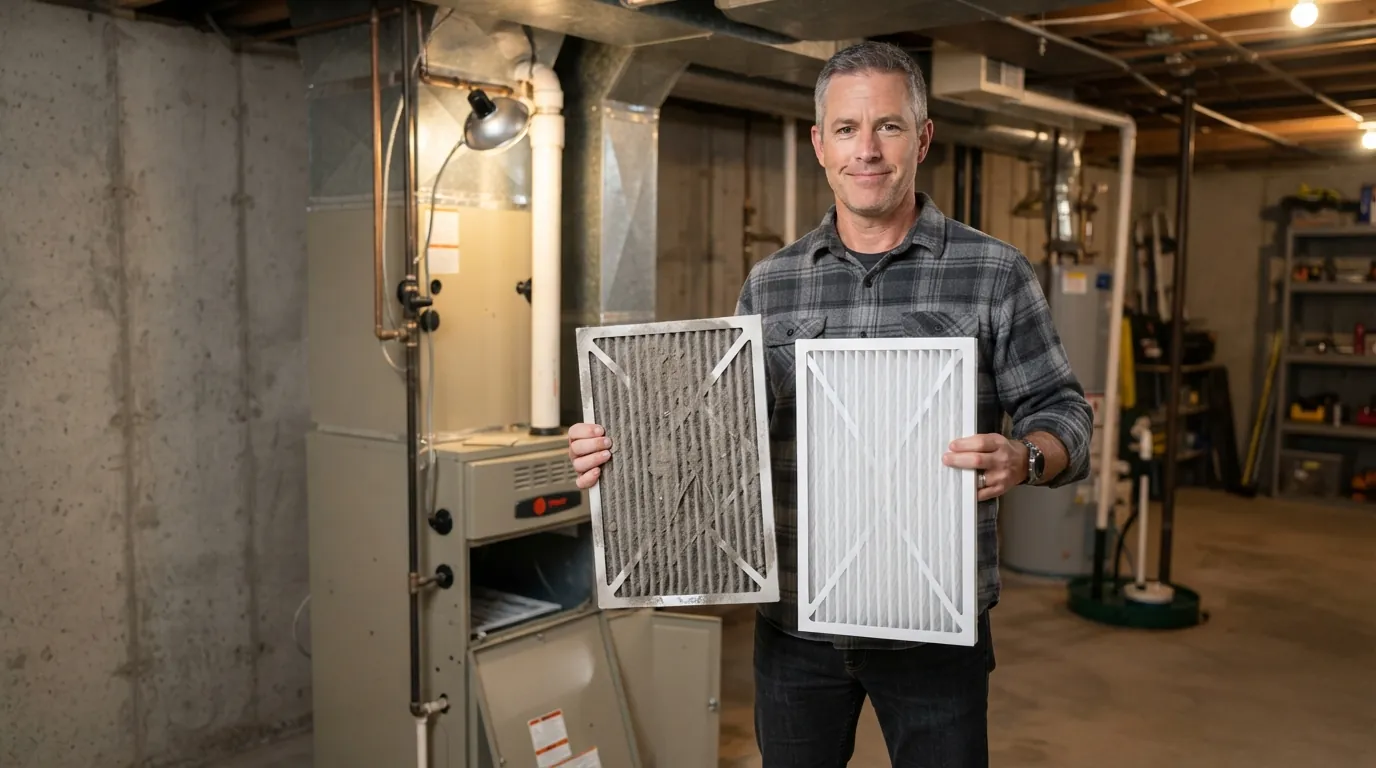
- A clogged filter: the most common cause. Replace it.
- Closed or blocked registers: open supply vents and clear return grilles of furniture.
- A dirty indoor coil: dust that got past a missing or bypassed filter. This needs cleaning by a technician.
- A weak blower: a failing capacitor or motor slows airflow. You may notice weak air from the vents even with a clean filter.
Refrigerant causes that need a technician
Refrigerant does not get used up, so a low charge means a leak. Common leak points are the indoor coil, the service valves at the outdoor unit and brazed joints. Adding refrigerant without fixing the leak only buys time, and on older R-22 systems that time is expensive. See our refrigerant leak repair page for how leaks are found and fixed.
A system that froze once because of a clogged filter and runs fine after a new filter was probably an airflow problem. A system that freezes again within days, with a clean filter and open vents, is almost certainly low on refrigerant.
Water around the furnace
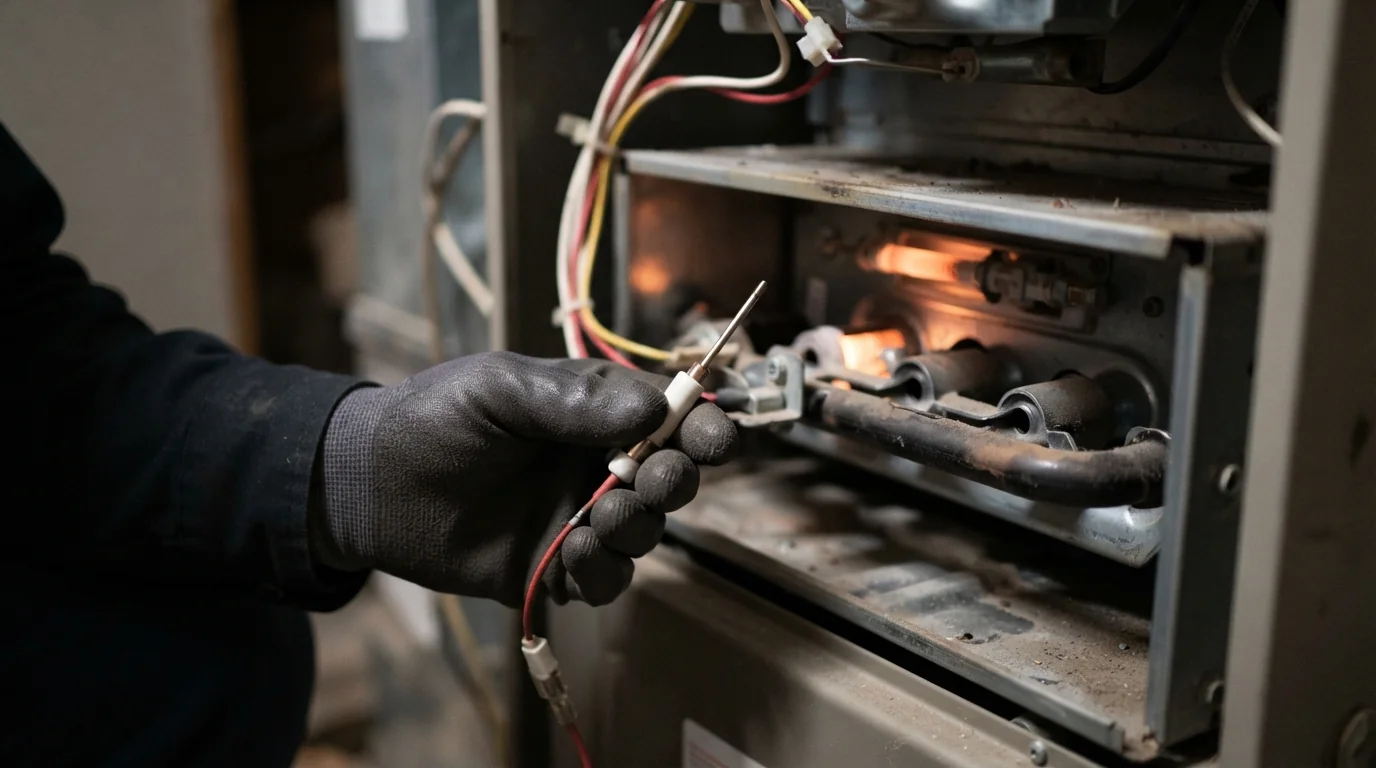
As the ice melts, the water has to go down the condensate drain. If the drain is partly clogged, or the thaw is fast, the pan overflows and water pools around the furnace. Many systems have a float switch that shuts the AC off when the pan fills, which can look like another failure.
Clear standing water, check the drain line where it exits, and if the float switch has tripped, the system will not cool again until the pan drains. A clogged drain is part of an AC tune-up work and an easy repair.
Preventing the next freeze
Most freeze-ups are preventable. Change the filter on schedule, every one to three months for a standard filter, and consider a deeper media filter that clogs more slowly; see our air filtration page. Keep supply registers open, even in rooms you do not use, and keep returns clear of furniture and rugs.
A spring tune-up checks the refrigerant charge, the blower and the indoor coil before the cooling season starts, which is when a slow leak or a weakening capacitor gets caught. If your system froze last summer, tell the technician, since a repeat freeze is the clearest sign of a leak.
When to call
Call if the coil freezes again after thawing with a clean filter, if you hear hissing near the outdoor unit, if the outdoor unit is not running while the indoor fan is, or if water keeps overflowing. Tell us when it started, what the filter looked like and whether you have had refrigerant added before. We answer 24/7 through AC repair.
If the house is getting dangerously hot for anyone vulnerable while you wait, moving to a cooler place matters more than the repair. Our AC cost guide covers what to expect if the system is near the end of its life.
Frozen AC questions
Usually a few hours with cooling off and the fan on.
No. It can damage the compressor.
Lower loads at night reduce airflow heat on the coil, exposing airflow or charge problems.
Yes. It is the most common cause.
Only for a while. A low charge means a leak that needs repair.
No. Let it thaw with the fan running.
Melting ice overflowing the drain pan or a clogged condensate drain.