For most Grand Rapids homes with gas service, the choice is not heat pump or furnace but how to combine them. A cold-climate heat pump handles heating efficiently through most of the season, and a gas furnace covers the coldest stretches in a dual-fuel setup. All-electric heat pumps suit homes without gas or owners who want to leave gas behind.
How a heat pump copes with a Michigan winter
A heat pump moves heat from outdoor air into the house. As it gets colder outside, there is less heat to move and the unit works harder. Older heat pumps lost most of their capacity in the 20s, which is why they had a poor reputation here. Cold-climate models with variable-speed compressors keep producing useful heat well below freezing. For how one copes with the coldest weeks, see heat pumps in a Michigan winter.
Grand Rapids averages about 133 nights a year at or below freezing but only a handful below zero, so most of the heating season sits in the range where a cold-climate heat pump works well. The question is what covers the coldest days: electric backup strips, or a gas furnace.
The three setups compared
Each setup has a clear case where it wins.
- Gas furnace plus central AC: lowest upfront cost where gas is already in the house, simplest to live with, no electric backup needed.
- Dual fuel: a heat pump replaces the AC and heats through mild weather, the furnace takes over below a set outdoor temperature. See dual-fuel systems in Grand Rapids.
- All-electric heat pump: no gas needed, electric strips cover the coldest hours. It suits homes without gas service. See our heat pump installation page.
What each costs in 2026
Statewide 2026 data puts a Michigan heat pump system at $5,500 to $13,000 installed, with standard split systems commonly landing between $6,000 and $8,500. A gas furnace replacement runs $3,000 to $9,500, and furnace plus central AC together $5,200 to $14,500.
Consumers Energy's 2026 chart pays $300 on a qualifying air-source heat pump, $350 on a qualifying ductless heat pump and $100 or $300 on high-efficiency furnaces. The federal tax credit that used to make heat pumps look much cheaper expired at the end of 2025. Our furnace cost guide breaks down the furnace side in more detail.
The questions that decide it for your house
The right answer depends on the house more than on any general rule.
- How old is the furnace? A young furnace makes a dual-fuel add-on cheap.
- Is the AC due for replacement anyway? Swapping it for a heat pump costs less extra than most people expect.
- Do you have gas service? Without it, an all-electric heat pump is the natural choice.
- Can the ducts carry heat pump airflow? Undersized ducts may need changes.
- What are your gas and electric rates? They set where the switch-over temperature makes sense.
Living with a heat pump
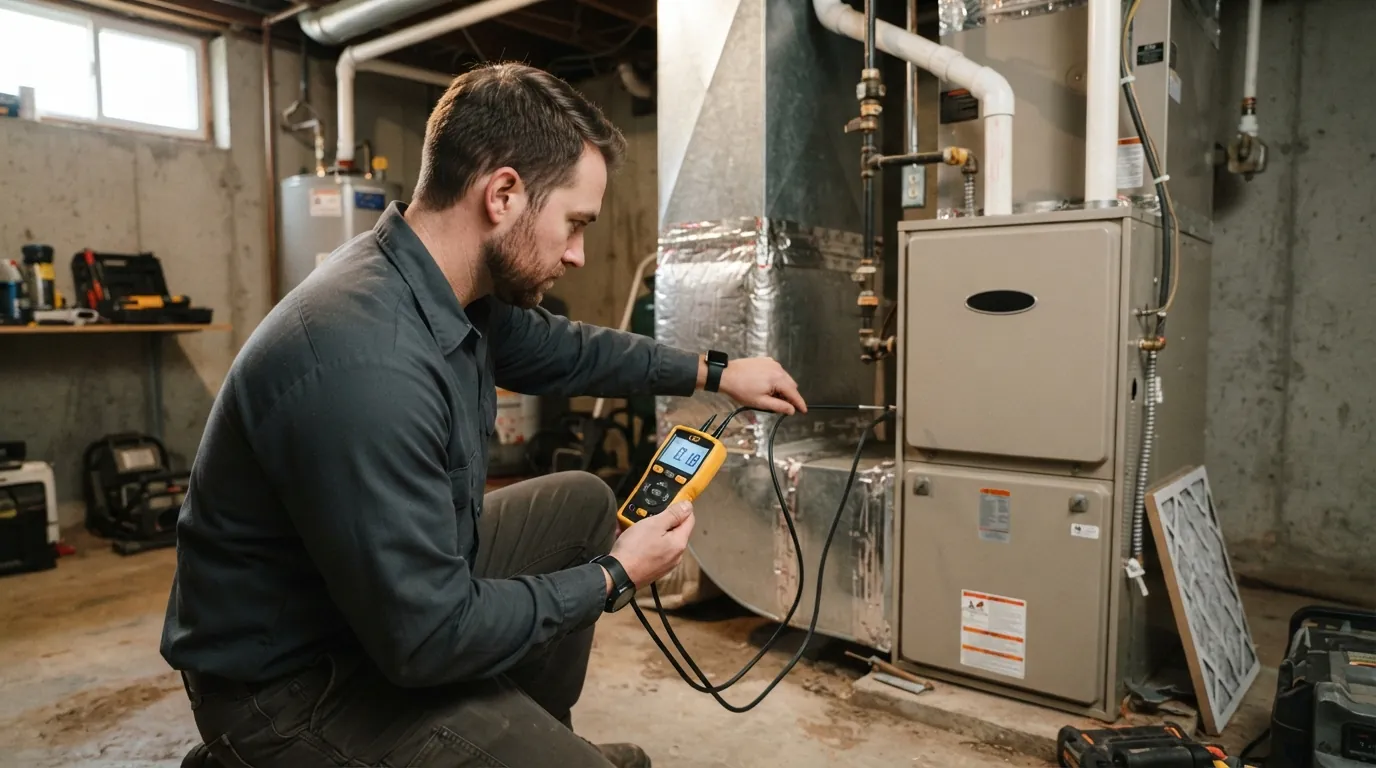
A few things surprise people in their first winter with a heat pump. Supply air feels cooler than furnace air, around body temperature rather than hot, even though the house is being heated properly. The outdoor unit periodically goes into defrost, with a whoosh and a cloud of steam, which is normal. And the system runs longer, gentler cycles instead of short blasts.
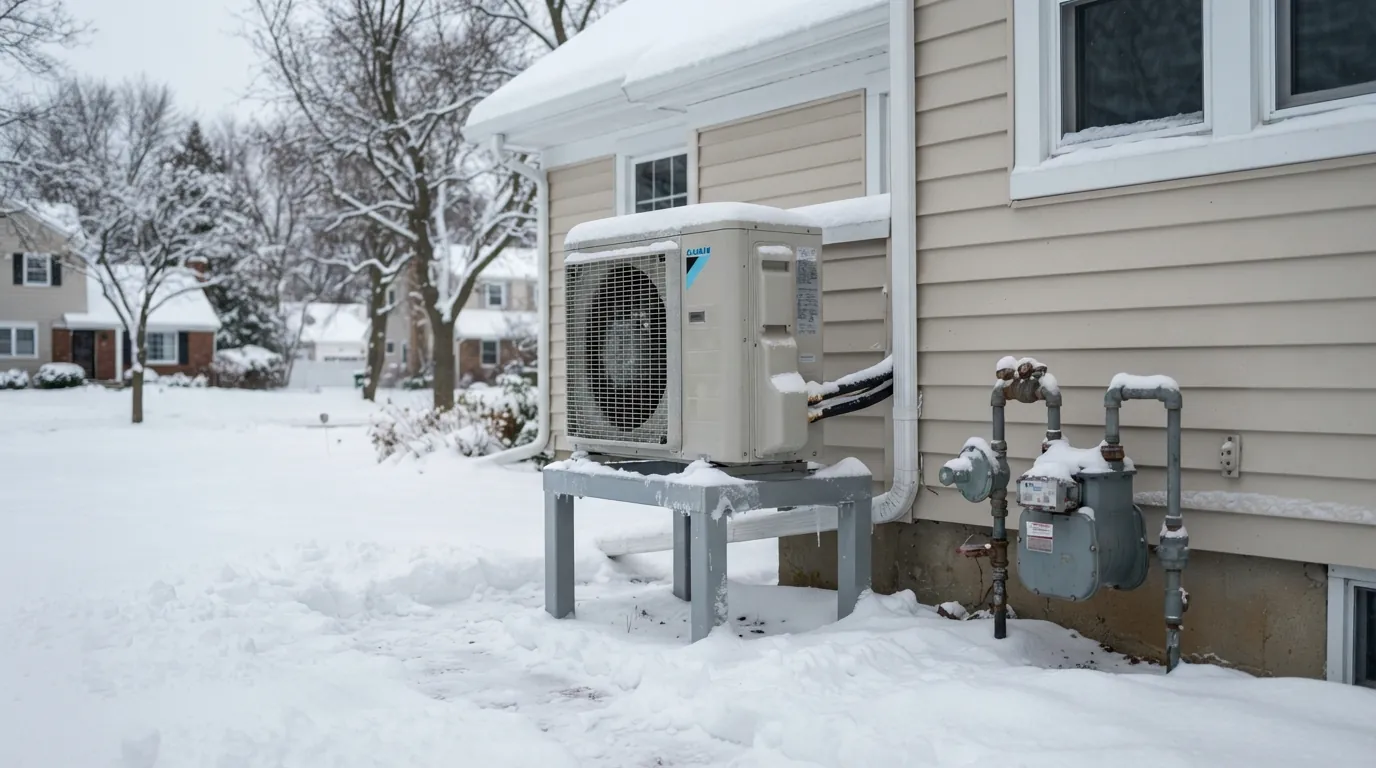
The outdoor unit needs a raised stand to stay clear of snow and let defrost water drain away, and it should have clearance on all sides. Modern variable-speed units are quiet, often quieter than the air conditioner they replace. A yearly heat pump tune-up work checks the defrost and backup heat, the two things that most affect winter running cost.
What we recommend most often
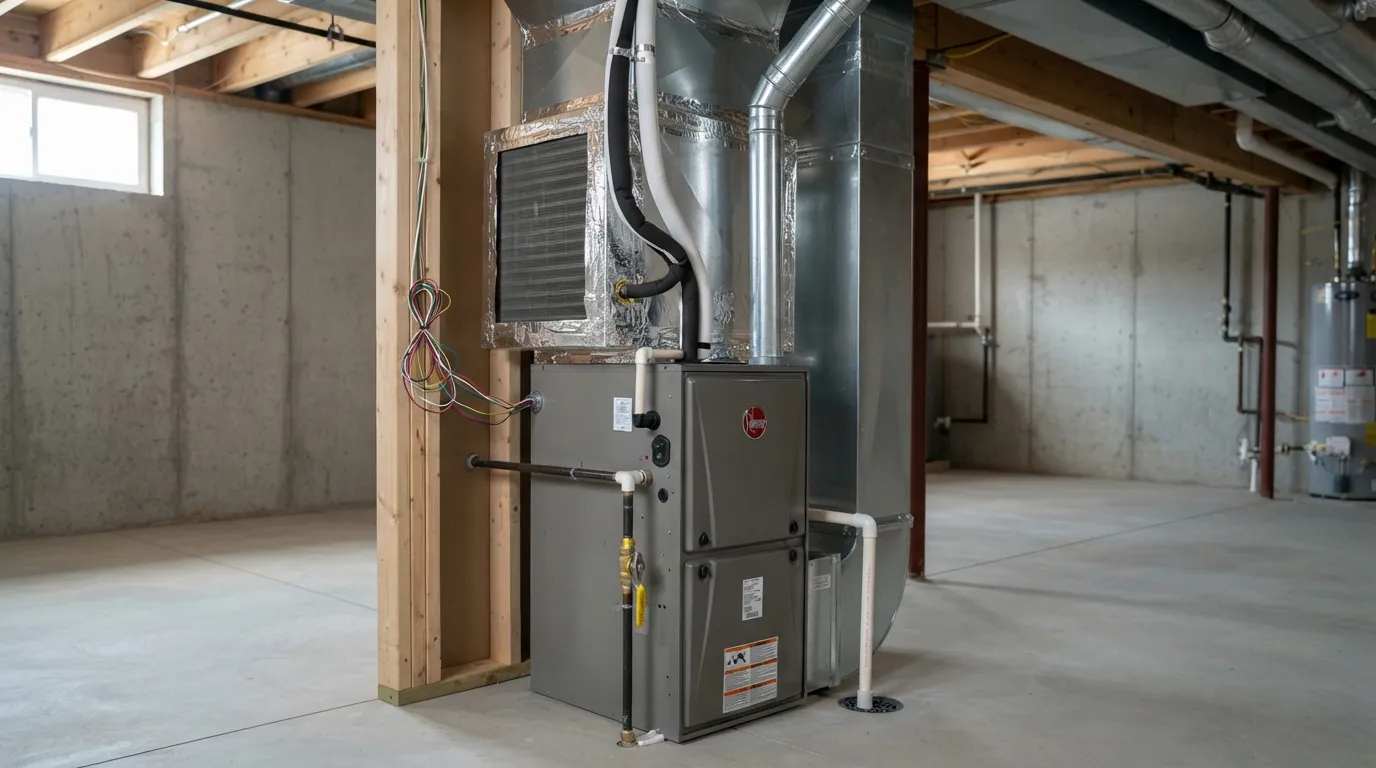
In Grand Rapids homes that already have gas and a furnace under about ten years old, adding a heat pump as a dual-fuel system when the AC is due is usually the best value. When both are old, replacing them together as a matched dual-fuel system is common. All-electric makes the most sense in homes without gas or with owners committed to going electric.
Rooms that ducts do not reach, such as finished attics and additions, are a separate question, usually answered by ductless mini splits. We run the numbers for your house on a single visit.
Heat pump and furnace questions
Cold-climate models do, with a furnace or electric strips for the coldest days.
A heat pump and a gas furnace sharing one system, switching at a set outdoor temperature.
Often in mild weather. It depends on your gas and electric rates.
Usually, if the furnace is in good shape and its blower can handle the airflow.
2026 statewide data puts systems at $5,500 to $13,000 installed.
No. It expired at the end of 2025. Utility rebates still apply.
Yes. It replaces your central air conditioner.