The right furnace size for a Grand Rapids home comes from a heat loss calculation, not square footage. The calculation uses insulation, windows, air leakage, ceiling height and the local design temperature to find how many BTUs the house loses on a cold night. Many older furnaces are oversized, and simply copying the old size repeats the mistake.
Furnace size is measured in BTUs
A furnace is sized by its heating output in BTUs per hour. The goal is a furnace that just covers what the house loses on a design-cold night, with a sensible margin, and no more. A furnace that is too small runs constantly in a cold snap; one that is too big turns on and off in short bursts all winter.
Output is what matters, not input. A 100,000 BTU input furnace at 96 percent efficiency delivers about 96,000 BTUs of heat; the same input at 80 percent delivers about 80,000.
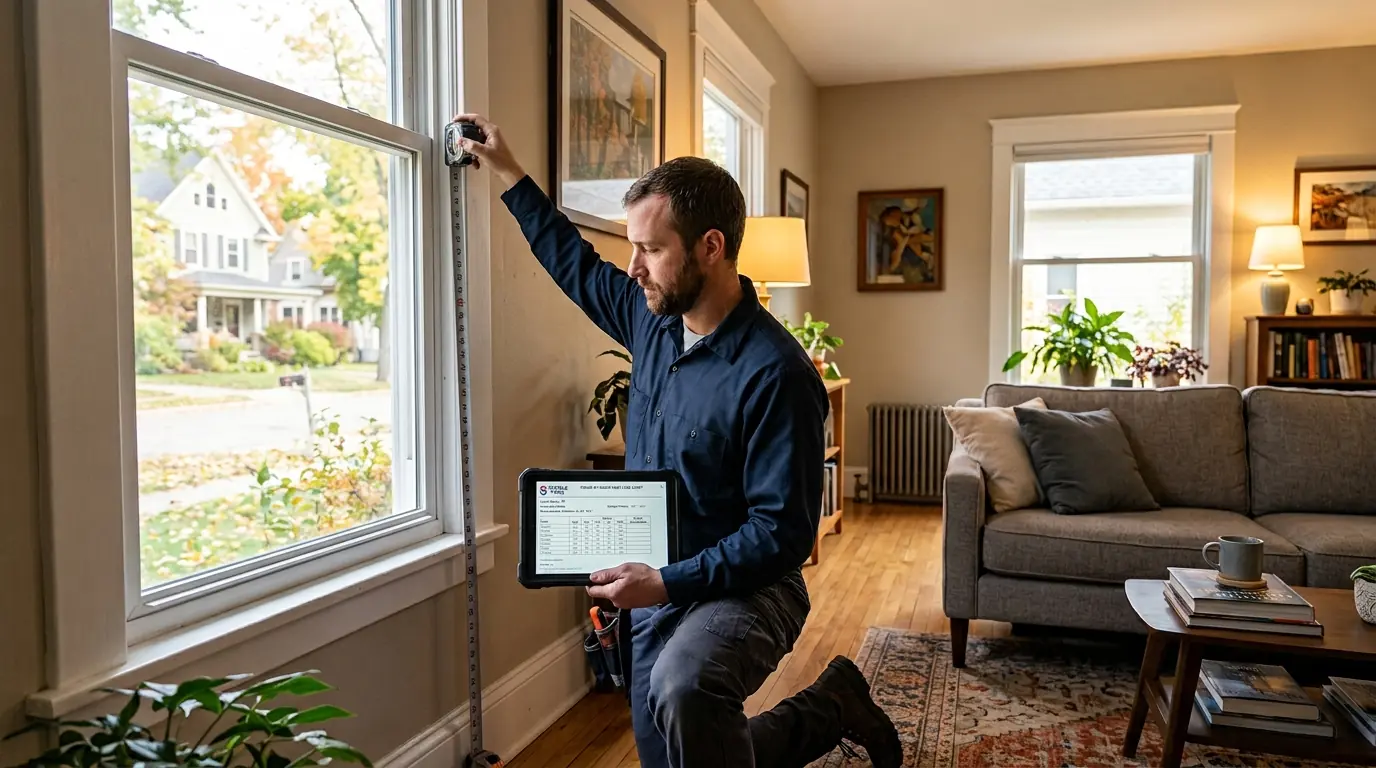
Why square footage is not enough
Two Grand Rapids homes of the same size can need very different furnaces. A tight newer house in a subdivision might lose half the heat of a drafty 1920s house with original windows and little wall insulation, and a ranch loses heat differently from a two-story with a finished attic.
Rules of thumb that multiply square footage by a fixed number of BTUs give answers that can be off by half in either direction. They are a starting guess, not a sizing method.
What a load calculation looks at
A proper heat loss calculation, usually done to the ACCA Manual J method, works room by room through the things that actually drive heat loss.
- Wall, ceiling and floor insulation levels.
- Window area, type and which way they face.
- Air leakage, from a blower door test or a careful estimate.
- Ceiling heights and the volume of each room.
- Basement walls and slabs, insulated or not.
- The local winter design temperature for Grand Rapids.
- Duct location, since ducts in unheated space lose heat.
What goes wrong with an oversized furnace
Oversizing is far more common than undersizing, because contractors have long added margin on top of margin. An oversized furnace reaches temperature quickly, shuts off and starts again a few minutes later. That short cycling wears the igniter and controls, keeps the heat exchanger from settling into steady operation and leaves rooms far from the thermostat colder.
It also tends to be louder, because the blower pushes more air than the ducts were built for. A right-sized furnace runs longer, quieter cycles and keeps temperatures more even. See signs your furnace is failing, explained for what short cycling looks like in practice.
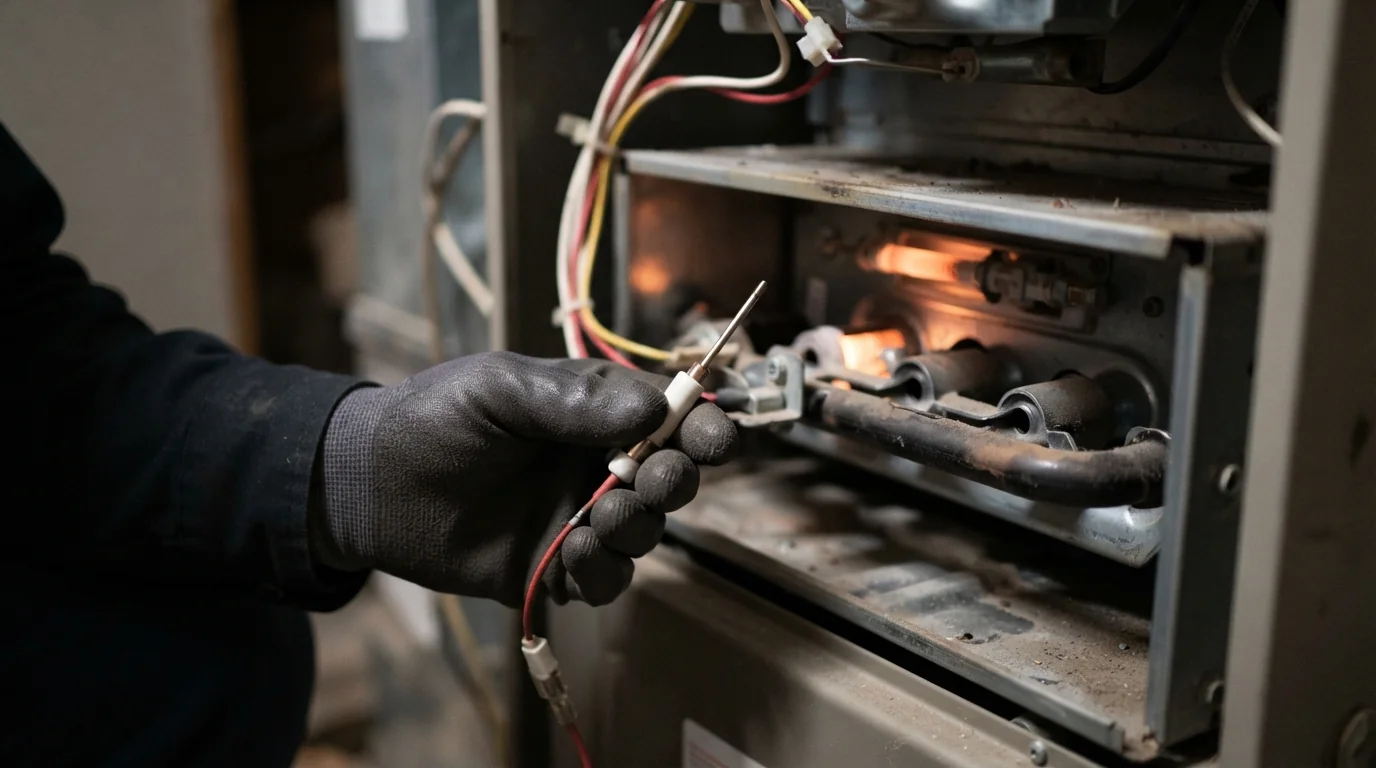
When the old size is wrong
Many furnaces being replaced in Grand Rapids were sized decades ago, before the house got new windows, attic insulation or a basement finish. A house that has been tightened up needs less heat than it did, so copying the old furnace's size often means installing another oversized furnace.
The opposite happens too: an addition or finished basement may have been tacked onto a furnace that was never resized. Either way, replacement is the moment to recalculate.
Two-stage and modulating furnaces
Two-stage and modulating furnaces soften the sizing problem by running at a lower output most of the time and only firing fully on the coldest days. They still need to be sized correctly at full output, but they handle the mild part of the season, most of a Grand Rapids winter, with longer, gentler cycles.
If you are choosing between models, our furnace replacement in Grand Rapids page compares single-stage, two-stage and modulating units.
Questions to ask on any quote
Ask how the size was chosen and ask to see the calculation. A contractor who sized the furnace properly can show room-by-room numbers and explain why the total came out where it did.
Ask whether the ductwork can carry the airflow the new furnace needs, and whether the air conditioner coil on top of it matches. Size, ducts and coil have to work together.
Furnace sizing questions
From a room-by-room heat loss calculation.
Only as a rough guess; it can be off by half.
No. Oversized furnaces short cycle and heat unevenly.
Not automatically; the house may have changed.
The ACCA method for calculating heating and cooling loads.
They run on low most of the time, which smooths out cycles.
Yes. The ducts must carry the airflow the furnace needs.